 RotiAI
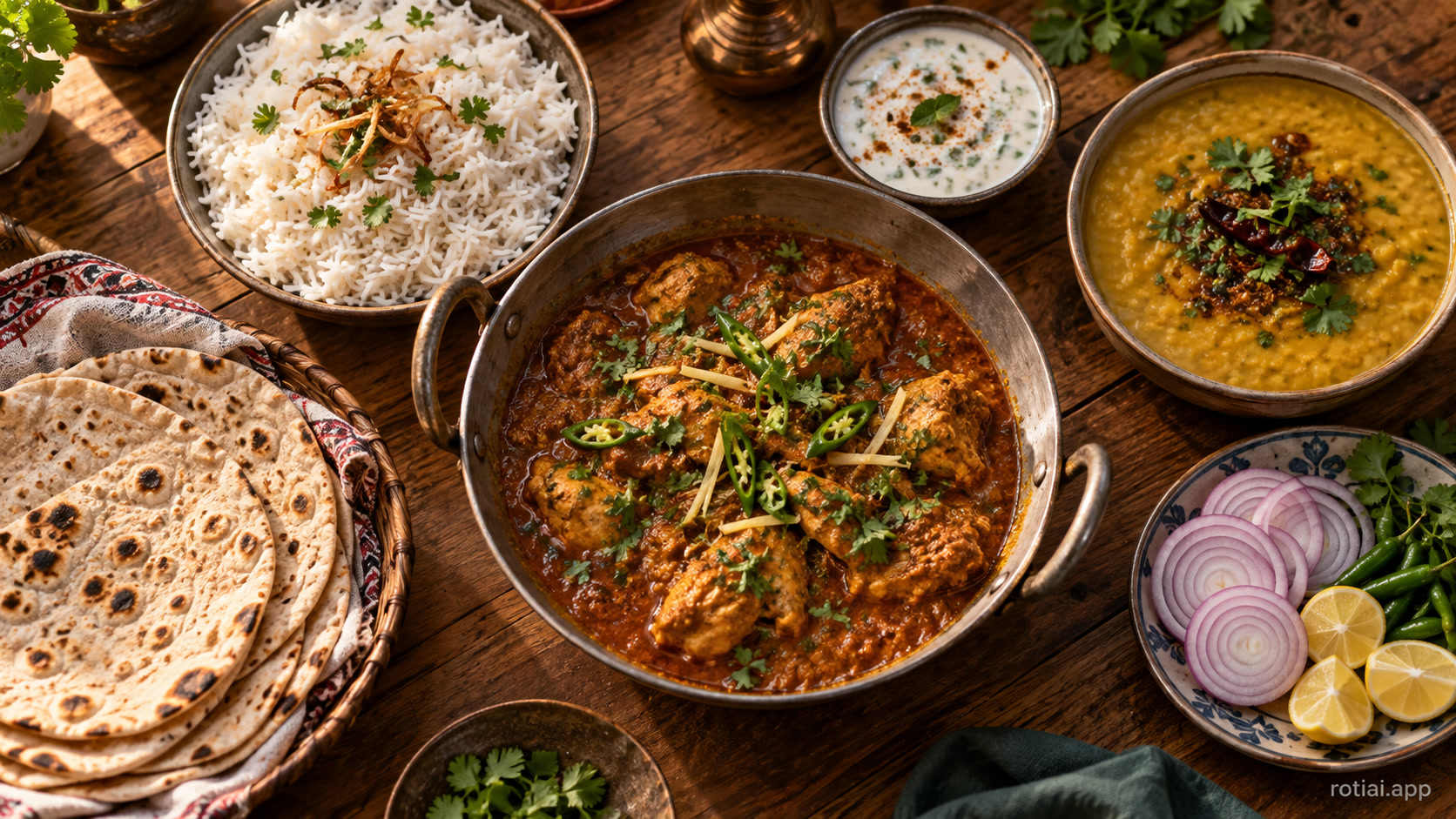
If you want authentic Pakistani recipes you can actually cook tonight — not a two-hour project, but real desi food on the table — this is your shortlist. Every dish below is a genuine home-style recipe with a full ingredients list and step-by-step method, and each one serves 4. Most are on the table in 15 to 45 minutes, using ingredients you probably already have in your kitchen.
These aren’t restaurant showpieces. They’re the everyday meals desi families actually cook: a quick anda bhurji before work, comforting daal chawal for lunch, a light bhindi sabzi with fresh roti, a slow-simmered yakhni on a cold night. From Punjabi karahis to a Bengali fish curry to Sindhi-style daal, it’s a small but honest set — 16 real recipes, each one tested and cookable, rather than a padded “100+” list you’ll never touch.
Pick one, tap the link for the full recipe, and get cooking.
Looking for a specific meal? See our Pakistani breakfast recipes and Pakistani rice recipes.
Quick-cook (under 25 minutes)
These are the weeknight lifesavers — minimal prep, fast on the stove.
- Anda Bhurji + Roti — Punjabi masala scrambled eggs with fresh roti. High-protein, low-oil, ~320 kcal a serving, and done in about 15 minutes. The classic desi breakfast that also makes a perfect quick dinner.
- Chana Chaat — a tangy chickpea chaat with tamarind dressing and chaat masala. Vegetarian, high-protein, ~330 kcal, ready in 15 minutes. An Iftar and street-snack favourite.
- Besan Cheela + Dahi — savoury gram-flour pancakes with yogurt on the side. Protein-rich, ~325 kcal for 2 cheelas with dahi, about 20 minutes. A brilliant lighter alternative to a paratha breakfast.
- Grilled Chicken + Salad — yogurt-marinated grilled chicken breast with a fresh cucumber-tomato salad. High-protein, low-carb, ~340 kcal, roughly 25 minutes of cooking (plus a short marinate).
- Aloo Anda — a hearty, budget-friendly potato-and-egg curry, ~360 kcal, about 25 minutes. Punjabi comfort food that stretches a few eggs into a full meal.
Everyday daal, rice & sabzi (25–35 minutes)
Vegetarian staples and one-pot rice — the backbone of the desi dinner table.
- Daal Chawal — Sindhi-style masoor daal with a garlic-and-cumin tarka over basmati rice. Budget, vegetarian, ~380 kcal. The ultimate desi comfort lunch.
- Masoor Daal + Brown Rice — the same soothing red-lentil daal served over wholegrain brown basmati. Lentils and wholegrain rice, ~440 kcal a serving.
- Lauki ki Sabzi + Roti — a light bottle-gourd curry with fresh roti. Vegetarian, ~350 kcal with 2 rotis. Gentle, home-style bottle-gourd curry.
- Bhindi + Roti — sautéed okra cooked dry with onions and tomatoes, served with roti. Vegetarian, ~410 kcal with 2 rotis. A beloved everyday sabzi.
- Moong Daal Khichdi — soft, creamy lentil-and-rice one-pot finished with a ghee-cumin tarka. Light and vegetarian, ~330 kcal. Perfect when you want something gentle for dinner.
- Vegetable Pulao — fragrant one-pot rice with mixed vegetables and whole garam masala. Vegetarian, ~550 kcal, about 35 minutes. Great for lunch or feeding a crowd.
Hearty curries & roasts (30–45 minutes)
When you want something richer — the meals worth the extra few minutes.
- Keema Karahi (Low-Oil) — a dry-style minced-beef karahi cooked kam tel, finished with fresh ginger. High-protein, ~460 kcal, about 40 minutes. Punjabi karahi flavour without the oil slick.
- Palak Gosht — bone-in mutton slow-cooked in blended spinach. High-protein and iron-rich, ~420 kcal, about 45 minutes. A classic Punjabi family curry.
- Fish Curry + Rice — firm white fish in a tangy mustard-oil and yogurt gravy with basmati rice. Bengali-style, high-protein and omega-rich, ~400 kcal.
- Chicken Yakhni Soup — a clear, slow-simmered bone-in chicken broth. High-protein, low-carb, about 190 kcal a bowl. Classic sardi (winter) comfort and a go-to when someone’s under the weather.
- Tandoori Chicken + Raita — oven-roasted spiced yogurt-marinated chicken with a cooling cucumber-mint raita. High-protein, low-carb, ~380 kcal. (Best marinated ahead — at least 4 hours in the fridge.)
Regional specialities from the RotiAI catalog
Ten more real recipes from the app’s regional “Desi Twist” collection — Sindhi, Pashtun, Bengali, and South Indian dishes, each with the same full ingredients-and-steps treatment. Every one serves 4.
- Sindhi Sai Bhaji — spinach, dill, and fenugreek mashed with chana daal and finished with a cumin-garlic tarka. Vegetarian, high-fibre, ~290 kcal, about 50 minutes.
- Sindhi Koki — a thick, crisp onion-and-coriander flatbread cooked slowly with ghee. The classic Sindhi nashta, ~340 kcal per koki, about 30 minutes.
- Pashtun Namkeen Gosht — bone-in mutton cooked with just garlic, salt, tomato, green chilli, and black pepper. High-protein, ~560 kcal, about 80 minutes.
- Kabuli Pulao — mutton and basmati steamed in spiced stock with sweet carrots and raisins on top. The Pashtun celebration rice, ~610 kcal, about 90 minutes.
- Chapli Kebab — Peshawar’s wide, flat, coarse-mince kebab with pomegranate seeds and crushed coriander, shallow-fried crisp. High-protein, ~430 kcal for two, about 40 minutes.
- Bengali Shorshe Mach — fish steaks simmered in a pungent mustard-seed paste with green chilli and mustard oil. High-protein, ~390 kcal, about 35 minutes.
- Bhuna Khichuri — fluffy Bengali rice and roasted moong daal fried in ghee with whole spices, potato, and cauliflower. Vegetarian, ~410 kcal, about 45 minutes.
- Masala Dosa with Sambar — crisp fermented-rice crêpes with a spiced potato filling and hot toor daal sambar. Vegetarian, ~470 kcal, about 55 minutes.
- Idli Sambar — soft steamed rice-and-lentil cakes with a tangy vegetable sambar. Vegetarian, ~330 kcal, about 40 minutes.
- Pepper Rasam Rice — a thin, peppery tamarind broth poured over hot rice. Low-oil, vegetarian, ~350 kcal, about 35 minutes.
How to build a full desi meal from these
Mix and match by how much time and appetite you have:
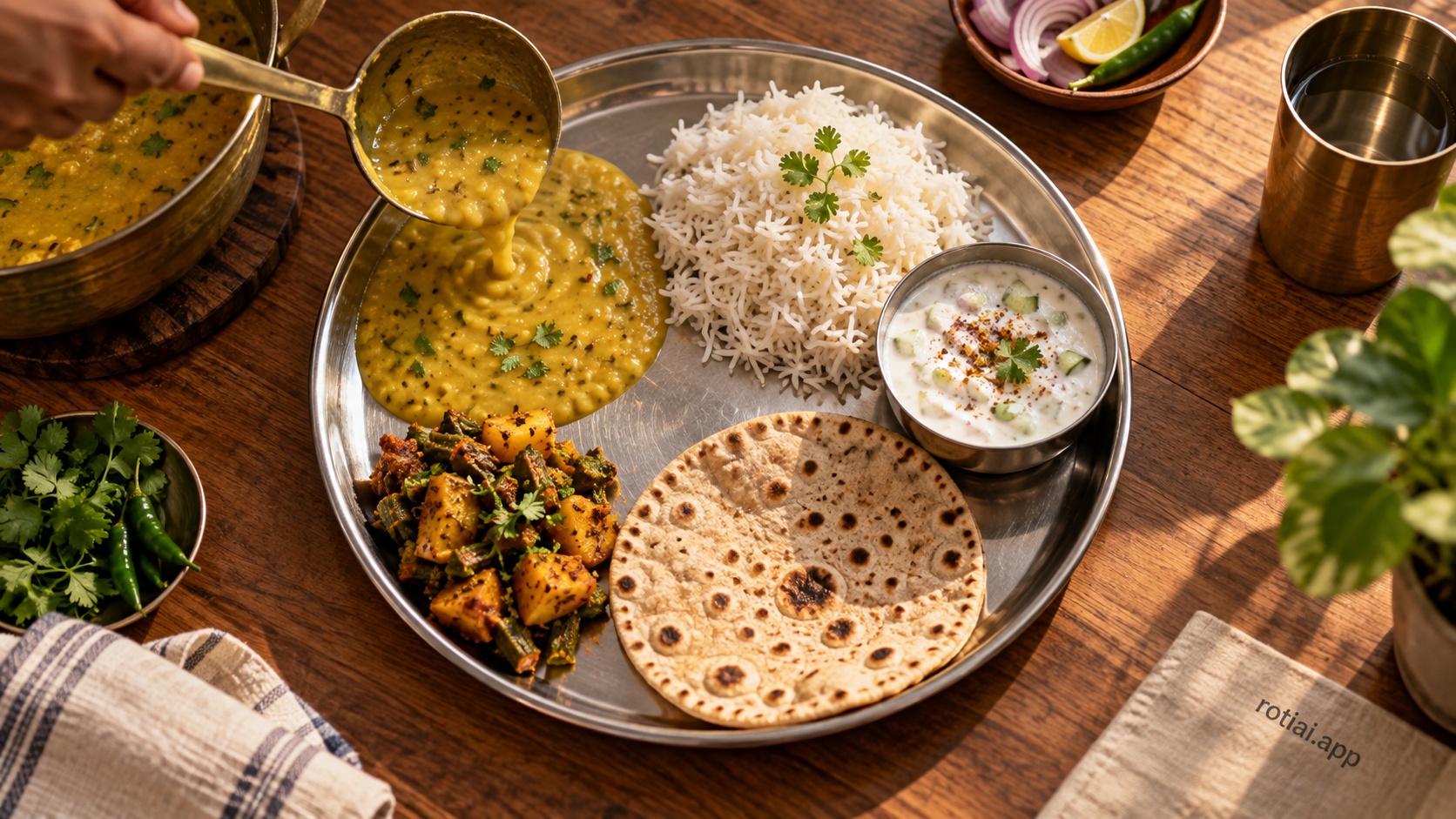
- Fast weeknight dinner: Anda Bhurji + Roti, or Aloo Anda with roti.
- Light and healthy: Grilled Chicken + Salad, or Chicken Yakhni Soup, or Lauki ki Sabzi.
- Classic comfort lunch: Daal Chawal, or Moong Daal Khichdi.
- Weekend or guests: Keema Karahi or Palak Gosht with fresh roti and a Vegetable Pulao on the side, finished with Tandoori Chicken and raita.
Every recipe above is written for 4 servings, so scaling up for a bigger family is simply a matter of doubling.
What makes a recipe “authentic” Pakistani cooking
Pakistani home cooking isn’t defined by a single fixed spice list — it’s defined by technique and instinct passed down in the kitchen. A few threads run through nearly every dish above:
- Bhunna (frying out the masala). Onions, ginger-garlic, tomatoes, and dry spices are cooked down in oil until the raw smell disappears and the oil starts to separate at the edges. Skip this step and rush straight to adding water, and the dish tastes flat no matter how many spices went in — you can see this in the Keema Karahi and Palak Gosht methods.
- Whole spices before ground spices. Cumin seeds, whole coriander, black peppercorns, and cardamom go into hot oil first to bloom before onions or ground masala are added — the base of the Chicken Yakhni Soup and Vegetable Pulao.
- Kam tel (low-oil) as a default, not a diet trick. A lot of home cooking in Pakistan is already lighter than restaurant versions — the karahi at a wedding hall uses far more oil than the one in a home kitchen. Several recipes here (Bhindi, Besan Cheela, Keema Karahi) are written the way most households actually cook, not stripped down for calories.
- Regional variation is real, not decorative. Punjabi cooking (Keema Karahi, Palak Gosht, Bhindi) tends toward richer, tomato-and-onion-heavy gravies. Sindhi cooking (Daal Chawal) leans on a simple tarka finish. Bengali-style fish curry uses mustard oil and a sharper, more sour profile. None of these are “more authentic” than the others — they’re different regional grammars for the same language.
Common beginner mistakes across desi cooking
- Adding water too early. If the masala hasn’t released its oil yet, adding water boils the spices instead of frying them, and the curry tastes raw and thin. Wait for the bhunna stage.
- Not resting roti dough. A 15-minute rest (see the Bhindi + Roti method) relaxes the gluten so the roti puffs properly instead of turning tough and chewy.
- Over-salting daal or soup early. Lentils and broths reduce as they cook, concentrating the salt. Season lightly at the start and adjust at the end — this matters most for the Chicken Yakhni Soup, where the broth reduces over 40+ minutes.
- Using wet vegetables. Okra, in particular, turns slimy if it isn’t dried thoroughly before cooking — a small step that makes or breaks the Bhindi + Roti recipe.
Storage and meal-prep notes for desi cooking
Most curries and daals in this list actually taste better the next day, once the spices have had time to settle into the gravy — keema, palak gosht, and daal chawal all reheat well from the fridge (3-4 days) or freezer (up to 2 months) in an airtight container. Rice-based dishes like Vegetable Pulao and Moong Daal Khichdi reheat best with a splash of water to loosen the grains. Fried or crisp items — Anda Bhurji, Besan Cheela, roti — are best made fresh or reheated briefly in a dry pan rather than a microwave, which turns them rubbery.
FAQ: 16 Authentic Pakistani Recipes You Can Cook Tonight recipe
Which of these recipes is best for a complete beginner?
Anda Bhurji + Roti or Chana Chaat. Both use a short ingredient list, forgiving technique, and are hard to get wrong on a first attempt.
What’s the difference between a “kam tel” recipe and a regular one?
Kam tel simply means less oil than the restaurant or wedding-hall version of the same dish — usually 2-3 tablespoons instead of a quarter cup or more — without changing the spicing or method.
Can I make these dishes if I don’t have every spice listed?
Most recipes here use a short, common spice list (cumin, coriander, turmeric, garam masala). Missing one or two rarely ruins the dish; missing the technique (bhunna, resting dough, drying okra) matters more.
Are these recipes halal by default?
Yes — no pork or alcohol appears in any recipe on RotiAI, and meat-based recipes assume halal-sourced meat, as is standard in Pakistani home cooking.
Cook 16 Authentic Pakistani Recipes You Can Cook Tonight smarter with RotiAI
Every one of these recipes lives in the RotiAI app with its full ingredients and steps — and RotiAI computes the exact kcal for any dish and portion, so you’re never guessing. Want a whole week of desi meals planned around your goals? RotiAI’s Sehat Mode builds a personalized weight-loss or maintenance meal plan from recipes just like these, and the Rasoi feed keeps region-based ideas coming. Cook tonight, and let the app do the calorie math.


