 RotiAI

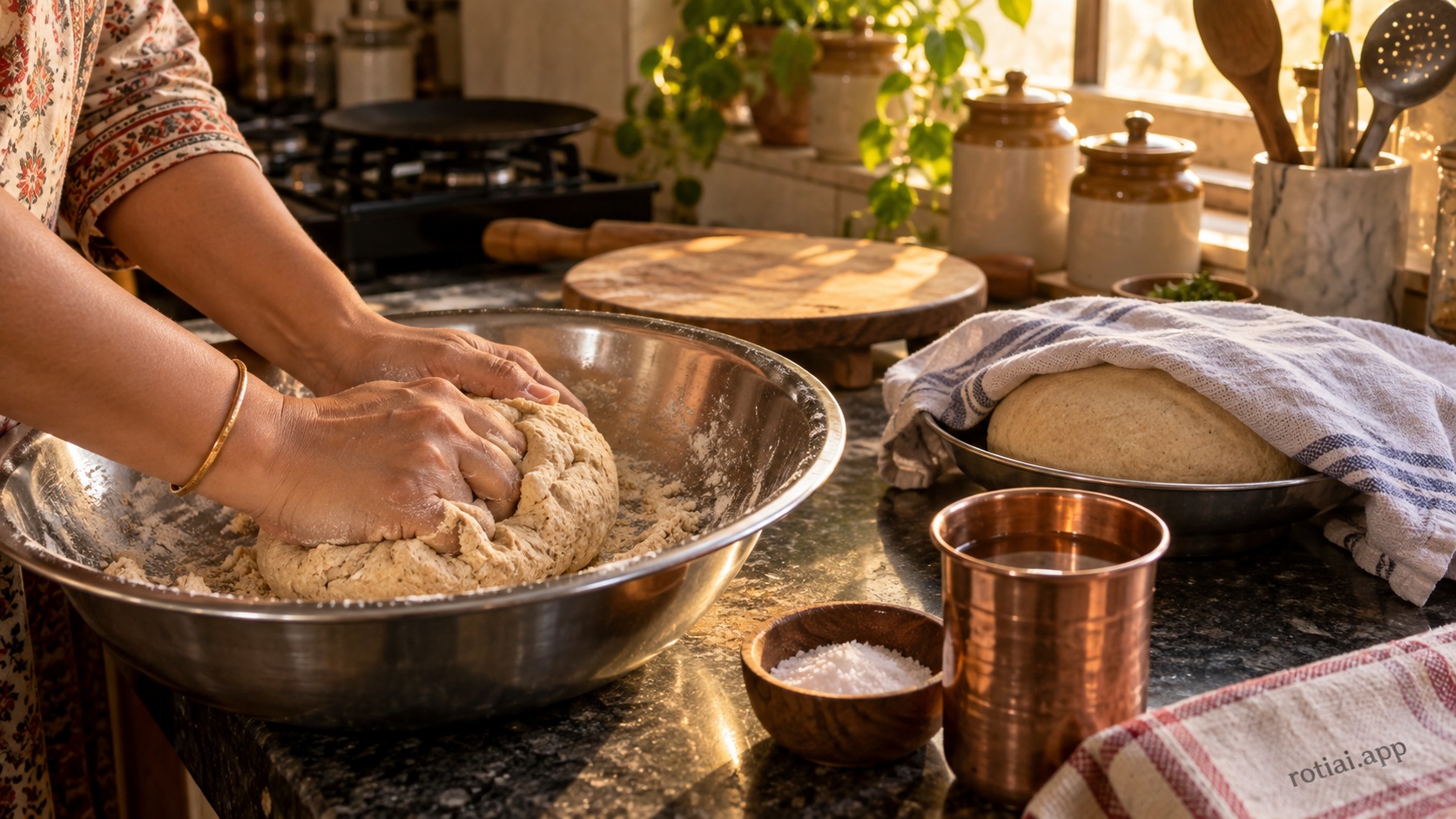
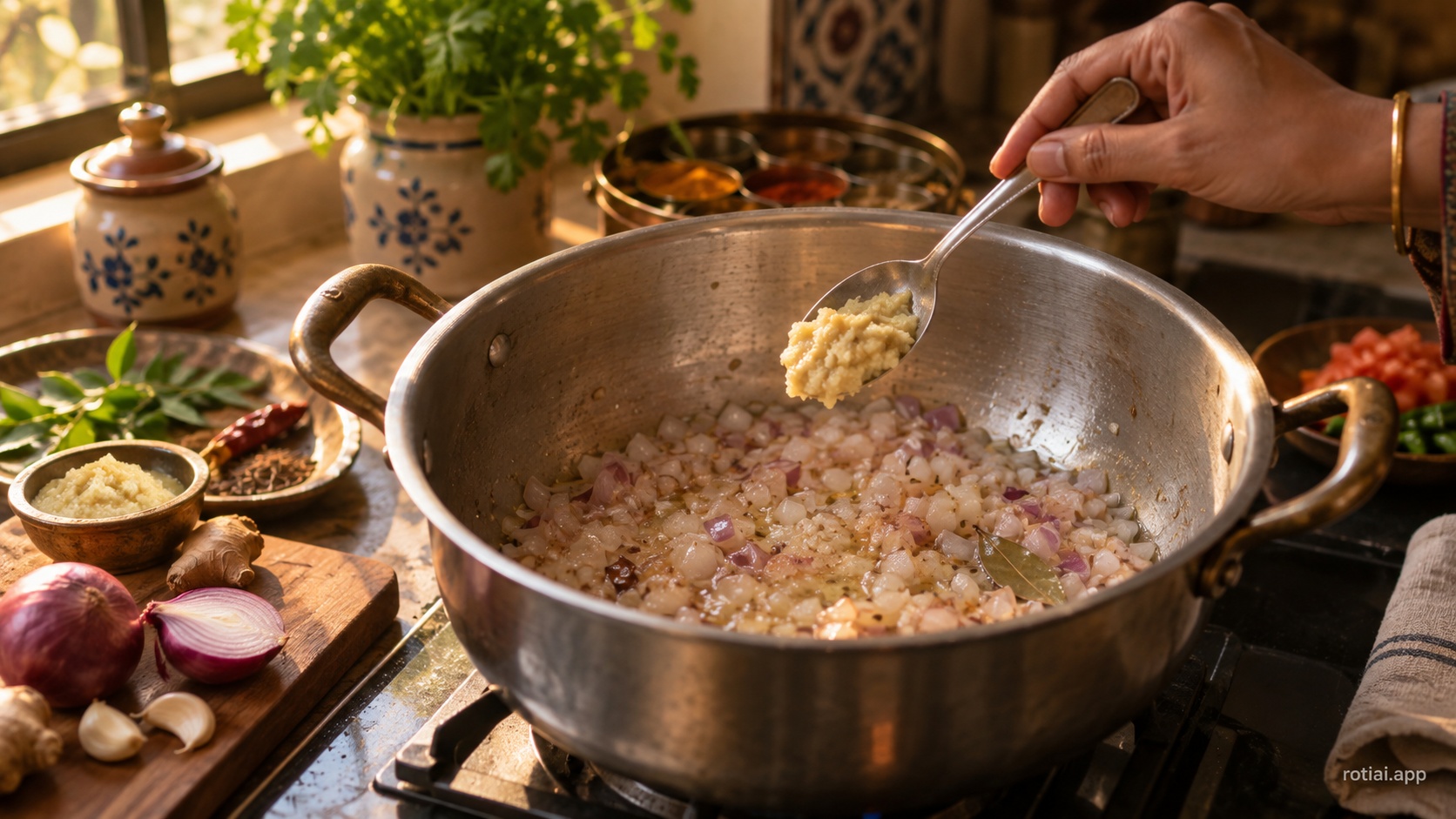
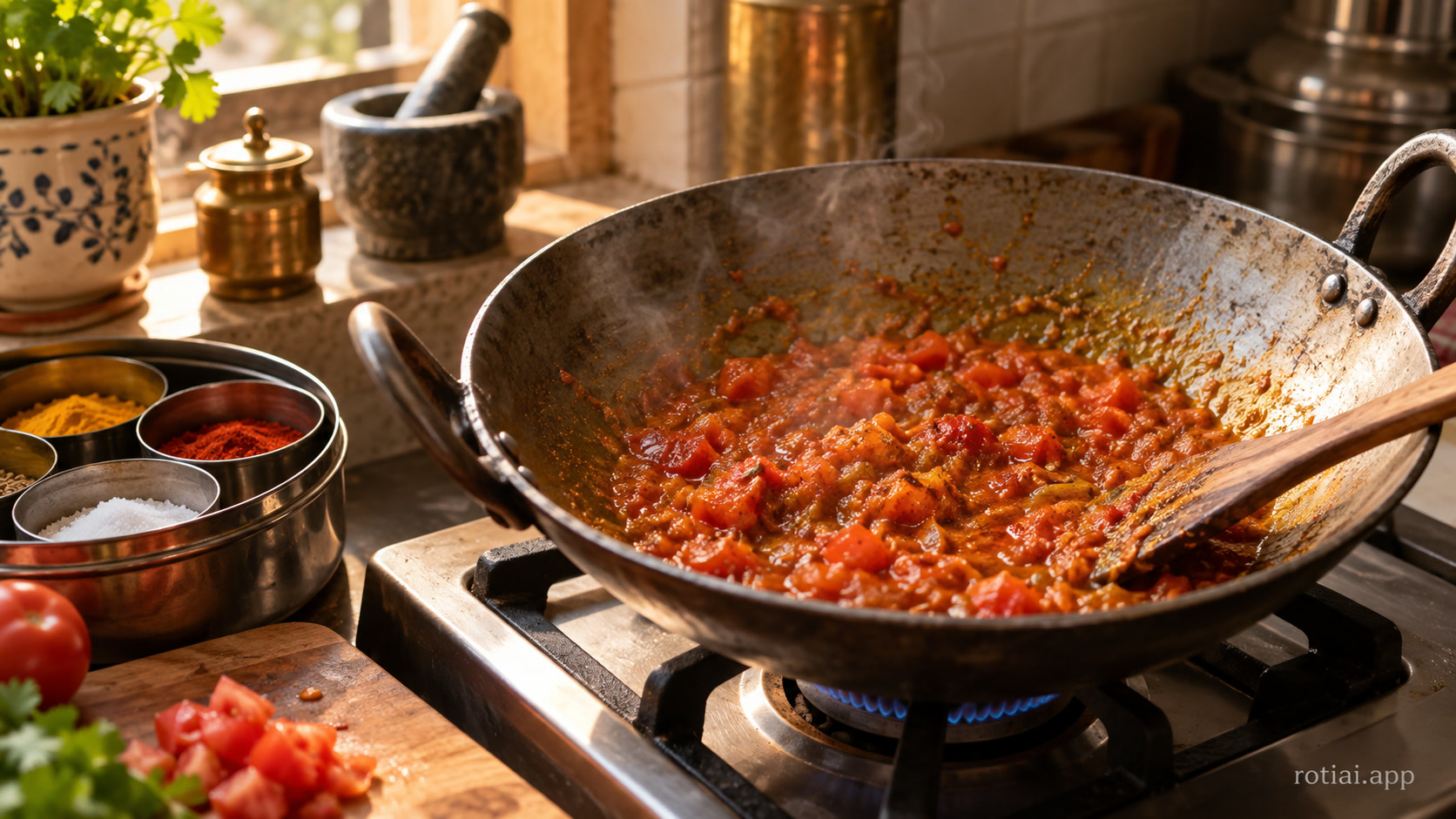
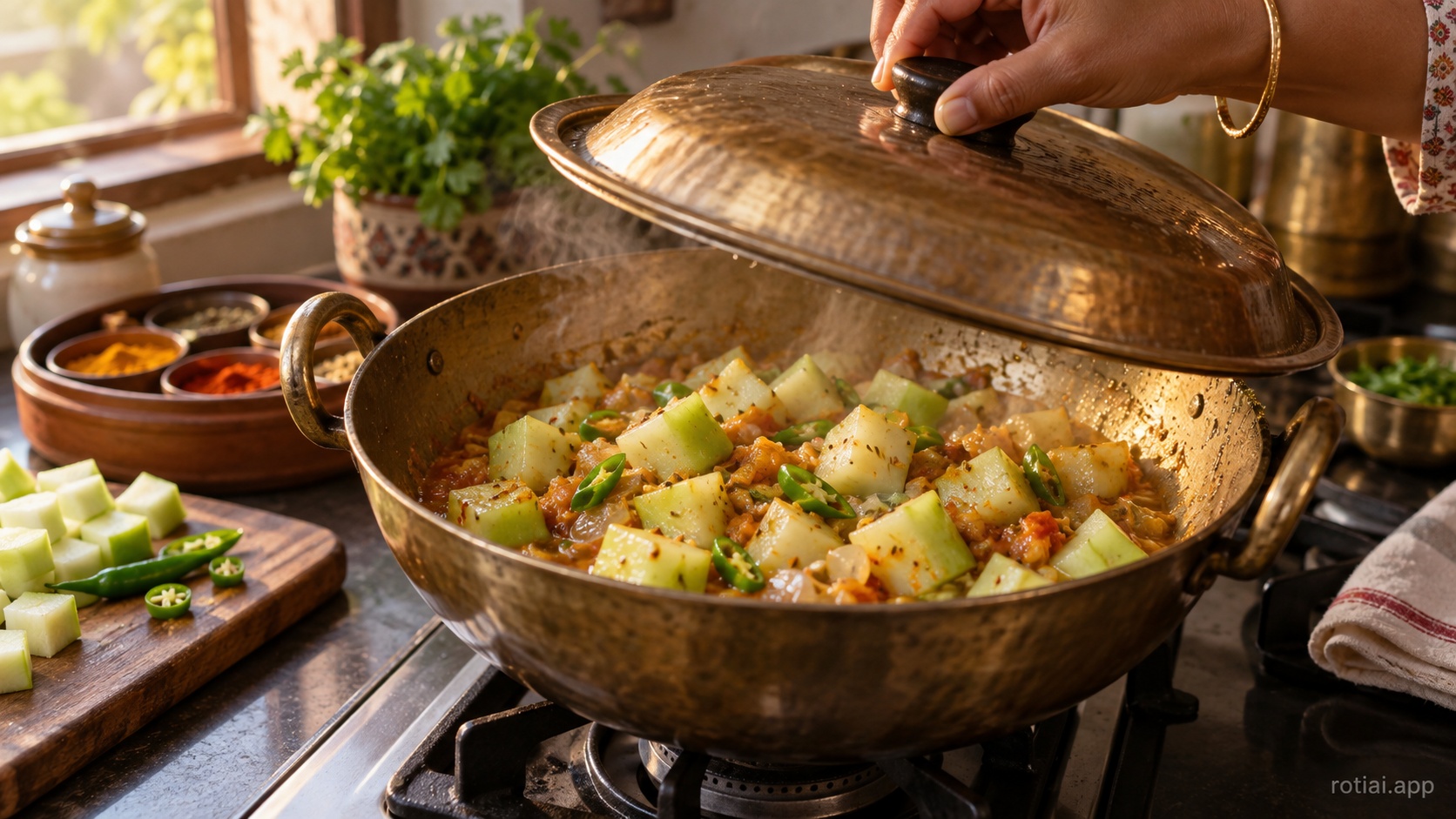
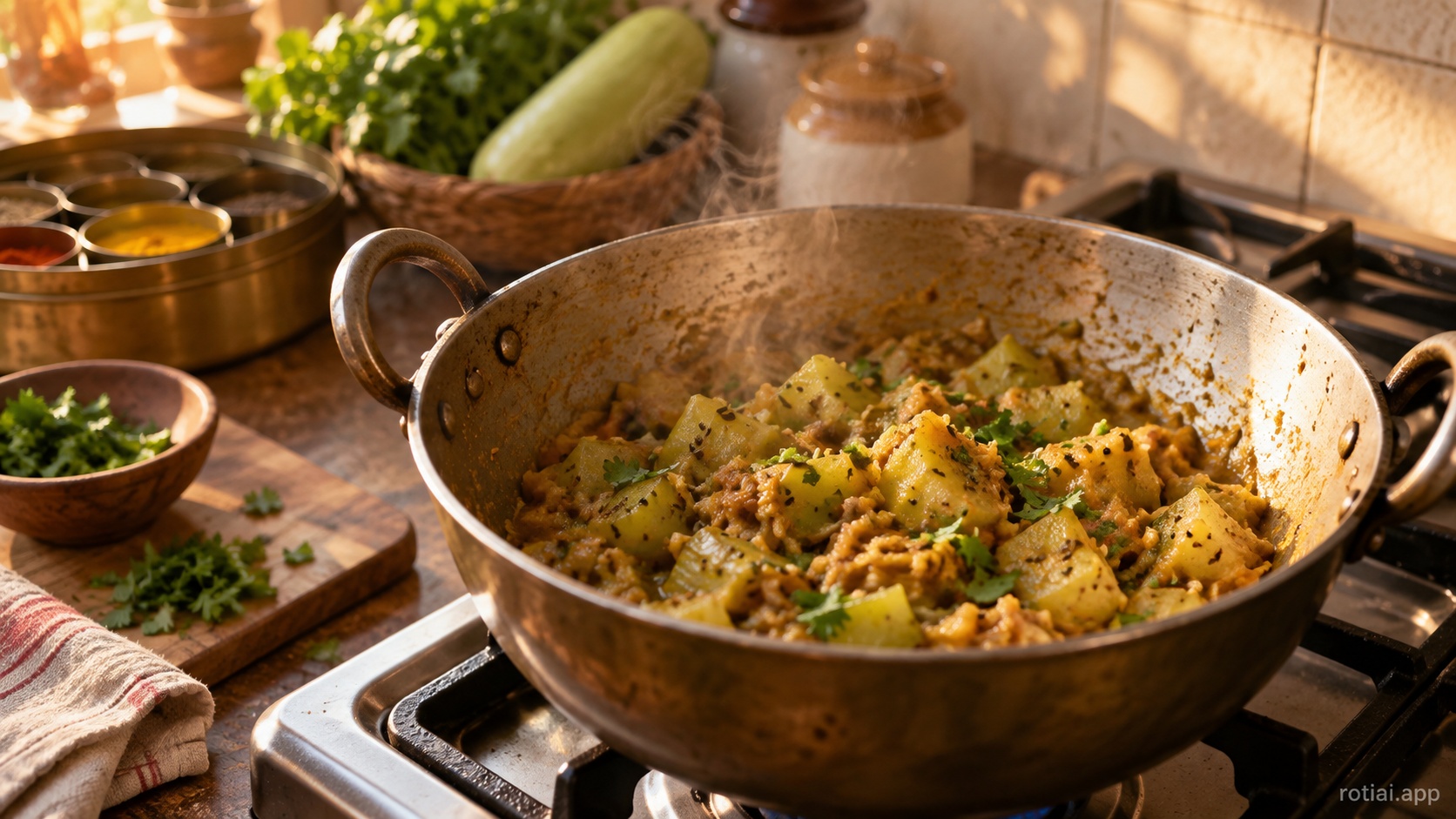
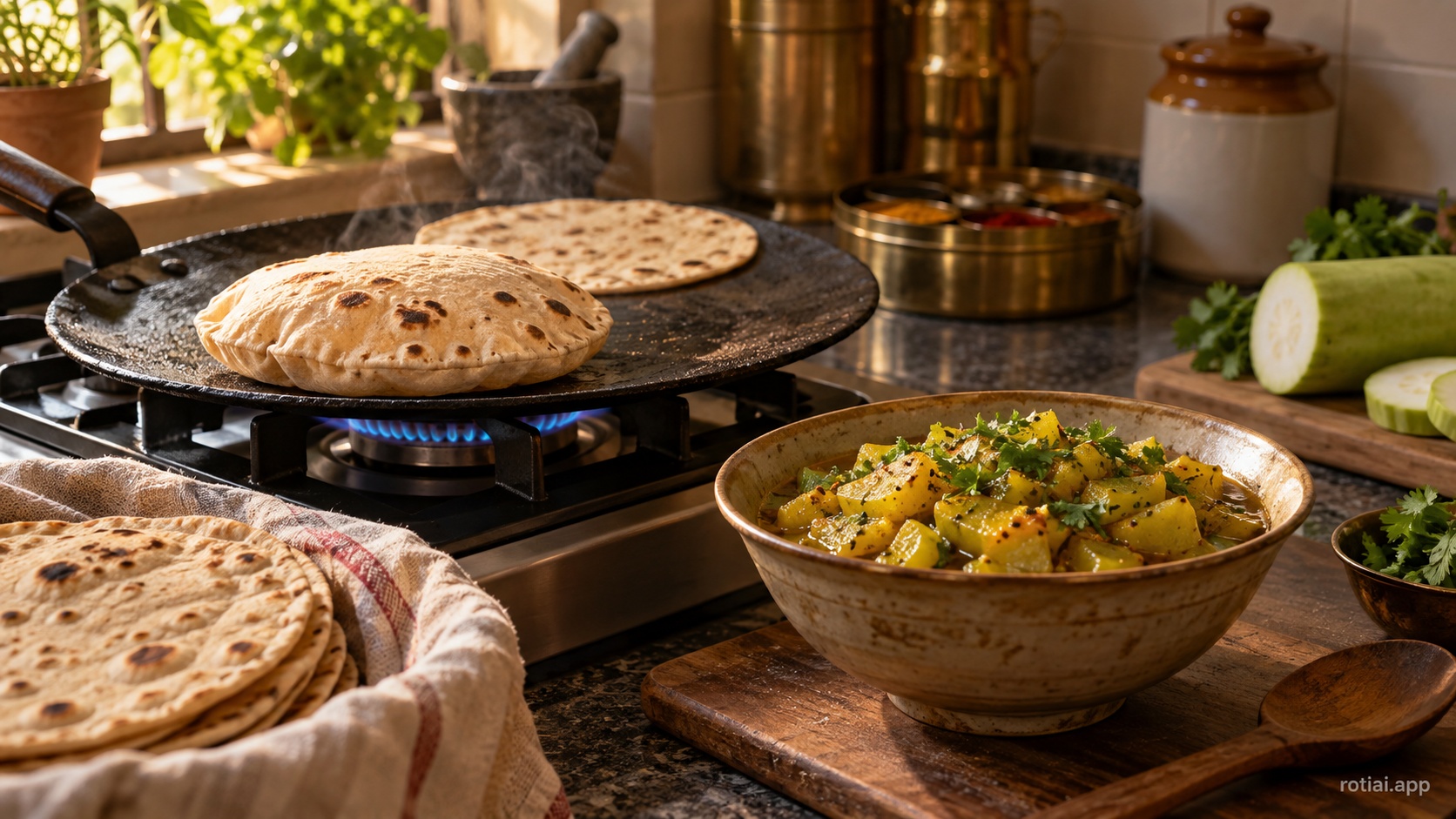
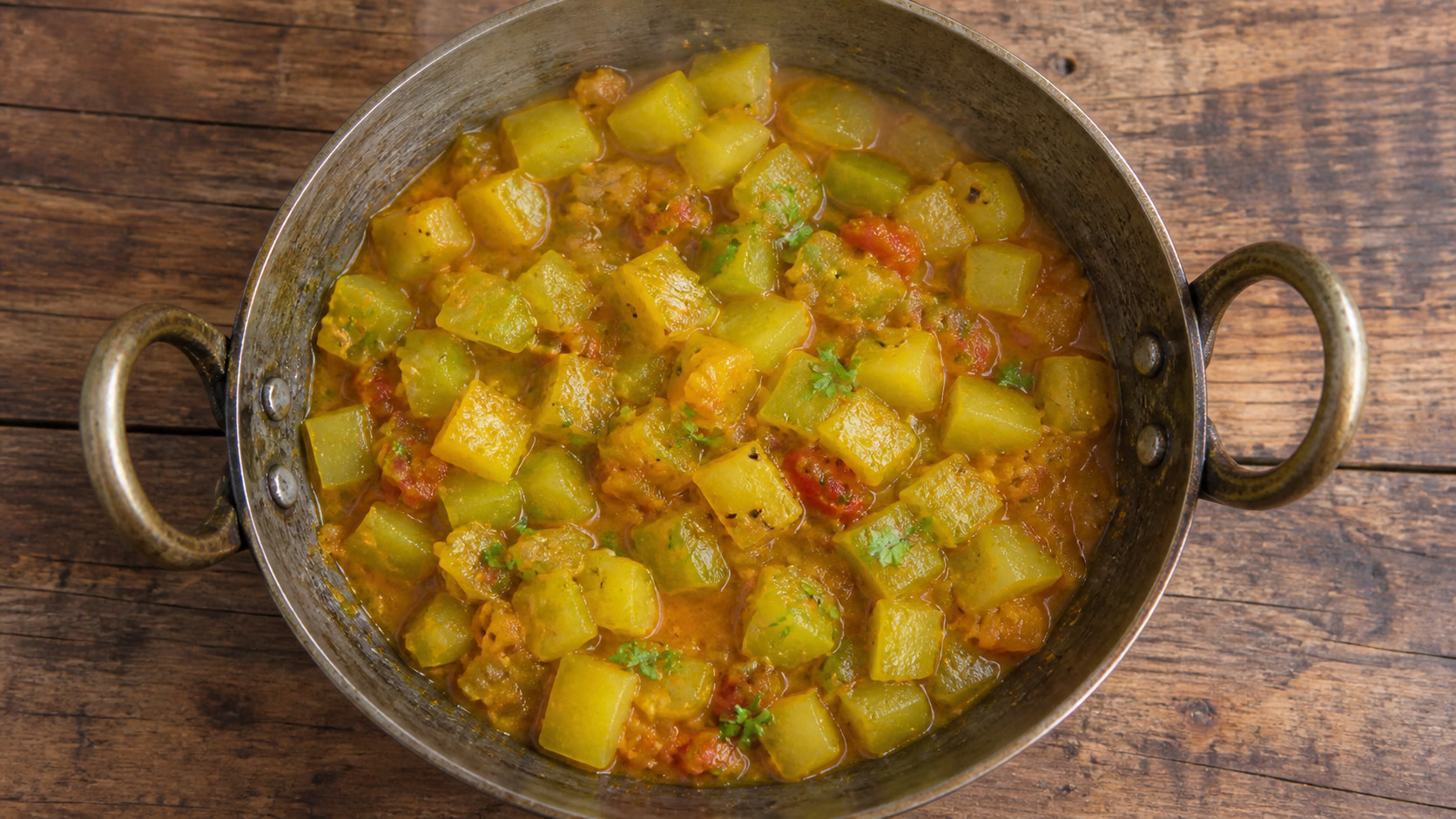
Lauki ki sabzi (لوکی کی سبزی) with fresh roti is the kind of everyday Punjabi home cooking that doesn’t need much fanfare — just bottle gourd simmered gently in its own juices with a simple tomato-onion masala. This Lauki ki Sabzi Roti recipe serves 4, takes about 30 minutes start to finish, and comes to roughly 350 calories a serving (a quarter of the sabzi plus 2 rotis), a light-tasting weeknight dinner.
In Punjabi households, lauki ki sabzi is the kind of dish mothers make when they want something light and easy on the stomach — comfort food that doesn’t sit heavy, paired with hot rotis straight off the tawa.
Why this Lauki ki Sabzi + Roti recipe works
Lauki is over 90% water, which is exactly why the “cover and cook in its own juice” step matters — you’re not adding extra liquid, you’re letting the vegetable release what it already has. That’s what keeps this dish light instead of watery or oily. A few things that make the difference between an average pot and a genuinely good one:
- Cut the lauki into even, medium cubes. Too small and it turns to mush before the masala develops; too large and the centre stays undercooked while the edges break down.
- Don’t skip the uncovered finish. The last 3–5 minutes with the lid off is what concentrates the flavour and gives the sabzi body instead of leaving it soupy.
- Taste the lauki before you buy it if you can — an older, more mature bottle gourd can turn bitter. A quick nibble of the raw skin end will tell you.
- Let the masala actually split from the oil in step 3 before adding the lauki. Rushing this stage is the single biggest reason home versions taste flat.
How to serve Lauki ki Sabzi + Roti
Serve the sabzi piping hot with fresh rotis straight off the tawa, and a side of plain yogurt or a simple onion-tomato salad if you like a bit more crunch on the plate.
Common Lauki ki Sabzi + Roti recipe mistakes to avoid
- Adding water. Lauki releases plenty on its own; pouring in extra just dilutes the masala and turns the dish watery.
- Skipping the peel-and-deseed step. If the lauki is older, the seeds can be tough and the skin bitter — always peel fully and scoop out any thick seed core before cubing.
- Rushing the onion-tomato base. A masala that hasn’t properly cooked down leaves a raw, sour edge that lingers under the vegetable.
- Overcrowding the tawa when making roti, which cools it down and leaves the rotis pale and chewy instead of lightly charred and soft.
Lauki ki Sabzi + Roti recipe variations
- Lauki chana daal: stir in a half cup of pre-soaked chana daal along with the lauki for a heartier, more filling version that’s still fully vegetarian.
- Lauki kofta: grate the lauki instead of cubing it, mix with besan and spices, shape into koftas, shallow-fry, and simmer in the same tomato-onion gravy for a richer curry night option.
- Dry version (lauki bhujia): skip the covered simmer and instead sauté the cubes uncovered on medium heat until just tender, for a drier side dish that pairs well with daal-chawal instead of roti.
- Add methi or palak leaves in the last 5 minutes of cooking for extra iron and a slightly bitter, more complex flavour profile.
Storing and reheating leftover Lauki ki Sabzi + Roti
Lauki ki sabzi keeps well in an airtight container in the fridge for up to 3 days. Because the vegetable holds a lot of moisture, it will release a bit more liquid as it sits — that’s normal, not spoilage. Reheat gently on the stovetop over low heat with the lid on, stirring occasionally, rather than microwaving on high, which can make the lauki go rubbery at the edges while the centre stays cold.
The sabzi also freezes reasonably well for up to a month, though the texture softens further on thawing, so it’s best suited to freezing if you plan to eat it as a curry rather than a firmer side dish. Keep roti dough and cooked roti separate from the sabzi in storage — roti dries out fast in the fridge, so it’s best made fresh or reheated briefly on a hot tawa just before serving.
FAQ: Lauki ki Sabzi + Roti recipe
Is lauki ki sabzi good for weight loss?
It can be. Bottle gourd is low in calories and high in water (14 kcal per 100 g raw, USDA). In this recipe the 3 tbsp of oil is about 90 kcal of each serving, so cutting the oil is the easiest saving; the two rotis add about 205 kcal. See our roti vs rice for weight loss guide for how dishes like this fit into a broader plan.
Why is my lauki ki sabzi bitter?
Bitterness almost always comes from the lauki itself, not the cooking. Older or overripe bottle gourds develop a natural bitterness (from cucurbitacins) that no amount of masala can mask. Always taste a small raw piece before cooking a large batch.
Can I make this without tomatoes?
Yes — some households make a lighter, tomato-free version using just onion, ginger-garlic, and turmeric, which results in a paler, milder sabzi. It’s a common variation when tomatoes are out of season or expensive.
What can I serve instead of roti?
Plain steamed rice or a light daal-chawal combo both work well if you want a change from roti — see our daal chawal recipe for a pairing idea.
Where the calories in this lauki sabzi recipe come from
These numbers are estimates, not laboratory values. We converted the ingredient list to grams (bottle gourd 1 kg peeled, taken as 900-1,000 g after deseeding; onion about 110 g; tomatoes 2 medium at about 120 g each; oil 3 tbsp = about 41 g; atta 2 cups at about 120 g per cup, so about 30 g per roti for 8 rotis) and summed per-100 g values from USDA FoodData Central: calabash gourd raw (FDC 169232), whole-grain wheat flour (FDC 168893), onion (FDC 170000), tomato (FDC 170457) and peanut oil for cooking oil (FDC 171410). Ginger-garlic paste and spices are our own estimates. The result is about 350 kcal per serving, likely range 305-385; the breakdown is on the lauki sabzi roti calorie page. This is general nutrition information, not medical or dietary advice.
Cook Lauki ki Sabzi + Roti smarter with RotiAI
Want to know exactly how many calories are in your everyday desi meals? RotiAI can crunch the numbers for dishes like this one, and Sehat Mode turns that into a personalized diet plan built around your actual cooking — browse the Rasoi recipe feed for more recipes worth adding to your rotation, or check the full calorie breakdown for lauki ki sabzi and roti.


Comments
to leave a comment — same account as the RotiAI app.
Check your email for a sign-in link.
Commenting as ·
Loading comments…