 RotiAI

Lauki ki sabzi with roti (لوکی کی سبزی + روٹی) is about 350 calories per serving: bottle gourd cooked in a tomato-onion masala, served with two whole-wheat rotis made from 30 g of atta each. Lauki is mostly water and very low in calories, so the oil and the rotis make up almost all of the total.
Quick answer
- Calories: ~350 kcal per serving (likely range 305-385)
- Serving: one quarter of the sabzi (about 240 g of raw lauki, about 3/4 tbsp of oil) plus 2 rotis from 30 g of atta each
- Serves: 4 · Cook time: 30 min
- Region: Punjabi · Tags: vegetarian
Calories in Lauki ki Sabzi + Roti: the count
~350 calories per serving. The recipe makes four servings from 1 kg of peeled bottle gourd, 1 onion, 2 tomatoes, 1 tbsp of ginger-garlic paste and 3 tbsp of oil, plus 8 rotis from 2 cups (about 240 g) of atta. One serving is a quarter of the sabzi and two rotis.
| Part of the plate | Approx. kcal |
|---|---|
| Lauki, onion, tomato, ginger-garlic and spices | ~60 |
| Oil that ends up in the serving | ~90 |
| Lauki sabzi alone | ~150 (135-165) |
| 2 rotis (60 g atta) | ~205 |
| Total | ~350 (305-385) |
What drives the lauki sabzi roti calorie count
- Lauki is almost free. 1 kg of raw bottle gourd is only about 140 kcal for the whole pot (14 kcal per 100 g, USDA).
- Oil is the largest part of the sabzi. 3 tbsp is about 41 g, or roughly 365 kcal for the pot. Lauki is cooked in its own juice and the sauce is eaten, so we assume 90-100% of the oil reaches the plate.
- Roti size matters. We assume 30 g of atta per roti (2 cups of flour, 8 rotis), which is a medium roti.
Lauki ki Sabzi + Roti macros at a glance
Per serving, the plate is roughly 61% carbohydrate, 28% fat and 11% protein by calories. The rotis supply most of the carbohydrate and protein, and the oil supplies most of the fat. This is not a low-carbohydrate meal because of the rotis; the sabzi alone has about 14 g of carbohydrate a serving.
How Lauki ki Sabzi + Roti fits a desi diet
At ~350 calories, lauki ki sabzi + roti is a moderate, high-volume vegetarian meal that suits a weight-loss plan if you watch the oil. To go lighter, use less oil, or have one roti and a bigger helping of sabzi; a larger helping of sabzi also brings more of its oil, so it is not free. For more protein, add a bowl of daal or some yogurt.
Lauki ki Sabzi + Roti: full macro breakdown
A ~350 kcal serving (a quarter of the sabzi plus 2 rotis) breaks down approximately like this:
| Macro | Amount (likely range) | % of calories |
|---|---|---|
| Protein | 10 g (9-12 g) | ~11% |
| Fat | 12 g (11-12.5 g) | ~28% |
| Carbohydrates | 57 g (49-63 g) | ~61% |
| Fibre | 9 g (8-10 g) | n/a |
Percentages use 4/4/9 kcal per gram, so they add to 100% of that sum; USDA’s energy figure for whole-wheat flour is slightly lower, so the grams multiply out to a little more than 350 kcal. Fibre comes from the USDA values for the ingredients. Most of the protein and carbohydrate come from the two rotis; bottle gourd is about 95% water and adds very little.
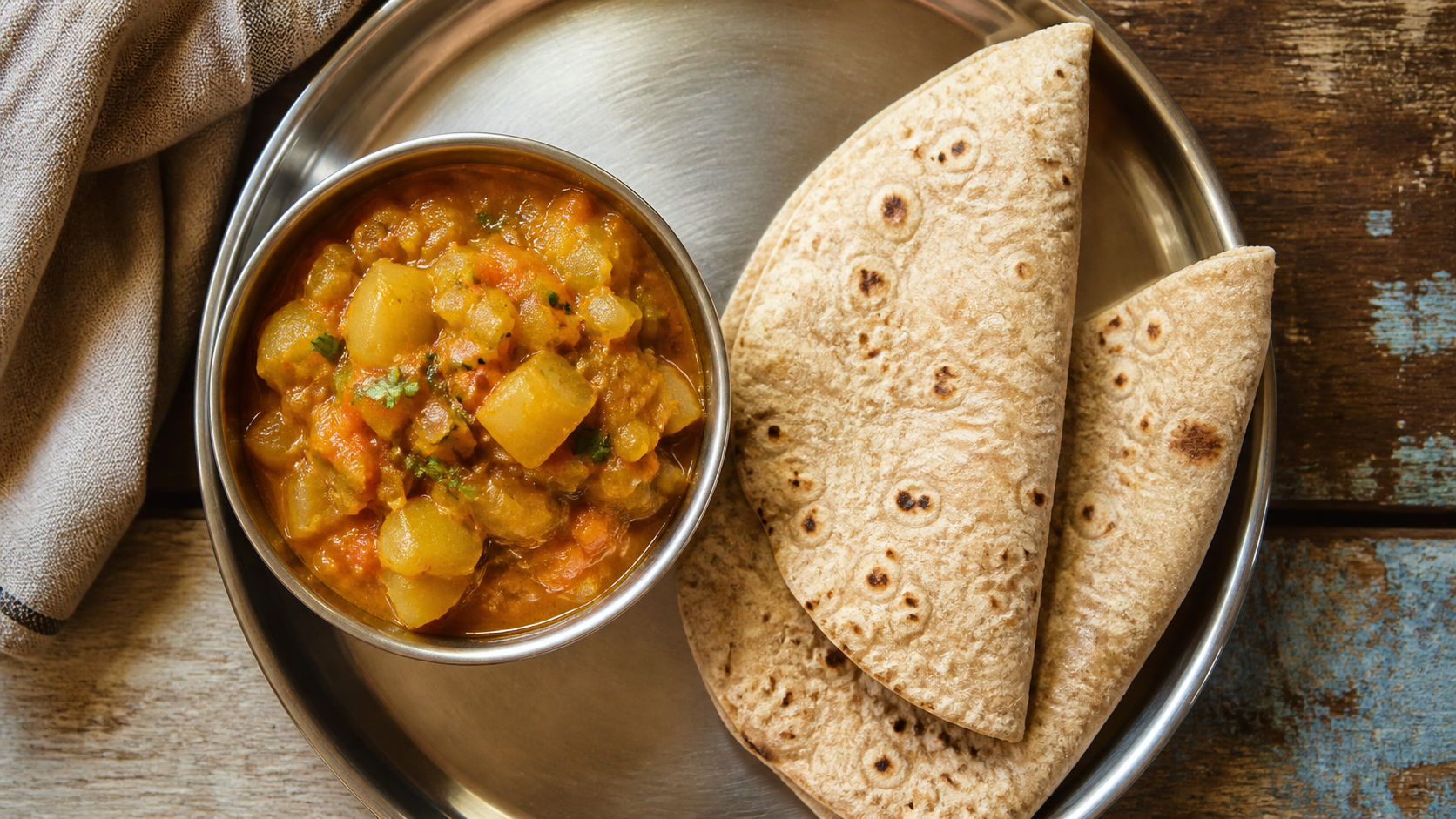
Lauki ki Sabzi + Roti portion size comparison
A “portion” of sabzi here is one quarter of the pot, about 150 kcal.
| Portion | Approx. weight/count | Calories |
|---|---|---|
| Sabzi only (no roti) | 1 portion (1/4 of the pot) | ~150 kcal |
| Sabzi + 1 roti | 1 portion + 1 roti (30 g atta) | ~250 kcal |
| Sabzi + 2 rotis (standard) | 1 portion + 2 rotis | ~350 kcal |
| Sabzi + 3 rotis | 1 portion + 3 rotis | ~455 kcal |
| Large sabzi portion + 2 rotis | 1.5 portions + 2 rotis | ~425 kcal |
| Light-oil version + 2 rotis | 1 tsp oil in the pot instead of 3 tbsp | ~265 kcal |
A bigger helping of sabzi also brings more of the oil, so it adds calories, though fewer than a roti would.
Tips for a lighter Lauki ki Sabzi + Roti
- Cut the oil. Going from 3 tbsp to 1 tbsp in the pot saves about 60 kcal per serving. A non-stick pot helps.
- Pressure-cook or steam the lauki with the tomato and onion, then finish with a teaspoon of oil.
- Add a handful of moong or chana daal for protein and fibre; it adds some calories, which we have not included.
- Choose smaller, thinner rotis (less atta per roti) if roti portion control is your main lever.
- Drop to one roti if you are cutting calories; that saves about 100 kcal.
Pair this dish with bhindi roti or chana chaat for other vegetarian days, and see the full recipe for the step-by-step method. For roti calorie math specifically, how many calories in 1 roti breaks down the number this dish depends on most.
Frequently asked questions about Lauki ki Sabzi + Roti calories
Is lauki ki sabzi good for weight loss?
It can be. Bottle gourd is mostly water (14 kcal per 100 g raw, USDA), so a big portion adds few calories. In this recipe the oil is the larger part of the sabzi’s calories, so the amount of oil and the number of rotis control the total.
Does lauki help reduce bloating or aid digestion?
Bottle gourd is soft when cooked and is commonly eaten as a gentle, light vegetable in South Asian households. We have not verified specific digestive claims.
Can I make this dish without any oil?
You can steam or pressure-cook the lauki with tomatoes, onion and spices and finish with just a teaspoon of oil. That cuts about 80 kcal per serving (from about 90 kcal of oil to about 10 kcal), at the cost of a flatter taste.
Is lauki ki sabzi enough protein for a full meal?
Not on its own. A serving has about 10 g of protein, most of it from the rotis. Adding a bowl of daal, a boiled egg or a side of yogurt makes it a more balanced plate.
How many calories are in lauki ki sabzi without roti, for tracking purposes?
About 150 kcal for one quarter of this recipe (range 135-165), of which about 90 kcal is oil. The two rotis add about 205 kcal, which gives ~350.
How we calculate lauki sabzi roti calories
These numbers are estimates, not laboratory values. We converted the recipe to grams (bottle gourd 1 kg peeled, taken as 900-1,000 g after deseeding; onion 1 medium at about 110 g; tomatoes 2 medium at about 120 g each; oil 3 tbsp = 45 ml = about 41 g; atta 2 cups at about 120 g per cup, so about 30 g per roti for 8 rotis) and summed per-100 g values from USDA FoodData Central: calabash (white-flowered bottle) gourd, raw (FDC 169232), whole-grain wheat flour (FDC 168893), onion (FDC 170000), tomato (FDC 170457) and peanut oil for cooking oil (FDC 171410). Ginger-garlic paste and spices are our own small estimates (about 30 kcal for the whole pot). We assume 90-100% of the oil reaches the servings and 25-32 g of atta per roti, which gives the range shown. Your oil, roti size and cup measure will move the result, so weigh your food for the closest figure. This is general nutrition information, not medical or dietary advice.
Related reading on Lauki ki Sabzi + Roti
- Lauki ki sabzi + roti recipe: the full step-by-step for this dish
- Bhindi + roti: the other sabzi-and-roti plate in this hub
- How many calories in 1 roti: size your roti so the total is accurate
- Calories in Aloo Anda: a heavier potato-and-egg curry at about 360 kcal, for comparison
- Roti and chapati calorie guide — how size and ghee change the roti on this plate
Get the exact calorie count for Lauki ki Sabzi + Roti
Your roti size and the oil in the masala are the main variables here. RotiAI computes the kcal for your lauki ki sabzi + roti, and Sehat Mode can build meals like this into a personalized desi diet plan.


