 RotiAI

Moong daal khichdi (مونگ دال کھچڑی) is about 350 calories per serving: split yellow lentils and basmati rice cooked together until soft, finished with a cumin-ghee tarka. A serving here is one sixth of the recipe, which is about 33 g of dry moong, 46 g of dry rice and half a tablespoon of ghee.
Quick answer
- Calories: ~350 kcal per serving (range 335-365)
- Protein and fibre: about 12 g protein and 6 g fibre
- Serving: 1/6 of the recipe: about 3 tbsp dry moong and 1/4 cup dry rice, with 3 tbsp of ghee in the whole pot
Calories in Moong Daal Khichdi: the count
~350 calories per serving. The recipe uses 1 cup of split yellow moong, 1 1/2 cups of basmati, 1 small onion, 1 tomato, ginger and 3 tbsp of ghee, and we count it as six servings. About 48% of the calories come from the rice, 33% from the lentils and 17% from the ghee.
What drives the moong daal khichdi number
- Rice is the largest part. Dry white rice is about 365 kcal per 100 g (USDA), and there is more rice than lentils in this pot.
- The ghee is not small. 3 tbsp of ghee in the whole pot is about 370 kcal, or about 60 kcal per serving, which is more than the tarka’s reputation suggests.
- Lentils add protein and fibre. Dry moong is about 347 kcal per 100 g (USDA) with 24 g protein and 16 g fibre.
Moong Daal Khichdi macros at a glance
A serving carries about 12 g of protein, 7 g of fat and 60 g of carbohydrate, with about 6 g of fibre. The rice supplies most of the carbohydrate, the moong most of the protein and fibre, and the ghee nearly all of the fat. Soft-cooked and mild, it is an easy meal to digest.
How Moong Daal Khichdi fits a desi diet
At ~350 calories khichdi is a modest dinner or a light meal after heavier eating. Because it is soft, it is easy to eat more than a sixth of the pot, and a quarter of the pot is about 525 kcal.
Want more protein? Stir in extra moong or serve with plain yogurt. Want fewer calories? Use less ghee in the pot; the table below shows the effect.
Moong Daal Khichdi: full macro breakdown
| Macro | Per serving | Share of calories |
|---|---|---|
| Protein | ~12 g | ~13% |
| Fat | ~7 g | ~19% |
| Carbohydrates | ~60 g | ~68% |
| Fibre | ~6 g | — |
Percentages are computed from grams with 4/4/9 kcal per gram, so they add to 100% of that sum; they will differ slightly from USDA’s own energy values.
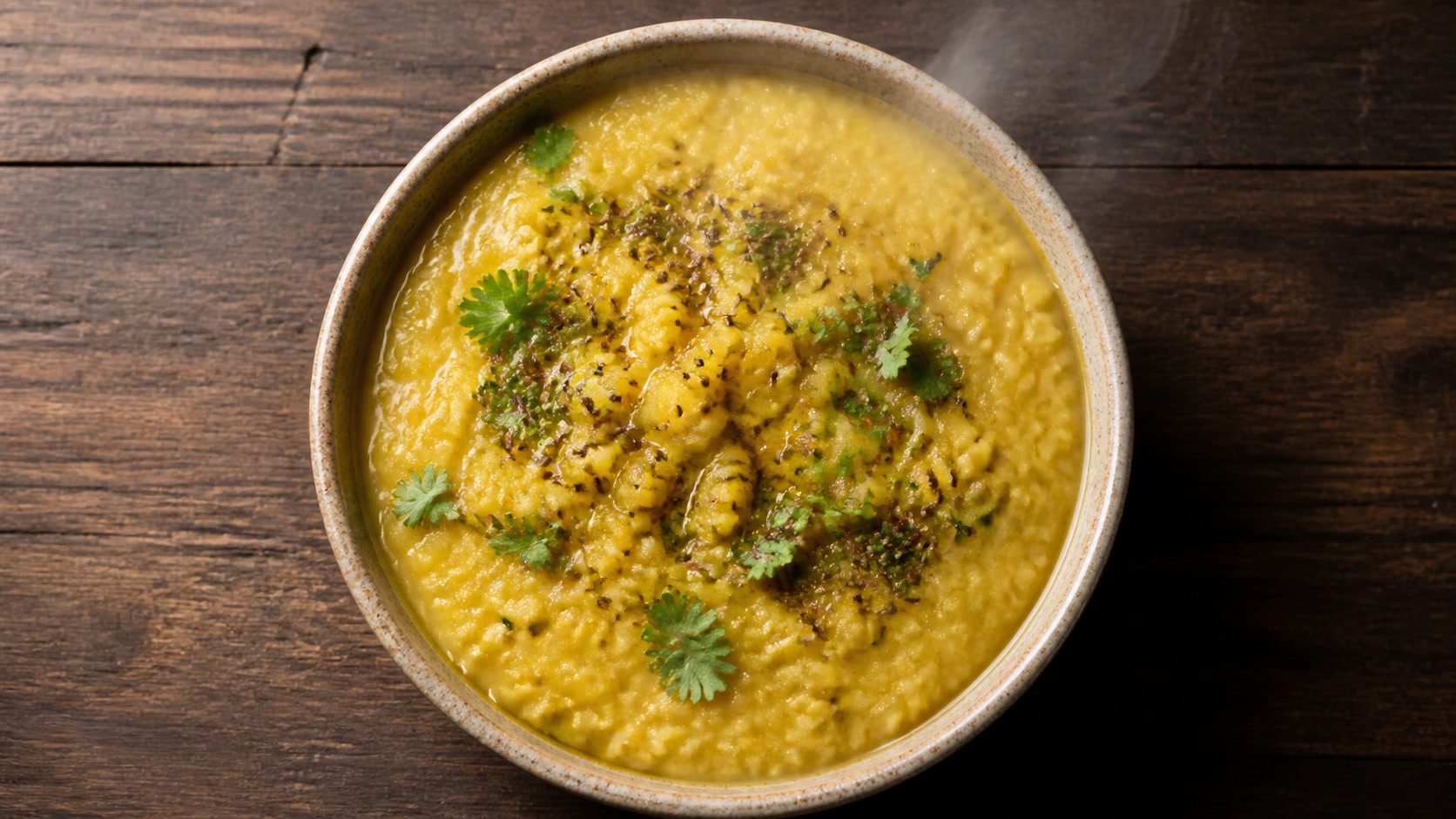
Moong Daal Khichdi portion size comparison
| Portion | What it is | Calories |
|---|---|---|
| Small | 1/8 of the pot | ~265 kcal |
| Standard serving | 1/6 of the pot | ~350 kcal |
| Large | 1/4 of the pot (the 4-serving version) | ~525 kcal |
| Standard + yogurt | 1/6 of the pot + 100 g plain whole-milk yogurt | ~410 kcal |
| Standard + extra ghee | 1/6 of the pot + 1 tbsp ghee on top | ~470 kcal |
| Less ghee in the pot | 1/6 of the pot made with 1 tbsp ghee instead of 3 | ~310 kcal |
Yogurt uses USDA’s 61 kcal per 100 g for plain whole-milk yogurt. A tablespoon of ghee is about 120 kcal.
Tips for a lighter Moong Daal Khichdi
- Use 1 tbsp of ghee in the whole pot instead of 3. It saves about 40 kcal per serving.
- Raise the daal-to-rice ratio. More moong means more protein and fibre per bowl.
- Add vegetables such as carrots, peas or spinach for volume at very few calories.
- Measure the portion. Soft food is easy to serve generously.
See the full khichdi recipe for the method. For another daal-and-rice plate, try masoor daal + brown rice, or compare with daal chawal.
Frequently asked questions about Moong Daal Khichdi calories
Is moong daal khichdi good for weight loss?
It can fit a calorie target, but it is not especially low in calories: a sixth of the recipe is about 350 kcal, and a quarter is about 525. Measuring the portion and the ghee matters more than the dish itself.
Why is khichdi eaten when you feel unwell?
It is soft, mild and easy to eat, which is why it is a traditional comfort food across South Asia. We do not make medical claims about it.
Is khichdi suitable for people with diabetes?
We have not tested this dish for blood-sugar response, so we do not call it diabetic-friendly. A serving has about 60 g of carbohydrate and 6 g of fibre, mostly from rice; if you manage diabetes, follow your clinician’s or dietitian’s advice on carbohydrate portions.
How can I add protein without changing the dish much?
Raise the moong-to-rice ratio, or serve it with plain yogurt or a boiled egg. A 100 g serving of plain whole-milk yogurt adds about 3.5 g of protein.
Does the ghee add many calories?
Yes: 3 tbsp in the pot is about 370 kcal, or about 60 kcal per serving. Using 1 tbsp instead saves about 40 kcal per serving, and a spoon of ghee on top adds about 120 kcal.
How we calculate moong daal khichdi calories
These numbers are estimates, not laboratory values. We converted the recipe to grams (split moong 1 cup at about 200 g, basmati 1 1/2 cups at about 185 g a cup so 278 g, onion 70 g, tomato 120 g, ghee 3 tbsp at 41 g) and added each ingredient using per-100 g values from USDA FoodData Central: mung beans, raw (FDC 174256), white long-grain rice, raw (FDC 169756, used as a stand-in for basmati), ghee (FDC 171314), onion (FDC 170000) and tomato (FDC 170457). Ginger and spices are not counted. We assume 90-100% of the ghee ends up in the servings and allow a cup of lentils or rice to weigh about 5% more or less, which gives the 335-365 range. Weigh your own ingredients for the closest figure. This is general nutrition information, not medical or dietary advice.
Related reading on Moong Daal Khichdi
- Moong daal khichdi recipe — the full step-by-step for this dish
- Masoor daal + brown rice — another daal-and-rice plate
- Desi weight-loss meals — light dinners that pair well with khichdi
Get the exact calorie count for Moong Daal Khichdi
Your daal-to-rice ratio and the amount of ghee are the main variables. RotiAI computes the kcal for your moong daal khichdi, and Sehat Mode can build meals like this into a personalized desi diet plan.


