 RotiAI

Palak gosht (پالک گوشت) — tender mutton slow-cooked in spinach — comes in at about 420 calories per serving, and it earns those calories with a serious hit of protein and iron. This is a heartier, richer curry than the veg dishes in this hub, but it’s also one of the most nutrient-dense meals you can put on a desi table.
Quick answer
- Calories: ~420 kcal per serving
- Serves: 4 · Cook time: 45 min
- Region: Punjabi · Tags: high-protein, iron
Calories in Palak Gosht: the count
~420 calories per serving. A serving is bone-in mutton braised until tender in a thick, blended spinach masala with onion, tomato, ginger-garlic, and spices. The calorie figure is for the curry itself — add rotis or rice separately and count those on top.
Why the number sits higher
- Mutton is calorie-dense. Red meat brings more fat than chicken or lentils, which is the main reason palak gosht runs richer than most dishes here.
- Oil for the bhunai. Building a proper masala base takes a fair amount of oil, and that fat adds up.
- Spinach barely counts. The kilo of spinach that goes in cooks down to almost nothing calorie-wise — it’s adding nutrients and volume, not calories.
Palak Gosht macros at a glance
Palak gosht is a high-protein, iron-rich curry. The mutton delivers plenty of protein along with the fat that lifts the calorie count, while the spinach contributes iron, folate, and fiber for very few calories. Think of it as nutrient-dense rather than “light.”
How Palak Gosht fits a desi diet
At ~420 calories for the curry alone, palak gosht is best treated as the protein centerpiece of a controlled plate. Pair it with one or two rotis rather than a big pile of rice, and let the iron-rich spinach do its work. Trimming visible fat from the mutton and going lighter on the cooking oil are the two easiest ways to bring the count down without losing the dish’s character.
Palak Gosht: full macro breakdown
For a ~350 g bone-in serving of palak gosht (~420 calories), the split typically looks like:
| Macro | Amount | % of calories |
|---|---|---|
| Protein | ~28–32 g | ~28% |
| Fat | ~26–30 g | ~60% |
| Carbohydrates | ~8–10 g | ~9% |
| Fiber | ~3–4 g | — |
| Iron | ~4–5 mg | — |
The fat share looks high, but a good chunk of it comes from mutton’s own marbling plus the oil used to bhunofy the masala — not from anything added carelessly. The carbs are almost entirely from the onion-tomato base and a touch of spinach; there’s no rice or flour in the curry itself. That iron figure is worth noting too: between the mutton and the kilo of spinach, this dish delivers a meaningful chunk of daily iron needs, which is one reason it’s often recommended for people managing low iron or postpartum recovery.
Palak Gosht portion size comparison
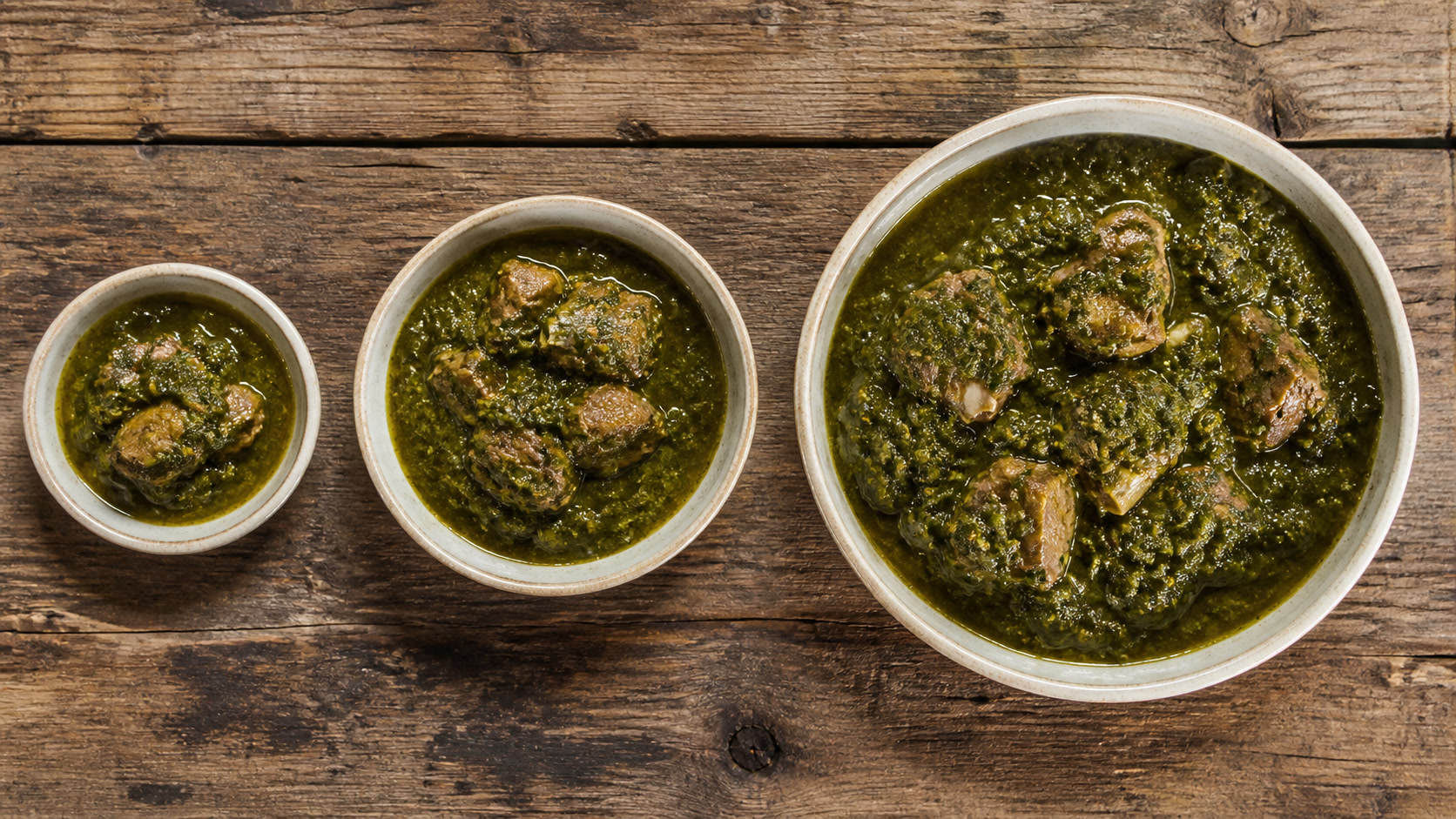
| Portion | Approx. weight | Calories | Best for |
|---|---|---|---|
| Small (½ cup, mostly gravy) | ~150 g | ~180 | Side dish alongside daal or another curry |
| Medium (1 cup, curry + 1–2 mutton pieces) | ~300 g | ~360 | Standard single serving with 1 roti |
| Large (1.5 cups, 3+ pieces) | ~450 g | ~540 | Main course with rice, no second curry |
| Restaurant/dhaba serving | ~500 g+ | ~600+ | Often includes extra oil/ghee tadka on top |
Home-cooked palak gosht generally runs lighter than restaurant versions, since dhabas tend to finish the dish with an extra ghee tadka for shine and flavor — that alone can add 60–100 calories.
Tips for a lighter Palak Gosht
- Boneless leg over shoulder or ribs — leaner cut, same tenderness after slow cooking.
- Blend, don’t fry, the onions — pressure-cook onions with a splash of water until soft, then puree instead of deep-browning in oil.
- Add spinach in two batches — a portion pureed into the gravy for body, a portion added whole near the end for texture and volume without extra oil.
- Skim before serving — let the curry rest 5 minutes off heat and spoon off the surface oil layer.
- Watch the sides — this dish is naturally rich, so pair it with a plain roti or small rice portion rather than doubling up on carbs.
Frequently asked questions about Palak Gosht calories
Is palak gosht good for weight loss?
In moderation, yes. It’s protein-dense and the spinach adds almost no calories, but the fat content means portion control matters more than with a lentil or vegetable curry. One medium portion (~360 cal) with a roti and salad fits comfortably into most calorie-controlled plans.
Is palak gosht healthier than palak paneer?
They serve different goals. Palak gosht has less saturated fat per gram of protein than paneer-based curries and adds iron and B12, which paneer lacks. Palak paneer is usually the higher-calorie, higher-fat option gram-for-gram because of the paneer itself.
Does trimming the mutton fat actually make a difference?
Yes, noticeably. Visible fat on mutton pieces can account for 15–20% of the dish’s total fat. Trimming it before cooking, or skimming the oil layer that rises to the top once the curry rests, is one of the highest-impact changes you can make without altering the recipe.
Can I make a lower-calorie version at home?
Use boneless leg meat instead of fattier cuts, cut the oil for the bhunai by a third (a well-blended onion-tomato base still browns fine with less), and skip the finishing ghee tadka. These three changes alone typically shave 80–120 calories off a serving without changing the taste much.
How does palak gosht compare to other curries in this hub?
It runs close to vegetable pulao in raw calories but with a very different macro profile — mostly protein and fat instead of carbs. If you’re pairing dishes across a week, palak gosht slots in well opposite lighter, carb-forward meals.
Related reading on Palak Gosht
- Palak gosht recipe — the full step-by-step for this dish
- Tandoori chicken + raita — a leaner high-protein option
- Keema karahi — the other red-meat curry in this hub
Get the exact calorie count for Palak Gosht
Your cut of mutton, its fat content, and the oil used all move this number. RotiAI computes the exact kcal for your palak gosht, and Sehat Mode turns it into a personalized desi diet plan that makes room for rich curries like this. For more high-protein desi options, see tandoori chicken + raita or browse the full palak gosht recipe.


