 RotiAI

A serving of vegetable pulao (ویجیٹیبل پلاؤ) is about 550 calories when a serving means one quarter of our recipe pot (about 400 g, roughly two cups cooked). A 200 g cup is about 275 kcal. It is a fragrant, one-pot rice dish, and the oil in the pot is what lifts it above plain boiled rice.
Quick answer
- Calories: ~550 kcal per serving (1/4 of the recipe, about 400 g); likely range 480-590 kcal
- Per 200 g cup: ~275 kcal
- Serves: 4 · Cook time: 35 min
- Tags: vegetarian, dopehar (lunch)
Calories in Vegetable Pulao: the count
~550 calories per serving. The recipe uses 2 cups of basmati (about 370 g dry), 3 cups of mixed vegetables, 1 large onion, 1/2 cup of yogurt and 1/4 cup of cooking oil (about 54 g), and makes roughly 1.6 kg of cooked pulao. Divided into four, each serving is about 400 g. That works out to roughly 1.4 kcal per gram, close to plain boiled rice (about 1.3 kcal per gram in USDA data), so a smaller scoop is a much smaller number.
Why Vegetable Pulao lands where it does
- Rice is the base. About 1,350 of the roughly 2,200 kcal in the whole pot come from the rice.
- Oil is the second biggest source. A quarter cup of oil adds about 480 kcal to the pot, or about 120 kcal per serving.
- Vegetables add volume, not many calories. Three cups of mixed vegetables contribute roughly 200 kcal across the whole pot, or about 50 kcal per serving, along with fibre.
Vegetable Pulao macros at a glance
Vegetable pulao is carb-forward. Most calories come from the rice, with a sizeable share from the cooking oil and a modest amount of protein. The vegetables add fibre and volume.
Vegetable Pulao: full macro breakdown
For one serving (1/4 of the recipe, about 400 g, about 550 kcal):
| Macro | Amount | % of calories |
|---|---|---|
| Carbohydrates | ~91 g (range 79-98 g) | ~67% |
| Fat | ~15 g (range 13-16 g) | ~25% |
| Protein | ~11 g (range 8-11 g) | ~8% |
| Fibre | ~5 g | n/a |
Rice dominates the macro profile, as expected for a one-pot pulao. Most of the fat comes from the oil used to fry the onion and bloom the whole spices, with a little from the yogurt. Protein is low because a basic vegetable pulao has no meat or paneer, which is why it is usually served with raita or a protein side.
Vegetable Pulao portion size comparison
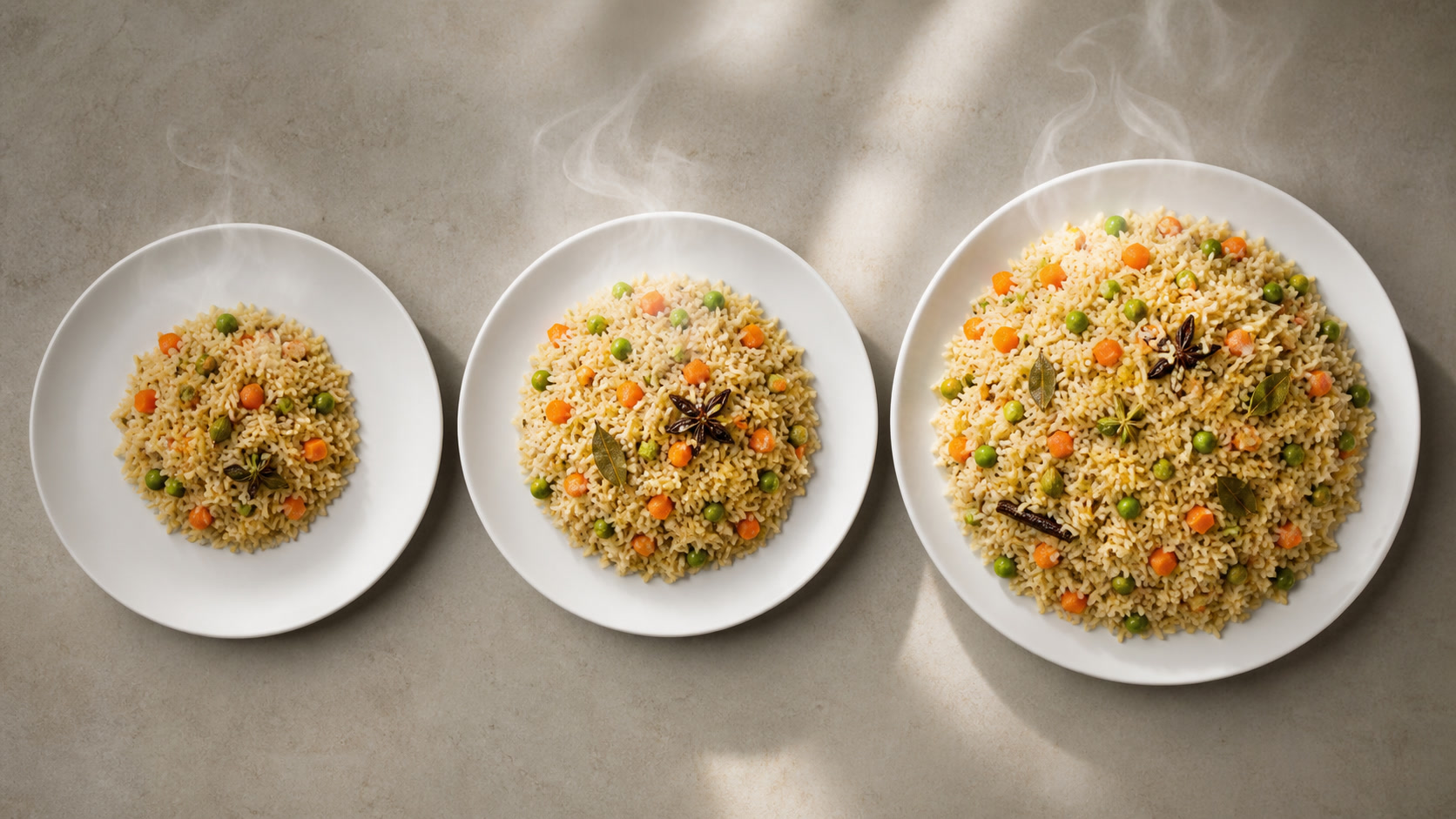
| Portion | Approx. weight | Calories | Best for |
|---|---|---|---|
| Small (1/2 cup) | ~100 g | ~140 | Side dish alongside a curry |
| Medium (1 cup) | ~200 g | ~275 | Light main with raita |
| Large plate | ~300 g | ~410 | Main course without a second carb source |
| One serving (1/4 of the recipe) | ~400 g | ~550 | Full lunch plate |
These weights apply to this recipe at about 1.4 kcal per gram. A richer pulao, for example with extra ghee or fried onion on top, will be higher: each teaspoon of ghee adds about 40 kcal.
Tips for a lighter Vegetable Pulao
- Cut the oil for the tarka by a third. That removes about 160 kcal from the whole pot, or about 40 kcal per serving.
- Swap some rice for extra vegetables. Cauliflower, beans and peas add volume and fibre for few calories.
- Use brown or partially brown basmati if fibre matters to you; it swaps in easily in most pulao recipes.
- Skip the fried onion garnish. It adds calories without adding much else.
- Weigh or measure your portion. Pulao is easy to over-serve, and a level 200 g cup is about half of one full serving.
Frequently asked questions about Vegetable Pulao calories
How many calories are in a cup of vegetable pulao?
A 200 g cup of our pulao is about 275 kcal. A full serving, one quarter of the recipe (about 400 g), is about 550 kcal.
Is vegetable pulao healthier than plain rice?
Per gram it has slightly more calories than plain boiled rice because of the oil (about 1.4 vs 1.3 kcal per gram), but it adds fibre, vitamins and volume from the vegetables, so it is a reasonable choice if the oil is kept in check.
Is vegetable pulao good for weight loss?
It can fit in a measured portion. Because it is carb-dense, a measured cup or two paired with raita or a protein side works better than an unmeasured plate. Adding extra vegetables rather than extra rice adds volume for fewer calories.
How does vegetable pulao compare to biryani calorie-wise?
Biryani recipes usually include meat, more oil and often fried onion, so they tend to come out higher per serving than a simple vegetable pulao. The exact gap depends on the recipe.
Can I make vegetable pulao without losing flavor if I cut the oil?
Yes. Much of the flavour comes from the whole spices and browned onions, not from the total quantity of oil. Cutting the oil by a third rarely changes the taste noticeably if the spices are toasted first.
What should I eat with vegetable pulao to make it a balanced meal?
Pair it with a protein source such as raita, a boiled egg or a small portion of daal. On its own, pulao is carb-heavy and light on protein.
How we calculate vegetable pulao calories
These numbers are estimates, not laboratory values. We converted the recipe to grams and added each ingredient using per-100 g values from USDA FoodData Central: white long-grain rice, raw (FDC 169756, used as a proxy for basmati), peanut oil (171410), whole-milk plain yogurt (171284), onion (170000), and carrot, green beans, peas and potato for the vegetables (170393, 169961, 170419, 170026). Ginger-garlic paste and whole spices have no record we checked, so they are labelled estimates and add under 20 kcal in total.
Our assumptions: 2 cups of raw rice is about 370 g (USDA cup of 185 g); 1/4 cup of oil is about 54 g and all of it stays in the pot; 3 cups of mixed vegetables is about 375 g, split evenly between carrot, beans, peas and potato; one large onion is 150 g; 1/2 cup of yogurt is about 122 g. The cooked yield (about 1.6 kg, range 1.45-1.75 kg) is an estimate, so the per-200 g figure is less certain than the per-serving figure, which depends only on the ingredients. The range of 480-590 kcal reflects rice and oil quantities and vegetable choice. Your pot, cup size and vegetables will move the result, so weigh your food for the closest figure. This is general nutrition information, not medical or dietary advice.
Related reading on Vegetable Pulao
- Vegetable pulao recipe — the full step-by-step for this dish
- Daal chawal — how it compares to the other rice lunch in this hub
- Roti vs. rice for weight loss — when to pick rice and when to pick roti
Get the exact calorie count for Vegetable Pulao
Your rice portion and the oil used for the tarka are the main variables. RotiAI computes the kcal for your vegetable pulao, and Sehat Mode builds one-pot meals like this into a personalized desi diet plan. If you’re comparing carb-heavy options, see how it stacks up against daal chawal or check the full vegetable pulao recipe.


