 RotiAI

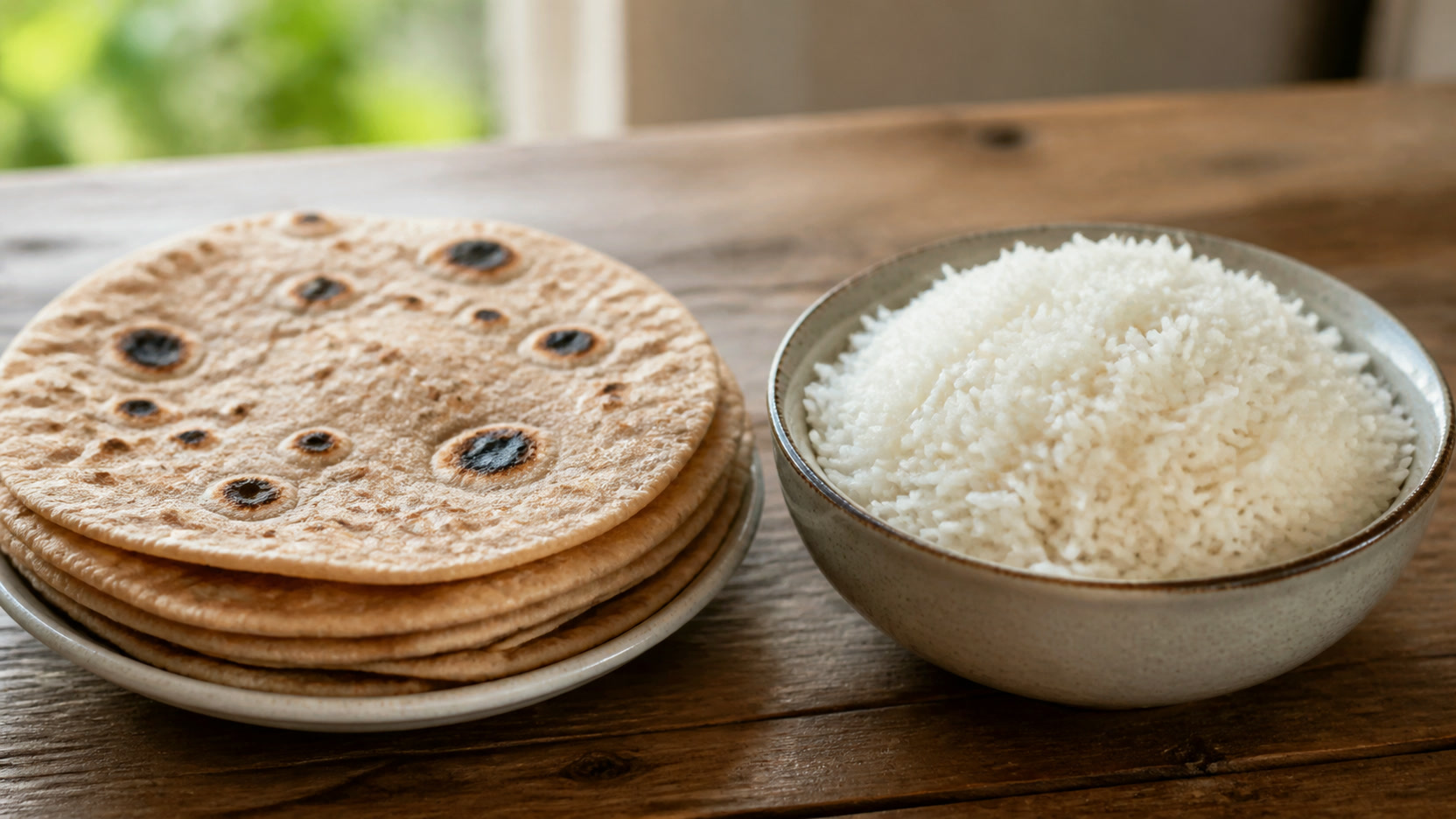
Roti vs rice for weight loss is one of the oldest debates in every desi kitchen — and the honest answer is that neither one is “fattening” on its own. What matters far more is your portion size, what you eat with them, and how the rest of your day adds up. Still, there are some real nutritional differences worth knowing, so let’s break them down clearly and practically.
A quick note: this article is general nutrition information, not medical advice. If you’re managing diabetes, kidney issues, or any condition where carbohydrates matter specifically for you, talk to a doctor or dietitian about what’s right for your body.
The short answer
For most people trying to lose weight, whole-wheat roti has a slight edge over white rice — mainly because it has more fibre and protein, which keeps you full for longer. But the difference is small. A person eating two measured rotis will do just as well as a person eating one measured cup of rice. Portion size beats the roti-vs-rice choice every time.
Roti (whole-wheat chapati): the case for it
- More fibre. Whole-wheat atta keeps the bran, so roti has more fibre than white rice. Fibre slows digestion and keeps you full — useful when you’re trying to eat less.
- More protein. Wheat has a bit more protein than white rice, gram for gram.
- Slower to digest. The fibre and protein mean roti generally raises blood sugar a little more gradually than white rice does — helpful for steady energy and fewer cravings.
- Naturally portioned. One roti is one roti. It’s easy to count. Rice is easy to over-serve.
The catch: roti’s calories climb fast if it’s slathered in ghee or butter, or made with refined maida instead of whole-wheat atta. A plain whole-wheat roti is the goal.
Rice (white basmati): the case for it
- Easy to digest. Rice is gentle on the stomach, which is why khichdi is comfort food when you’re unwell.
- Naturally fat-free and low-sodium. Plain boiled rice has no added fat.
- Brown rice levels the field. Swap white for brown basmati and you get much more fibre — closing most of the gap with roti. That’s exactly why our Masoor Daal + Brown Rice dish pairs lentils with brown rice.
- Portion is everything. A single measured serving of rice is perfectly fine in a weight-loss diet. The problem is the heaped plate, not the grain.
The catch: white rice is quick to digest and easy to eat a lot of, so it’s simple to overshoot your portion — especially with rich, oily curries.
Head to head
| Factor | Whole-wheat roti | White rice | Brown rice |
|---|---|---|---|
| Fibre | Higher | Lower | Higher |
| Protein | Slightly higher | Lower | Moderate |
| Digestion speed | Slower (steadier energy) | Faster | Slower |
| Easy to portion? | Yes (count the rotis) | Easy to over-serve | Easy to over-serve |
| Best move | Keep it plain, whole-wheat | Measure one serving | Great fibre upgrade |
What actually decides your weight loss
Here’s the part most “roti vs rice” arguments miss: the roti or rice is rarely the real issue. What’s on top of it usually is.
- A plain roti with Lauki ki Sabzi (350 kcal with 2 rotis) is a lighter vegetable meal.
- The same roti with a heavy, oily korma is not.
- A measured portion of rice with Masoor Daal + Brown Rice (440 kcal a serving) is balanced and filling.
- The same rice under a mound of fried, ghee-heavy biryani is a different story.
The grain is the supporting act. The oil, the portion, and the protein are what move the needle.
Practical takeaways
- Pick either — just measure it. One roti, or one cupped-handful of cooked rice, per meal.
- Go whole-grain when you can. Whole-wheat roti and brown rice both bring extra fibre that helps you stay full.
- Fix the topping, not just the grain. Choose low-oil, high-protein dishes to go alongside — grilled chicken, tarka daal, sautéed vegetables.
- Don’t fear carbs. Roti and rice have fuelled South Asia for centuries. In sensible portions, both belong in a weight-loss diet.
The best choice is the one you’ll actually stick to. If you love rice, keep it — measure the serving and pair it with lentils and vegetables. If roti is your comfort, keep it plain and whole-wheat.
The science in plain terms
Roti and rice differ mainly in two things: fibre content and glycemic response.
- Fibre. Whole-wheat atta keeps the wheat bran, giving roti roughly 3-4x the fibre of white rice, gram for gram. Fibre slows how fast your stomach empties and how fast sugar hits your bloodstream — both of which help you feel full longer and avoid the energy dip that leads to snacking.
- Glycemic response. White rice tends to raise blood sugar faster than whole-wheat roti because it has less fibre and protein to slow digestion. Brown rice closes most of that gap. This matters more if you’re managing diabetes or prediabetes — talk to a doctor about what’s right for your specific numbers — but for most people trying to lose weight, it’s a secondary factor behind total calories and portion size.
Neither of these differences is large enough to make one grain “good” and the other “bad.” They’re both complex carbohydrates that have fed South Asia for generations. The differences just mean roti has a very slight edge for people specifically optimizing satiety.
A sample day either way
If you’re a roti person:
| Meal | Dish | Calories |
|---|---|---|
| Breakfast | Anda Bhurji + Roti | 320 |
| Lunch | Bhindi + Roti | 410 |
| Dinner | Lauki ki Sabzi + Roti | 350 |
Day total: 1,080 kcal from these three meals — add a snack and drinks to round out your day.
If you’re a rice person:
| Meal | Dish | Calories |
|---|---|---|
| Breakfast | Besan Cheela + Dahi | 325 |
| Lunch | Masoor Daal + Brown Rice | 440 |
| Dinner | Daal Chawal | 380 |
Day total: 1,145 kcal from these three meals. Both days are balanced, protein-and-fibre-forward, and built entirely from real desi dishes — proof that either grain works when the rest of the plate is right.
When one is clearly the better call
Portion and topping decide most days, but there are a few specific situations where one grain genuinely edges out the other:
- You’re managing blood sugar. Whole-wheat roti or brown rice, both slower-digesting, are usually the safer default — but confirm the specifics with your doctor, since individual response varies.
- You’re recovering from an upset stomach. Plain boiled white rice (as in khichdi) is easier to digest than roti when your gut needs a break.
- You’re trying to hit a higher protein target from grains alone. Roti has a slight protein edge, though neither grain should be your main protein source — build meals around eggs, meat, fish, or daal instead.
- You genuinely dislike one of them. The “better” grain is worthless if you won’t eat it consistently. Consistency beats a marginal nutritional edge every time.
Common mistakes in the roti-vs-rice debate
- Assuming “whole-wheat” automatically means low-calorie. A whole-wheat paratha fried in ghee has more calories than a plain bowl of white rice. The grain matters less than what’s added to it.
- Eating rice straight from a big serving spoon instead of measuring it. A “serving” of rice can silently be 2-3x a proper portion when scooped from a large pot.
- Stacking 3-4 rotis out of habit at a family meal instead of counting how many you’re actually eating.
- Comparing dry rice weight to cooked roti weight — always compare cooked-to-cooked; rice roughly triples in weight when cooked, which throws off casual calorie math.
FAQ: Roti vs Rice for Weight Loss: Which Is Better? recipe
Is rice more fattening than roti?
Not inherently. Gram for gram cooked, they’re fairly close in calories. Roti has a slight edge for fibre and protein, but portion size and what you eat them with matter far more than the grain itself.
Should I cut carbs completely to lose weight faster?
No — roti and rice are staple energy sources, and cutting them out completely is hard to sustain and often backfires into overeating elsewhere. A measured portion of either fits into a weight-loss diet; see our low-cal desi food swaps for ways to lighten what goes with them instead.
Is brown rice actually better than roti?
It’s close. Brown rice has meaningfully more fibre than white rice and narrows most of the gap with whole-wheat roti, so it’s a solid swap if you prefer rice — see our Masoor Daal + Brown Rice dish for an example.
How many rotis or how much rice should I eat per meal to lose weight?
As a starting point, one roti or one cupped handful (roughly 3/4 to 1 cup) of cooked rice per meal works for most people in a moderate calorie deficit — adjust up or down based on your activity level and how your weight trends over 2-3 weeks.
Does this apply the same way to women’s diet plans?
Yes, the core logic is identical — see our full Pakistani diet plan for weight loss for females for how roti and rice fit into a day built around women’s specific nutrition needs.
See the real numbers for your plate in RotiAI
Whether you go roti or rice, the calories depend on your portion and your toppings. RotiAI calculates the exact kcal of any desi meal — roti, rice, curry and all — so you can compare your real plates instead of guessing. And Sehat Mode builds those numbers into a personalized weight-loss plan around the desi food you actually eat.
👉 Compare roti and rice meals with exact calories in RotiAI, and get a personalized plan in Sehat Mode.
For roti calories by size, flour and ghee, see the roti and chapati calorie guide.


