 RotiAI

A Pakistani diet plan for weight loss for females works best when it fits real desi life — family cooking, shared meals, and staples like roti and daal — while quietly meeting a woman’s specific nutrition needs. This guide focuses on protein, iron and calcium (the three things women most often fall short on) using the same real desi dishes you’d cook for the whole family, just portioned for fat loss.
Please note: this is general nutrition guidance, not medical advice. Women’s needs change a lot with life stage. If you’re pregnant, breastfeeding, trying to conceive, dealing with PCOS, thyroid issues, anaemia, or any medical condition, speak to a doctor or a registered dietitian before following any calorie-restricted plan — some of these conditions need more food or specific nutrients, not less.
What’s different about weight loss for women?
The core principle is the same for everyone: eat a bit fewer calories than you burn. But a few things are worth a woman’s attention when building a desi diet plan:
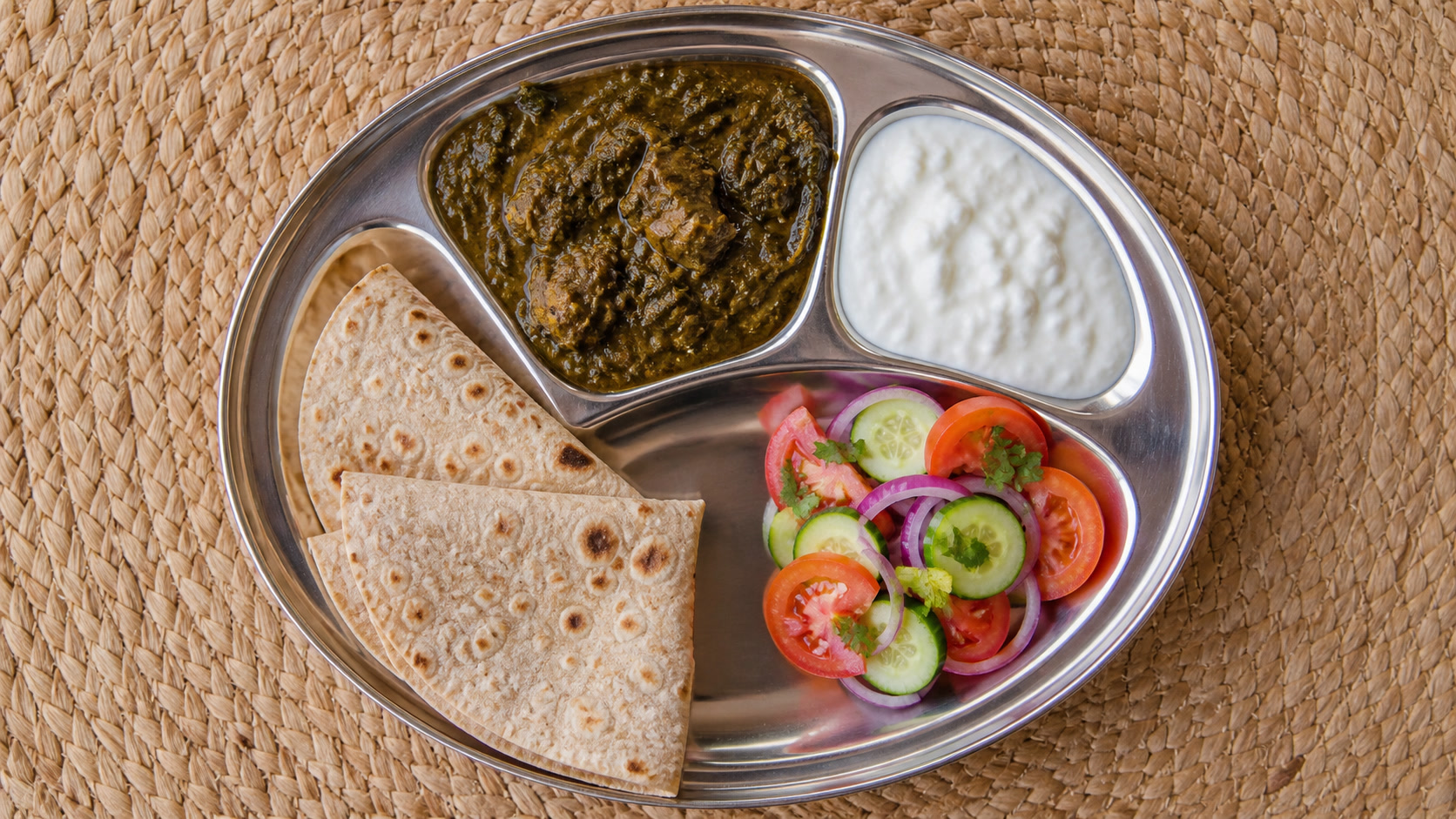
- Iron. Menstruating women lose iron monthly and are more prone to anaemia. Iron-rich desi dishes like palak gosht (meat with spinach) and lentils help — and pairing them with something vitamin-C rich (lemon, tomato, chana chaat) helps your body absorb the iron.
- Protein. Women often under-eat protein, which is exactly what keeps you full and preserves muscle in a deficit. Aim to build every meal around a protein: eggs, chicken, fish, daal or yogurt.
- Calcium. Yogurt (dahi) and daal support bone health — easy wins that are already part of desi cooking.
- Realistic portions, not starvation. Very low-calorie crash diets backfire: they tank your energy, mood and metabolism. A gentle deficit you can actually sustain wins every time.
Portion guide for desi meals
Portion control matters more than any single “superfood.” A simple hand-based guide that works with desi food:
- Protein (chicken, fish, meat, eggs): about a palm-sized serving per meal.
- Roti / rice: one roti, or one cupped-handful of cooked rice, per meal — not a stack.
- Vegetables / salad: as much as you like — fill half the plate.
- Oil / ghee: measured teaspoons, not free pours. Most of the dishes below use only a few tablespoons across four servings.
- Yogurt: a small bowl of plain (not sweetened) dahi.
A sample day for women
Here’s one balanced day built from real RotiAI dishes, with the actual per-serving calorie figures added up:
| Meal | Dish | Calories | Why it works |
|---|---|---|---|
| Breakfast | Besan Cheela + Dahi | 325 | Protein + calcium to start the day full |
| Lunch | Palak Gosht (with 1 roti) | 420 | Iron + protein — a key combo for women |
| Snack | Chana Chaat | 330 | Fibre, plant protein, and vitamin C to aid iron absorption |
| Dinner | Grilled Chicken + Salad | 340 | Lean protein, low-carb, light for the evening |
Day total: 325 + 420 + 330 + 340 = 1,415 kcal (from these dishes; add plain drinks, water or a piece of fruit as you like).
If you’re smaller, less active, or aiming for a slightly faster loss, you can shift the dinner to a lighter option like Chicken Yakhni Soup (190 kcal), bringing the day to 290 + 420 + 260 + 220 = 1,190 kcal. If you’re very active or breastfeeding (and cleared by your doctor), add a roti or a serving of daal to eat more.
Best desi dishes for a female weight-loss plan
Pulling from real dishes, these are especially useful for women trying to lose weight:
- Palak Gosht (420 kcal) — iron and protein in one pot.
- Grilled Chicken + Salad (340 kcal) — high-protein, low-carb, low-oil.
- Besan Cheela + Dahi (325 kcal) — a protein-rich breakfast with calcium from the yogurt.
- Chana Chaat (330 kcal) — fibre and plant protein; the tomato and lemon help iron absorption.
- Masoor Daal + Brown Rice (440 kcal) — about 8 g of fibre and 17 g of plant protein a serving.
- Chicken Yakhni Soup (190 kcal) — the lightest, most warming option for dinner.
- Moong Daal Khichdi (350 kcal) — gentle, light and easy to digest at night.
A few practical tips
- Don’t skip breakfast. A protein breakfast steadies your appetite for the whole day and reduces afternoon snacking.
- Cook once, portion smart. You don’t need separate “diet food.” Cook the family palak gosht — just serve yourself a measured portion with one roti and a big salad.
- Sugary chai adds up fast. Two or three sweetened cups a day can quietly add hundreds of calories. Switch to less sugar, or black/green tea.
- Be patient around your cycle. Water retention in the days before your period can show up on the scale — it isn’t fat. Judge progress over weeks, not days.
A second sample day (higher activity or breastfeeding)
If your day one above feels too light — you’re on your feet all day, exercising, or breastfeeding and cleared by your doctor to eat more — here’s a slightly higher-calorie day using the same real dishes:
| Meal | Dish | Calories | Why it works |
|---|---|---|---|
| Breakfast | Anda Bhurji + Roti | 320 | Protein-forward, keeps you full past mid-morning |
| Lunch | Daal Chawal | 380 | Plant protein and carbs for sustained energy |
| Snack | Chana Chaat | 330 | Fibre, plant protein, vitamin C for iron absorption |
| Dinner | Palak Gosht (with 1 roti) | 420 | Iron + protein for evening recovery |
Day total: 320 + 380 + 330 + 420 = 1,450 kcal. Add a second roti at lunch or dinner (about +120 kcal) if you’re still hungry — a gentle deficit that leaves you satisfied is far more sustainable than a very low number you can’t stick to.
Iron and calcium: pairing tips that actually help
Getting enough iron and calcium isn’t just about eating iron-rich or calcium-rich foods in isolation — how you combine them matters:
- Pair iron with vitamin C, not with tea or coffee. A squeeze of lemon on palak gosht or chana chaat meaningfully boosts iron absorption. Tea and coffee within an hour of an iron-rich meal can block absorption, so save the chai for later.
- Don’t rely on spinach alone for iron. Plant-based (non-heme) iron from spinach and lentils is absorbed less efficiently than the iron in red meat. Palak gosht — spinach cooked with meat — is a smart pairing for exactly this reason.
- Calcium and iron compete for absorption if eaten at the exact same time in large amounts. A small bowl of dahi alongside a meal is fine; a huge glass of milk right after an iron-heavy dinner is less ideal. Spread them across the day instead.
Common mistakes women make on desi weight-loss diets
- Cutting roti or rice entirely. This usually backfires — you end up starving by evening and overeating. One measured portion per meal is almost always better than zero. See roti vs rice for weight loss for the full comparison.
- Copying a general (often male-oriented) diet plan. Generic plans rarely account for iron, calcium, or the calorie needs across a menstrual cycle. Build the plan around your own numbers instead.
- Skipping meals to “save calories” for later. This tends to backfire into overeating at night and leaves you low on energy during the day, which is exactly when women are already more prone to fatigue from iron losses.
- Ignoring water retention around your period and reacting to the number on the scale by restricting further. This is the fastest way to feel discouraged for no real reason — the fat loss is very likely still happening underneath the water weight.
FAQ: Pakistani Diet Plan for Weight Loss for Females recipe
How many calories should a Pakistani woman eat to lose weight?
It depends heavily on your height, weight, age and activity level, but many women see steady progress somewhere in the 1,200-1,500 kcal/day range from real food, not crash diets. RotiAI’s Sehat Mode calculates a number tailored to you rather than a generic figure.
Is roti or rice better for women trying to lose weight?
Whole-wheat roti has a slight edge for fibre and protein, but the honest answer is portion matters more than the grain — see roti vs rice for weight loss for the full breakdown.
What if I have PCOS or thyroid issues?
These conditions change how your body responds to calorie deficits and often need a tailored approach (sometimes a smaller deficit, sometimes specific nutrient focus). Please work with a doctor or dietitian rather than following a general plan — see the note at the top of this article.
Can I still eat roti and rice on a diet plan?
Yes — one measured roti or a cupped handful of rice per meal fits comfortably into a weight-loss diet. What matters more is what’s cooked alongside it; see our low-cal desi food swaps for practical ways to lighten your favourite dishes without dropping them.
How long before I see results?
Judge progress over 2-3 weeks rather than day to day, especially around your cycle when water retention can mask real fat loss. Consistency with portioned, protein-forward meals like the ones above matters far more than any single day.
Build your own plan in RotiAI’s Sehat Mode
Every woman’s calorie target is different — it depends on your weight, height, activity and goals. RotiAI’s Sehat Mode creates a personalized desi diet plan tuned to you, and calculates the exact kcal of any dish you cook so you’re never guessing. It’s the easiest way to keep eating the desi food your family loves while steadily reaching your goal.
👉 Get a personalized desi diet plan built for you in RotiAI’s Sehat Mode.


