 RotiAI

You don’t have to give up roti, daal or desi flavours to lose weight — you just have to be smarter about which desi dishes you eat and how much. This 7-day Pakistani diet plan for weight loss is built entirely from real, cookable desi meals: high-protein, low-oil (kam tel) and vegetable-forward dishes that keep you full without loading up on calories. Every meal below is a genuine RotiAI recipe, and every daily total is added up from real per-dish calorie numbers — no invented figures.
A quick honest note: this is general food guidance, not medical advice. It’s built around a light calorie deficit that suits many healthy adults, but calorie needs vary with age, weight, activity and health conditions. If you’re pregnant, breastfeeding, diabetic, on medication, or managing any medical condition, please check with a doctor or a qualified nutritionist before starting any diet plan.
How this plan works
Each day gives you four eating occasions — breakfast (nashta), lunch (dopehar), an afternoon snack, and a light dinner (raat ka khana) — and lands between roughly 1,260 and 1,470 kcal from these dishes. Whether that is a deficit depends on your own needs. Here’s the thinking behind the food choices:
- Protein at every meal. Eggs, chicken, fish, daal and yogurt keep you full and protect muscle while you lose fat.
- Low oil, always. We lean on kam-tel dishes and low-oil techniques (grilling, dry-roasting okra, tarka-only daals) instead of deep-fried food.
- Vegetables and lentils do the heavy lifting. Lauki, bhindi, spinach, chickpeas and lentils add fibre and volume for very few calories.
- Roti and rice stay — in portions. Carbs aren’t the enemy; oversized portions are. Where rice appears, it’s a single measured serving, and brown rice shows up for its extra fibre.
About the calorie numbers: each dish’s calories below are the per-serving estimates on RotiAI’s calorie pages. The daily totals are simply those per-dish numbers added together — I’ve shown the sum each day so you can check the maths yourself. They count only the listed dishes; tea, black coffee, water, a piece of fruit or extra salad will add a little on top, which is fine.
The plan, day by day
Day 1 — Ease in
Start light and protein-heavy. Besan cheela (savoury gram-flour pancakes) with a bowl of plain yogurt is filling and cooks in one non-stick tawa with barely half a teaspoon of oil per cheela. A grilled chicken breast with a lemony cucumber-tomato salad is the lunch backbone you’ll see all week. Dinner is soft, comforting moong daal khichdi — light on the stomach and easy to digest at night.
Day 2 — Lentils and greens
Anda bhurji with one fresh whole-wheat roti is a classic desi breakfast — cook the eggs with tomatoes and onion in just a little oil. Lunch swaps white rice for brown basmati alongside a tarka masoor daal (high in plant protein). The afternoon chicken yakhni soup is one of the lowest-calorie, most satisfying things on this whole plan. Dinner is humble lauki ki sabzi with a roti — the bottle gourd cooks down in its own water, so it needs less oil than many sabzis.
Day 3 — Tandoori day
Oven-roasted tandoori chicken with a cooling cucumber-mint raita is proof that weight-loss food can taste like a treat — it’s baked on a wire rack, not fried, so the fat drips away. Dinner is bhindi (okra) with roti; the trick is to dry the okra fully and dry-roast it so you need only a little oil and it never turns slimy.
Day 4 — Omega-3 boost
Fish curry with a single measured serving of rice brings in omega-3s and lean protein — the fish is lightly seared, then simmered in a tomato-yogurt gravy rather than deep-fried. Bookend it with a light egg breakfast and a low-oil lauki dinner to keep the day balanced.
Day 5 — Budget-friendly
Aloo anda (potato and boiled egg curry) is one of the most economical desi breakfasts — filling protein and carbs together. Keep the portion to one serving and skip the paratha; pair it with roti instead. The rest of the day stays lean with grilled chicken and low-oil okra.
Day 6 — Iron and protein
Palak gosht (meat cooked down with a kilo of spinach) is the richest lunch of the week — high in protein and iron. Because it’s the heaviest dish, we balance it with a very light dinner: just a bowl of chicken yakhni soup. Have one roti with the palak gosht if you’re active, or skip it if you’re not.
Day 7 — Finish strong
End the week on a high-protein note. A hearty daal-and-brown-rice lunch keeps you full through the afternoon, and tandoori chicken with raita is a satisfying, low-carb dinner to close things out.
The week at a glance
| Day | Total (from listed dishes) |
|---|---|
| Day 1 | 1,345 kcal |
| Day 2 | 1,300 kcal |
| Day 3 | 1,445 kcal |
| Day 4 | 1,260 kcal |
| Day 5 | 1,300 kcal |
| Day 6 | 1,265 kcal |
| Day 7 | 1,470 kcal |
These totals cover the four listed dishes each day. Add whatever plain drinks, a piece of fruit, or extra green salad you like — those additions are small and won’t derail the plan.
Simple rules that make this plan work
- Watch the roti and rice portion. One roti or one measured cup of cooked rice per meal — not three. This is usually where desi diets quietly go over.
- Keep the oil low. Most of these dishes use a few tablespoons of oil across four servings. Measure it; don’t pour freely.
- Drink water before meals. A glass of water 15 minutes before eating helps with portion control.
- Don’t skip protein. Every meal here has a protein source on purpose — it’s what keeps you full and stops the 5 pm biscuit cravings.
- Move a little every day. A 30-minute walk after dinner does more than any “detox” tea.
Can I really lose weight eating roti and daal?
Yes — weight loss comes down to eating fewer calories than you burn, not from banning any single food. Roti, rice and daal are staples across South Asia for good reason: they’re affordable, filling and nutritious in the right portions. The problem is rarely the roti itself; it’s the extra ghee, the oversized servings, the fried snacks and the sugary chai in between. This plan keeps the desi food you love and simply dials in the portions and the cooking method.
What to drink alongside the plan
Drinks quietly make or break a calorie deficit, and they’re not counted in the totals above:
- Green tea or black tea without sugar — essentially free calorie-wise, and a good chai substitute if you’re used to drinking several cups a day.
- Lassi and sweetened chai — a single glass of sweetened lassi can run 150–250 kcal; if you love it, have it occasionally and count it against your daily total rather than treating it as “free.”
- Water before meals — a glass 15–20 minutes before eating is one of the simplest, most evidence-backed portion-control tricks.
- Fresh lime water (nimbu pani), unsweetened — a good afternoon pick-me-up with essentially no calories.
Meal prep tips for the week
- Batch-cook the daals. Masoor and moong daal both reheat well — cook a double batch on Sunday and you’ve covered two lunches or dinners with minimal weekday effort.
- Marinate chicken in advance. Tandoori and grilled chicken taste better after a few hours (or overnight) in yogurt and spices, and it means dinner is just a grill-and-go on a busy evening.
- Pre-wash and chop vegetables. Bhindi and lauki both need some prep (drying okra, peeling gourd) — doing this once for the week saves the daily friction that leads to skipping the vegetable and reaching for something fried instead.
- Keep the snack options ready. Pre-portion chana chaat or boil eggs for the aloo anda breakfast in advance so a hungry moment doesn’t turn into ordering out.
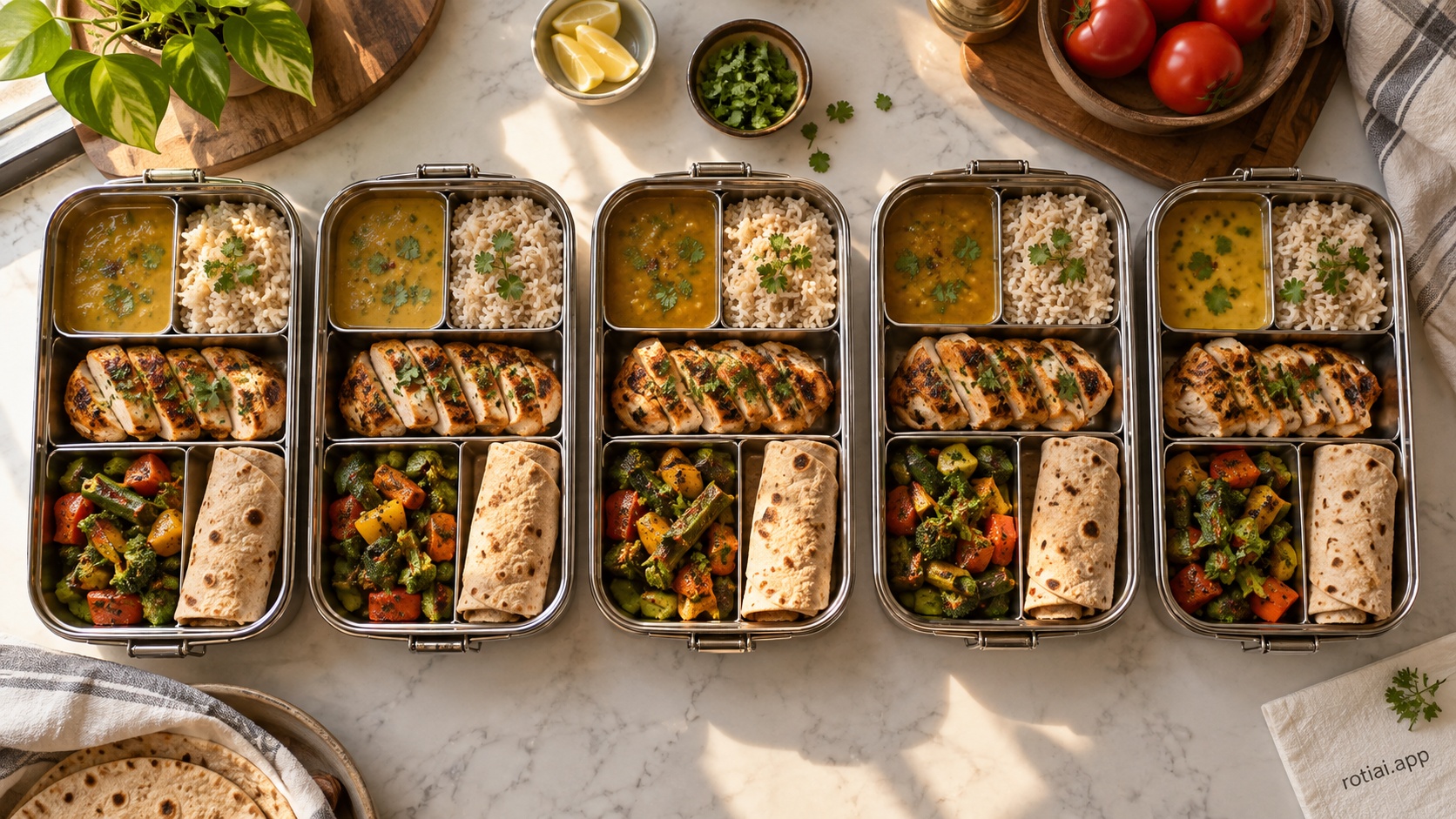
Common mistakes that slow this plan down
- “Healthy” fried snacks. Pakoras and samosas are desi comfort food, but a single plate of pakoras can equal an entire day’s oil budget from this plan. Save them for genuine occasions, not daily snacking.
- Ghee-heavy roti. One roti with a teaspoon of ghee adds 30–45 calories — across two or three rotis a day, that’s easily 100+ extra calories nobody accounted for.
- Sugary chai, multiple times a day. Three sweet chais a day can add 200–300 calories that never show up on a plate.
- Skipping meals, then overeating later. Skipping breakfast often leads to a bigger, less controlled dinner. This plan spreads calories across four occasions specifically to avoid that trap.
- Not adjusting for your own numbers. This plan is a solid template, but your ideal calorie target depends on your age, weight, height and activity level — a generic 1,200 kcal plan may be too low or too high for you specifically.
FAQ: 7-Day Pakistani Diet Plan for Weight Loss (Desi Food) recipe
Is 1,200 calories a day enough?
For some adults, yes; for others, it’s too low and can be hard to sustain. This plan lands between roughly 1,260–1,470 kcal from the listed dishes alone, before drinks, fruit or extra salad — adding a snack, fruit or drinks can bring the day to 1,350–1,600 kcal, so check the total against your own target. Your ideal number depends on your body and activity level; Sehat Mode in RotiAI can calculate a personalized target instead of relying on a one-size-fits-all number.
Can I repeat this plan for more than one week?
Yes. The dishes are chosen to be genuinely sustainable and affordable, so many people run this exact structure for several weeks, rotating in other low-oil desi dishes like chicken yakhni soup or masoor daal with brown rice for variety.
What if I’m vegetarian?
Swap the chicken and fish days for extra daal, besan cheela, paneer, or egg-based dishes (if you eat eggs) — see desi weight-loss meals for a fully vegetarian full-day example.
Do I need to exercise for this plan to work?
No, the calorie deficit alone will produce weight loss over time. That said, even light daily movement — a 20–30 minute walk — speeds up results and helps preserve muscle while you lose fat.
Can I eat out while following this plan?
Occasionally, yes — just be mindful that restaurant desi food is usually cooked with far more oil and ghee than home cooking. A grilled or tandoori option with a side salad is your safest bet if you’re eating out mid-plan.
Get a personalized version in RotiAI’s Sehat Mode
This 7-day plan is a solid starting template, but your ideal calorie target depends on your body and goals. RotiAI’s Sehat Mode builds a personalized desi diet plan around your own weight, activity level and food preferences, and its kcal engine calculates the exact calories for any dish you cook — including every meal in this plan. Want to swap Day 3’s tandoori chicken for keema karahi and see how the numbers change? Sehat Mode does the math for you.
👉 Get your personalized desi weight-loss plan in RotiAI’s Sehat Mode, and calculate any dish’s exact calories as you go.
The plan counts medium rotis; the roti calorie guide shows how that number changes with size and ghee, and how many rotis fit your daily target.


