 RotiAI

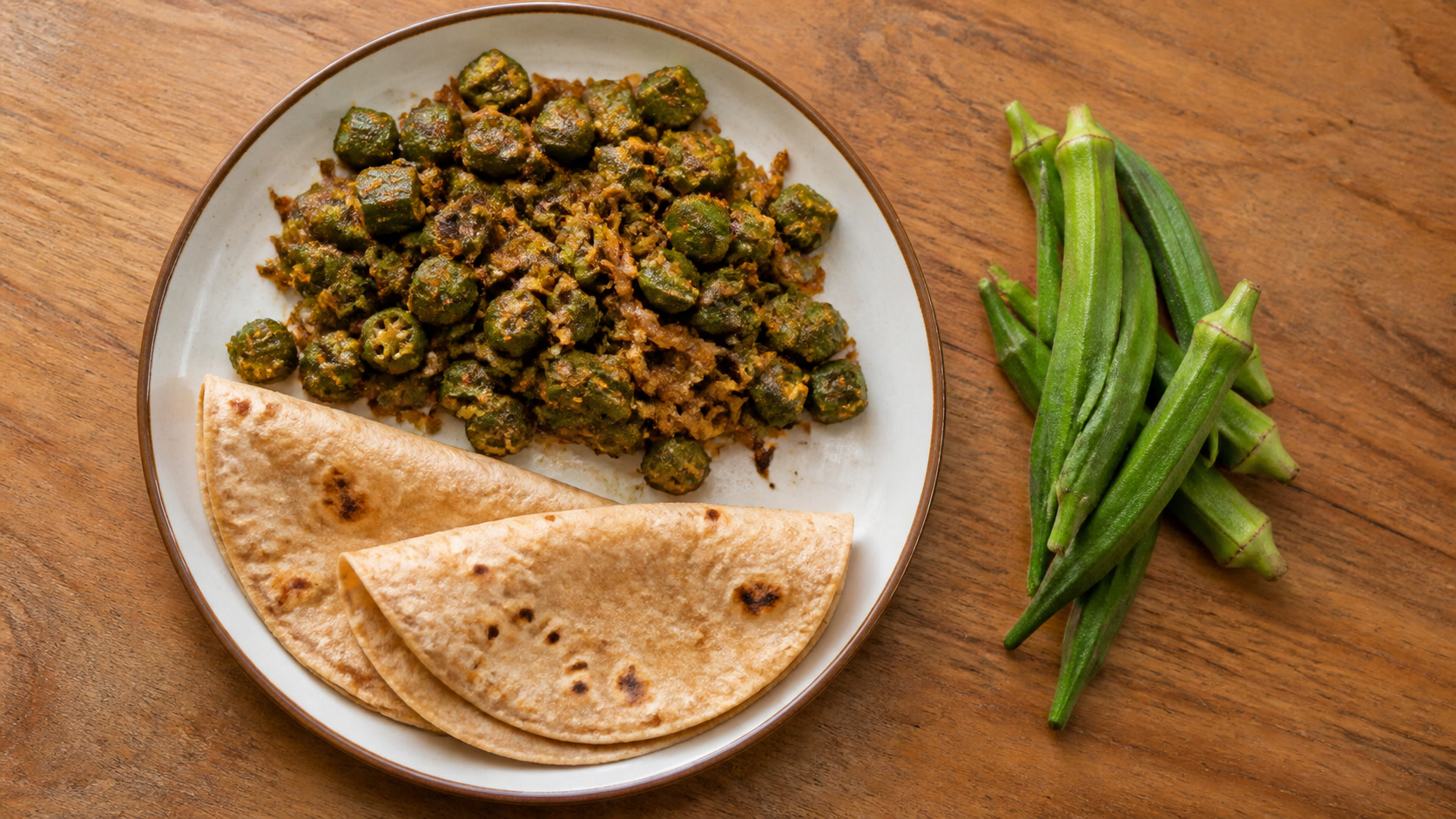
Bhindi with roti (بھنڈی + روٹی) is about 410 calories per serving: a dry okra sabzi fried in a modest amount of oil, served with two whole-wheat rotis made from 30 g of atta each. The okra itself is light, but it is shallow-fried, so the oil adds roughly as many calories as the vegetable, onion and tomato combined.
Quick answer
- Calories: ~410 kcal per serving (likely range 345-460)
- Serving: one quarter of the sabzi (about 200 g of raw okra, 1 tbsp of oil) plus 2 rotis from 30 g of atta each
- Serves: 4 · Cook time: 30 min
- Region: Punjabi · Tags: vegetarian
Calories in Bhindi + Roti: the count
~410 calories per serving. The recipe makes four servings from 800 g of okra, 2 onions, 2 tomatoes and 1/4 cup (60 ml) of oil, plus 8 rotis from 2 cups (about 240 g) of atta. One serving is a quarter of the sabzi and two rotis.
| Part of the plate | Approx. kcal |
|---|---|
| Okra, onion, tomato and spices | ~100 |
| Frying oil that ends up in the serving | ~105 |
| Bhindi sabzi alone | ~205 (175-240) |
| 2 rotis (60 g atta) | ~205 |
| Total | ~410 (345-460) |
What drives the bhindi roti calorie count
- Oil is the biggest swing. 1/4 cup of oil is about 55 g, or roughly 490 kcal for the whole pot. We assume 70-100% of it is eaten, because okra soaks up a lot while frying and some stays in the pan.
- Okra, onion and tomato are cheap in calories. 800 g of okra is about 265 kcal for the whole pot, which is about 66 kcal per serving.
- Roti size matters. We assume 30 g of atta per roti (2 cups of flour, 8 rotis), which is a medium roti. A bigger roti moves the total quickly.
Bhindi + Roti macros at a glance
Per serving, the plate is roughly 60% carbohydrate, 28% fat and 12% protein by calories. The rotis supply most of the carbohydrate and protein; the frying oil supplies most of the fat. Okra adds fibre.
Bhindi + Roti: full macro breakdown
For a ~410 kcal serving (a quarter of the sabzi plus 2 rotis from 30 g of atta each):
| Macro | Approx. amount (likely range) | % of calories |
|---|---|---|
| Protein | 13 g (11-14 g) | ~12% |
| Carbohydrates | 66 g (56-73 g) | ~60% |
| Fat | 14 g (11-16 g) | ~28% |
| Fibre | 14 g (13-16 g) | n/a |
Percentages are computed from grams with 4/4/9 kcal per gram, so they add to 100% of that sum; USDA’s own energy figure for whole-wheat flour is slightly lower, which is why the grams multiply out to a little more than 410 kcal. Fibre comes from the USDA values for okra, onion, tomato and whole-wheat flour.
How Bhindi + Roti fits a desi diet
At ~410 calories this is a moderate vegetarian meal with a good amount of fibre. Because the sabzi carries about half the calories, the oil is as important a lever as the roti count. To bring it down, use less oil or one roti. For more protein, add daal or yogurt.
Bhindi + Roti portion size comparison
| Version | What changes | Calories per serving |
|---|---|---|
| Lighter | 1 roti (30 g atta), standard bhindi | ~305 |
| Half the oil | 2 rotis, 2 tbsp oil in the whole pot instead of 4 | ~355 |
| Standard (this recipe) | 2 rotis, 1/4 cup oil in the pot | ~410 |
| With daal | Standard + 100 g plain boiled toor daal | ~530 |
| With yogurt | Standard + 100 g plain whole-milk yogurt | ~470 |
| Double the oil | 2 rotis, 1/2 cup oil in the pot, all eaten | ~510 |
The daal and yogurt rows use USDA values (boiled toor, 121 kcal per 100 g; plain whole-milk yogurt, 61 kcal per 100 g). Daal cooked with a tarka will be higher.
What changing the oil does to the number and to the dish
Every tablespoon of oil in the whole pot is about 120 kcal, and about 25-30 kcal lands on each of the four plates. The table shows the arithmetic; the cooking effects below it are what to expect in the pan, not measured results.
| Oil in the whole pot | Calories per serving (2 rotis) | What you are likely to notice |
|---|---|---|
| 1 tbsp | ~330 | Okra sticks and scorches easily; flat, dry-tasting masala |
| 2 tbsp | ~355 | Works in a non-stick pan with a hot, dry okra; less gloss |
| 1/4 cup (this recipe) | ~410 | Golden, separate pods and a glossy masala |
| 1/2 cup, all eaten | ~510 | Greasy plate, oil pooling in the pan, heavy after eating |
If you use less oil:
- Okra catches on the pan and browns unevenly, and a crowded pan steams the pods, which brings the slime back instead of removing it.
- The sabzi tastes flatter, and a meal with very little fat can leave you hungry sooner. Eating more sabzi or adding ghee on the roti then cancels the saving.
- Some fat helps the body absorb fat-soluble vitamins (A, D, E, K) and carotenoids such as the lycopene in tomato. Cutting oil down is reasonable; cutting it to nothing is not the goal.
If you use more oil:
- Each extra tablespoon in the pot adds roughly 25-30 kcal per plate, and it does not fix sliminess; a dry okra and a hot pan do.
- The dish turns greasy and the masala separates into an oil layer. Skimming that oil off is the easiest way to claw some of it back.
If the calories drop less than you expected: our figures assume 70-100% of the oil is eaten. Oil left in the pan, or a non-stick pan, lowers your real number; extra oil on the roti or a bigger portion raises it. Measure the oil with a spoon, not by eye, and weigh your own food for the closest figure. If you have a condition that needs a set fat intake, such as gallbladder or pancreas problems or high cholesterol, follow your clinician’s advice rather than these estimates.
Tips for a lighter Bhindi + Roti
- Measure the oil. Going from 1/4 cup to 2 tbsp in the pot saves about 55 kcal per serving. A non-stick pan and a hot, dry okra help it fry without extra oil.
- Don’t add oil to fix slime. Dry okra and a hot pan reduce stickiness; extra oil does not.
- Swap one roti for more sabzi only if the oil stays the same. Eating more sabzi from the same pot eats more oil too.
- Mix in multigrain atta. It can change fibre and protein per roti slightly; we have not recomputed the totals for it.
- Add lemon instead of extra fat to finish the dish.
Frequently asked questions about Bhindi + Roti calories
Is bhindi good for weight loss?
Okra itself is low in calories (33 kcal per 100 g raw, USDA) and has fibre, so it can fit a weight-loss plan. In this recipe the oil adds about as much as the vegetables, so the portion of oil matters as much as the portion of okra.
Is bhindi + roti a complete meal?
It is light on protein at about 13 g a serving. Pairing it with a small bowl of daal, a boiled egg or yogurt rounds it out; see the portion table above for calorie additions.
How many calories does bhindi alone have, without roti?
About 205 kcal per serving (range 175-240) for a quarter of this recipe, most of it from the frying oil. A drier, lower-oil version with 2 tbsp of oil in the pot is about 150 kcal.
Is bhindi good for diabetics?
Okra is a fibre-rich, low-carbohydrate vegetable, and whole-wheat roti is usually a better choice than white flour. We have not calculated a glycaemic load for this meal, and people managing diabetes should follow advice from their own doctor or dietitian.
How we calculate bhindi roti calories
These numbers are estimates, not laboratory values. We converted the recipe to grams (okra 800 g, onions 2 medium at about 110 g each, tomatoes 2 medium at about 120 g each, oil 60 ml at about 55 g, atta 2 cups at about 120 g per cup) and added each ingredient using per-100 g values from USDA FoodData Central: okra, raw (FDC 169260), whole-grain wheat flour (FDC 168893), onion (FDC 170000), tomato (FDC 170457) and peanut oil as a stand-in for cooking oil (FDC 171410). Spices and green chilli are our own small estimates (about 20 kcal for the whole pot). We assume 70-100% of the frying oil ends up in the servings, 25-32 g of atta per roti and 90-100% of the okra weight after trimming; that gives the range shown. Your oil, roti size and cup measure will move the result, so weigh your food for the closest figure. This is general nutrition information, not medical or dietary advice.
Related reading on Bhindi + Roti
- Bhindi + Roti recipe: the full cooking method
- Calories in Lauki ki Sabzi + Roti: a tomato-onion bottle gourd sabzi with roti
- Calories in Aloo Anda: a potato-and-egg curry at about 360 kcal that is also eaten with roti
- Roti nutrition facts: a full breakdown of what’s in each roti
- Roti and chapati calorie guide — how size and ghee change the roti on this plate
Get the exact calorie count for Bhindi + Roti
Your roti size and the oil used to fry the bhindi are the main variables. RotiAI computes the kcal for your bhindi + roti, and Sehat Mode can build meals like this into a personalized desi diet plan.


