 RotiAI

The calories in a chapati (چپاتی) come out to roughly 70–120 calories for a plain whole-wheat one, with a typical medium chapati sitting around 90–110 calories. If “chapati” and “roti” sound like the same thing to you — they basically are, and they carry the same calorie count. Here’s the full picture so you can count yours accurately.
Chapati and roti are the same food
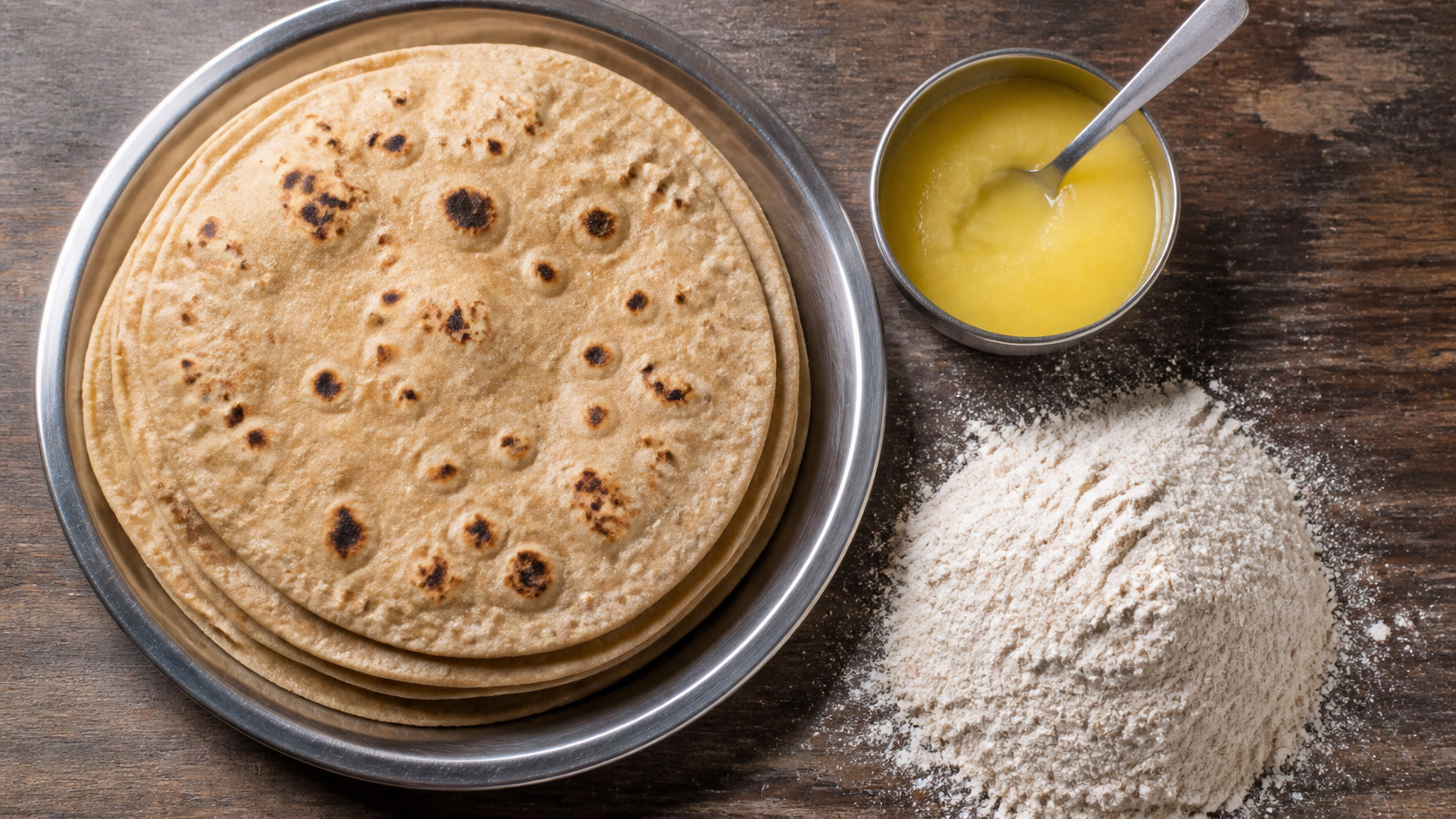
A chapati is an unleavened whole-wheat flatbread cooked on a tawa — which is exactly what a roti is. The words are used interchangeably across South Asia. So any “roti calories” number applies directly to your chapati. The calories come almost entirely from the atta (whole-wheat flour); the water and dry cooking add essentially nothing.
Calories in chapati, by size
| Chapati size | Approx. flour | Calories |
|---|---|---|
| Small (~6 inch) | ~20–25 g | 70–85 kcal |
| Medium (~7 inch) | ~30 g | 90–110 kcal |
| Large (~8–9 inch) | ~40–50 g | 120–150 kcal |
Rule of thumb: whole-wheat atta is about 340 calories per 100 g, and a chapati holds roughly that ratio of the flour you used.
What raises the count
- Ghee or oil: +30–45 calories per teaspoon. A plain chapati vs. a ghee-brushed one can differ by 40+ calories.
- Thickness: a thick chapati is just more flour than a thin phulka.
- Maida chapati: slightly different from atta but roughly the same calories — you just lose the fiber that keeps you full.
Nutrition beyond calories
A whole-wheat chapati isn’t only about the number — it brings fiber, slow-digesting carbs, and a little plant protein, which is why it’s a steadier everyday base than white rice or naan. That fiber is also why two chapatis feel more satisfying than the calories alone suggest.
Fitting chapati into your day
Treat your chapati count as a carb budget. Two medium chapatis (~200 calories) with daal or sabzi is a balanced, filling meal under 500 calories. Cutting calories? Drop to one chapati and bulk up the plate with salad and a protein like grilled chicken or an egg.
Chapati: full macro breakdown
A medium (7-inch, ~30 g atta) chapati works out to roughly:
| Nutrient | Amount (medium chapati) |
|---|---|
| Calories | ~100 kcal |
| Carbohydrates | ~18–20 g |
| Protein | ~3 g |
| Fat | ~1–2 g (more with ghee) |
| Fiber | ~2–3 g |
Carbs dominate, which is expected for a wheat flatbread — but the fiber from whole-wheat atta is what separates it nutritionally from refined-flour breads like naan or paratha, which strip most of that fiber and add oil in the layering.
Portion comparison table
| Portion | Flour used | Calories | Best for |
|---|---|---|---|
| 1 small chapati | ~20 g | ~75 kcal | Light snack, kids’ portion |
| 1 medium chapati | ~30 g | ~100 kcal | Standard single serving |
| 2 medium chapatis | ~60 g | ~200 kcal | Full meal with daal/sabzi |
| 1 medium + 1 tsp ghee | ~30 g + ghee | ~135 kcal | Richer everyday roti |
| 1 large chapati | ~45 g | ~135 kcal | Heavy appetite, single roti meal |
Frequently asked questions about Chapati calories
Is chapati good for weight loss?
Yes, especially compared to rice or naan at the same calorie count — the fiber in whole-wheat atta slows digestion and keeps you full longer, so you’re less likely to overeat later. The habit that actually moves the needle is portion count (one vs. three) and skipping the ghee brushing, not switching away from chapati itself.
Is chapati better than rice for calories?
Gram for gram they’re close, but chapati usually wins on satiety because of its fiber and protein content. A cup of white rice (~200 kcal) digests faster than two chapatis at a similar calorie count, which is why many people feel hungrier sooner after a rice-heavy meal.
How many chapatis should I eat a day to lose weight?
Most weight-loss plans keep it to 2–3 medium chapatis a day, split across meals, paired with protein and vegetables. The exact number depends on your total calorie target — see roti vs. rice for weight loss for a fuller comparison.
Does a thin phulka have fewer calories than a regular chapati?
Yes, modestly — a thin phulka uses slightly less flour for the same diameter, so it can run 10–15 calories lighter than a thicker chapati of the same size, mainly because it’s rolled thinner rather than cooked differently.
Is maida (white flour) chapati worse than atta chapati?
Calorie-wise they’re nearly identical, but maida loses the bran and germ during milling, so you lose most of the fiber and micronutrients. If you’re counting calories only, it doesn’t matter much; if you care about satiety and blood sugar, atta is the better everyday choice.
Lower-calorie variants
- Roll it thinner. A thin phulka uses less flour per chapati than a thick one for the same diameter — an easy 10–15 calorie cut with no other change.
- Skip the ghee brushing. Dry-cooked chapati saves 30–45 calories per piece versus one brushed with a teaspoon of ghee.
- Mix in bran or multigrain atta. Adding wheat bran or a multigrain blend bulks up the fiber without adding meaningful calories, so you feel full on fewer chapatis.
- Watch the count, not just the size. Two medium chapatis at 100 kcal each beats one large chapati at 150 kcal plus a second small one out of habit — track pieces, not “a chapati.”
Related reading on Chapati
- How many calories in 1 roti — the same flatbread, broken down piece by piece
- Roti nutrition facts — vitamins, minerals, and fiber beyond just calories
- Daal chawal recipe — a classic pairing if you’re building a full meal around your chapati
- Calories in roti and chapati: the complete guide — flours, ghee, and rotis per day
Count your chapati exactly
Because size and ghee move the number, a table only gets you close. RotiAI computes the exact kcal for your chapati and your full plate, and Sehat Mode builds a personalized desi diet plan around the meals you already eat.


