 RotiAI

Beyond calories, the roti (روٹی) nutrition facts are what make this humble whole-wheat flatbread a genuinely smart everyday carb. A plain medium roti runs about 90–110 calories, but the story worth knowing is what those calories bring: fiber, slow-release energy, and a little plant protein. Here’s the honest breakdown.
Roti nutrition facts (1 medium whole-wheat roti, ~30 g atta)
| Nutrient | Approx. per roti |
|---|---|
| Calories | ~90–110 kcal |
| Carbohydrates | ~18–22 g |
| Protein | ~3 g |
| Fiber | ~2–3 g |
| Fat | ~0.5–1 g (plain) |
These are approximate — they scale with your roti’s size and rise sharply if you add ghee (+30–45 calories and ~4–5 g fat per teaspoon). A large roti simply carries proportionally more of everything.
Why whole-wheat roti earns its place
- Fiber that keeps you full. Whole-wheat atta keeps the bran and germ, so a roti delivers fiber that white bread and naan (made with refined maida) lose. That fiber slows digestion and blunts blood-sugar spikes.
- Slow-release carbs. Roti’s energy comes in steadier than white rice, which helps with cravings and afternoon slumps.
- Naturally low in fat. A plain roti has almost no fat — all of it comes from what you add or spread on it.
- Some plant protein. Not a protein source on its own, but the ~3 g per roti adds up across a meal and pairs well with daal or eggs.
Roti vs the alternatives
| Food | Approx. calories | Fiber |
|---|---|---|
| 1 whole-wheat roti | ~100 | Good |
| 1 naan | 250–350 | Low (maida) |
| 1 cup white rice | ~200 | Low |
| 1 paratha | 250–300 | Moderate (but oily) |
For everyday desi eating, whole-wheat roti is the most nutrient-dense-per-calorie choice on this list.
Making roti work for your goals
The roti is rarely the problem — the count and the ghee are. Keep it to two medium plain rotis at a meal, pair with a protein and vegetables, and you’ve got a balanced plate. For weight loss, switch one roti for extra salad; for muscle, keep the rotis and add daal, eggs, or chicken.
Micronutrients roti quietly brings to the table
Beyond the headline macros, whole-wheat atta contributes small but real amounts of:
- B vitamins (thiamin, niacin, folate) — involved in energy metabolism, naturally present in whole wheat.
- Iron and magnesium — whole-wheat flour retains more of these than refined maida because the bran isn’t stripped out.
- Selenium and manganese — trace minerals present in wheat bran and germ.
None of these make roti a “superfood,” but they’re part of why whole-wheat atta is a meaningfully better everyday choice than refined flour — it’s not just about fewer calories, it’s about more nutrition per calorie.
Does roti spike blood sugar?
Less than you’d expect for a carb-heavy food, and far less than white rice or naan. The fiber in whole-wheat atta slows down how fast the carbohydrate is absorbed, which blunts the blood-sugar spike compared to refined-flour foods. That’s the main reason roti is often recommended over naan or white rice for people managing blood sugar — though portion size and what’s eaten alongside it (like a sugary drink or a heavy, oily curry) still matter more than the roti itself.
How atta roti compares to other flours
| Flour type | Fiber per roti | Notes |
|---|---|---|
| Whole-wheat atta | ~2–3 g | Standard, best everyday balance of fiber and taste |
| Bajra (pearl millet) | ~2–3 g | Gluten-free, slightly denser, common in winter |
| Jowar (sorghum) | ~2–3 g | Gluten-free, mild flavor |
| Besan (gram flour) | ~2 g + more protein | Used in missi roti, adds plant protein |
| Maida (refined) | <1 g | Used in naan/paratha, much lower fiber |
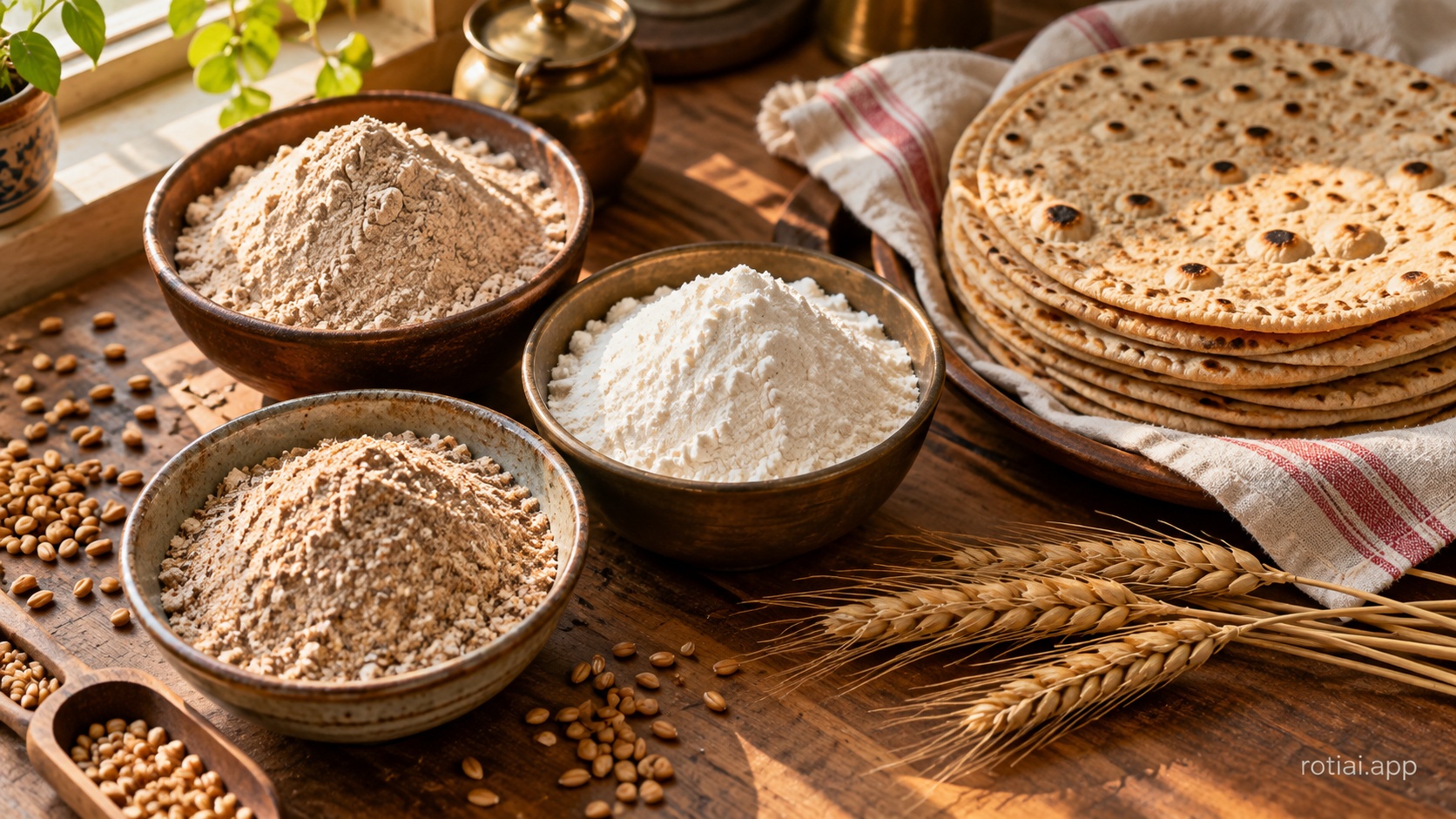
If you’re rotating flours for variety or gluten sensitivity, bajra and jowar roti land close to atta in fiber, while missi roti (besan-blended) edges ahead on protein.
Frequently asked questions about Roti Nutrition Facts calories
Is roti healthier than rice?
For most people, yes — roti has more fiber per calorie and a gentler effect on blood sugar than white rice. Brown rice narrows the gap, but a plain atta roti still edges it out on fiber. See the full comparison in roti vs rice for weight loss.
How much protein is in 2 rotis?
Roughly 5–6 g — not enough to count as a protein source on its own, but a real contribution when paired with daal, eggs, or chicken in the same meal.
Does roti nutrition change if I skip the tawa and cook it over open flame (phulka)?
No — the nutrition comes from the flour, not the cooking method. Phulka is usually just thinner, so it has slightly less flour (and slightly fewer calories) per piece than a thicker tawa roti.
Is roti good before or after a workout?
Its slow-release carbs make it a solid pre-workout carb source for sustained energy; post-workout, pairing it with a protein source (eggs, chicken, daal) supports recovery better than roti alone.
Get precise nutrition for your roti and plate
These figures are solid averages, but your roti’s real numbers depend on its size and prep. RotiAI computes exact calories and nutrition for your roti and any dish beside it, and Sehat Mode turns that into a personalized desi diet plan built around what you actually eat.
Curious exactly how many calories are in your roti specifically? See the full breakdown in how many calories in roti/chapati, or check real pairings like lauki ki sabzi with roti.


