 RotiAI

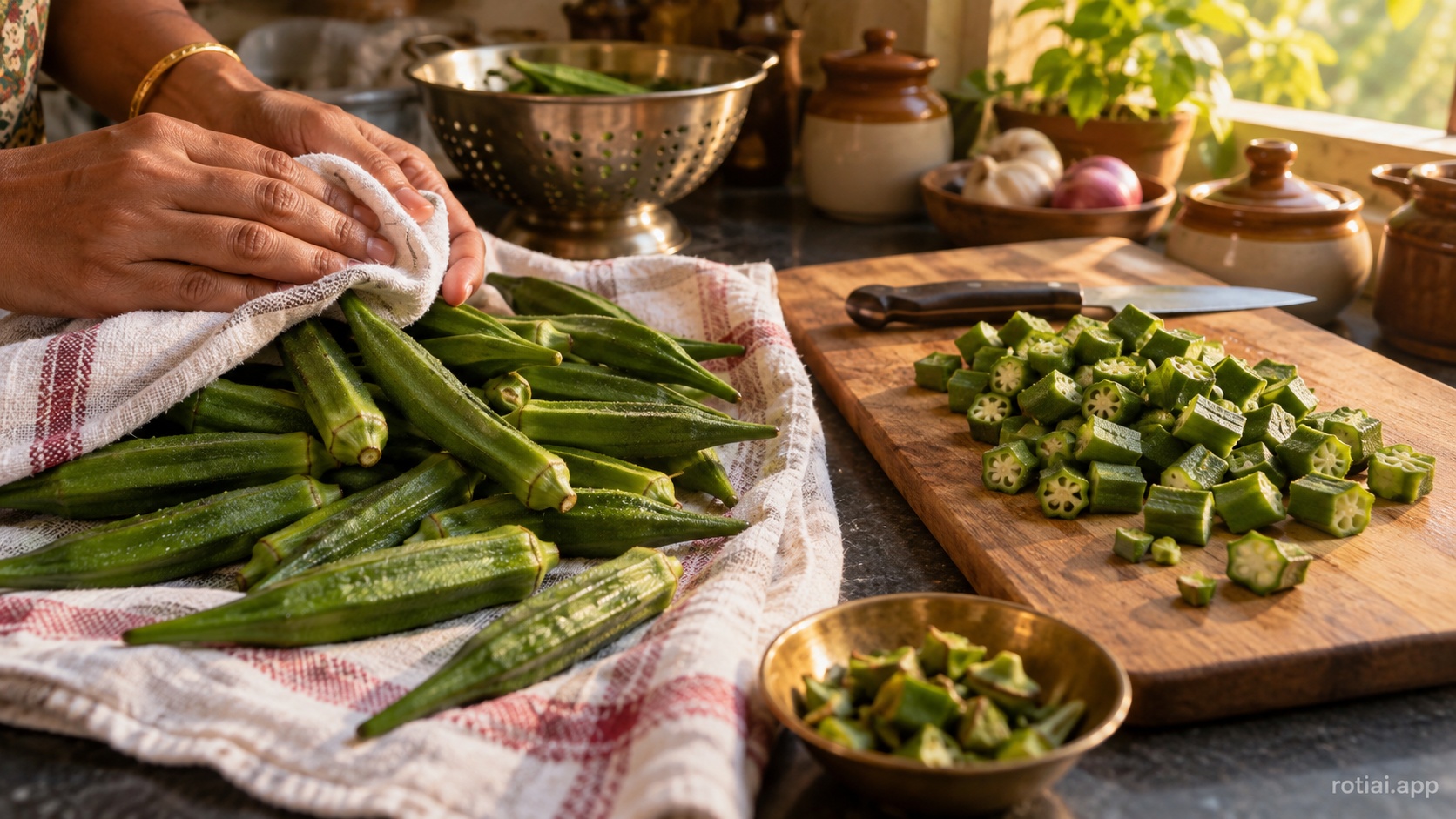
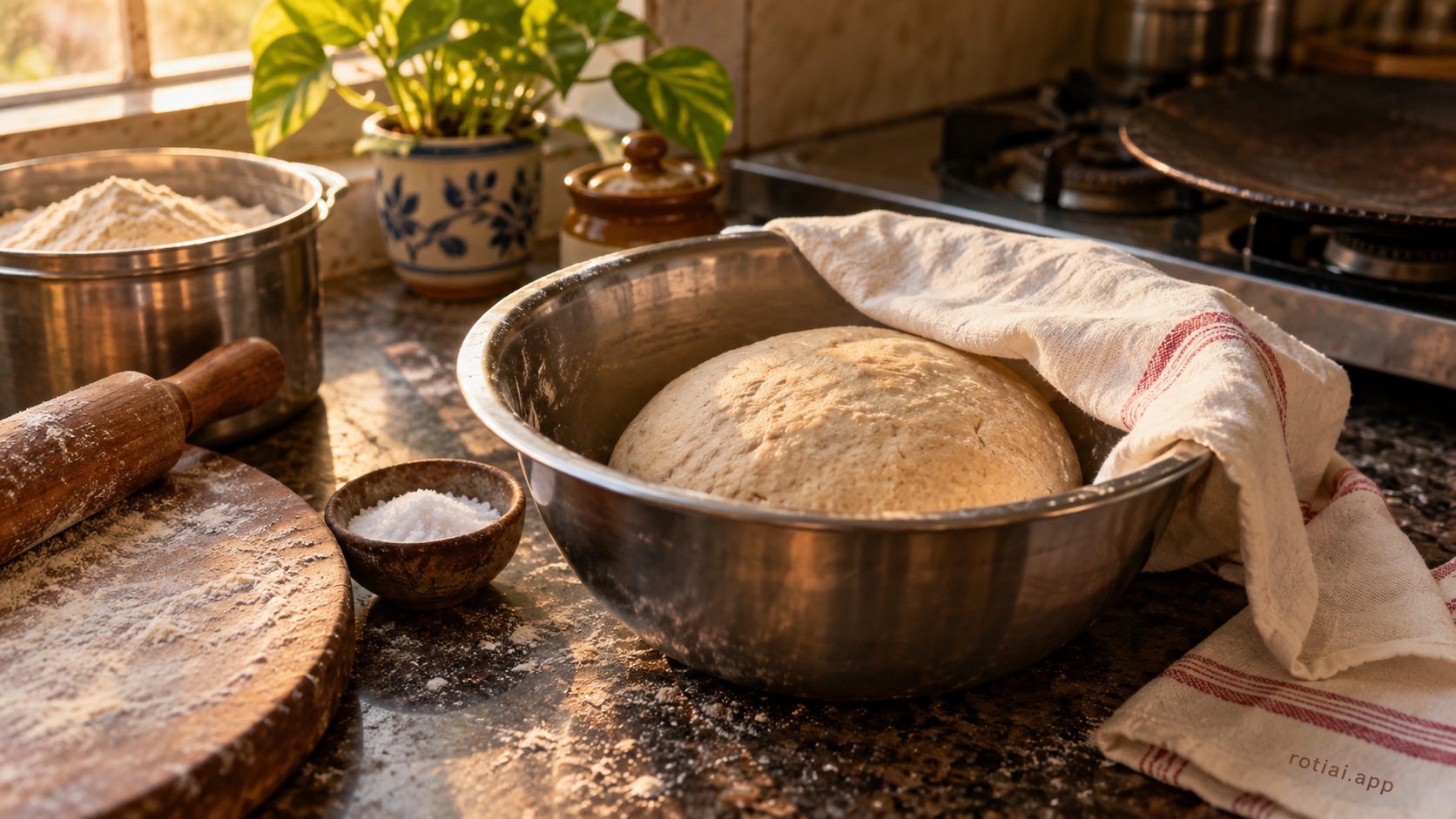
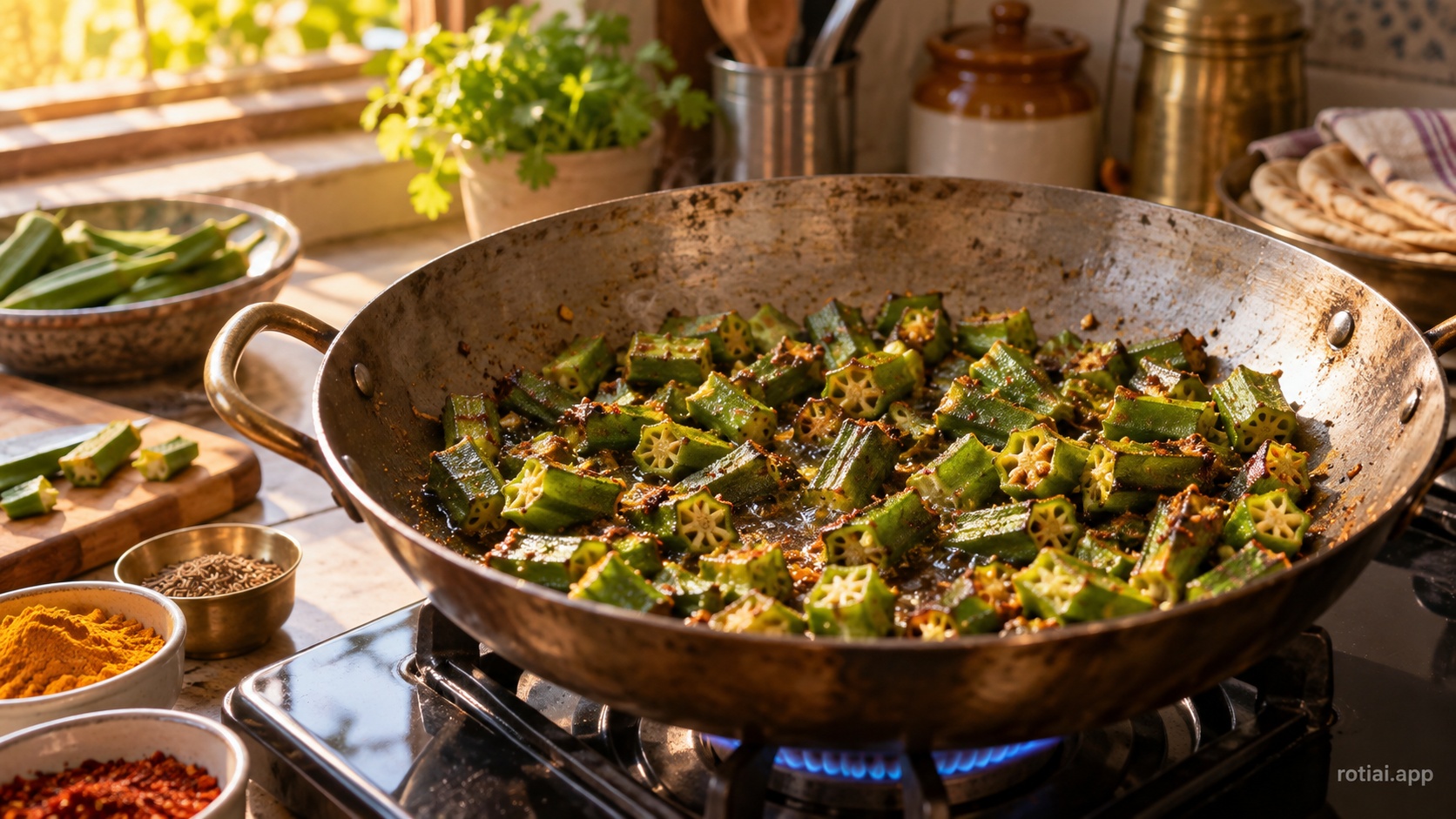
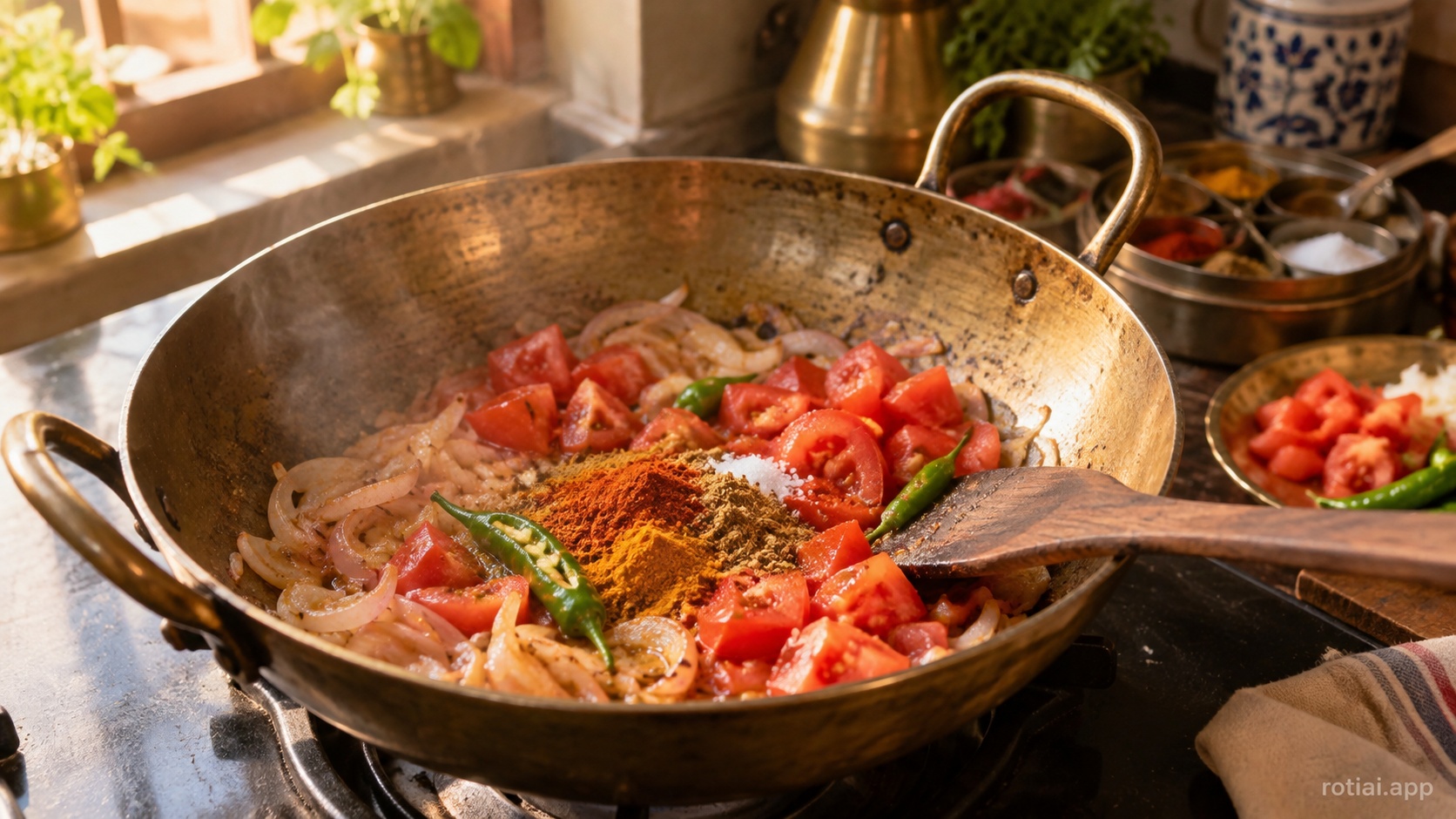
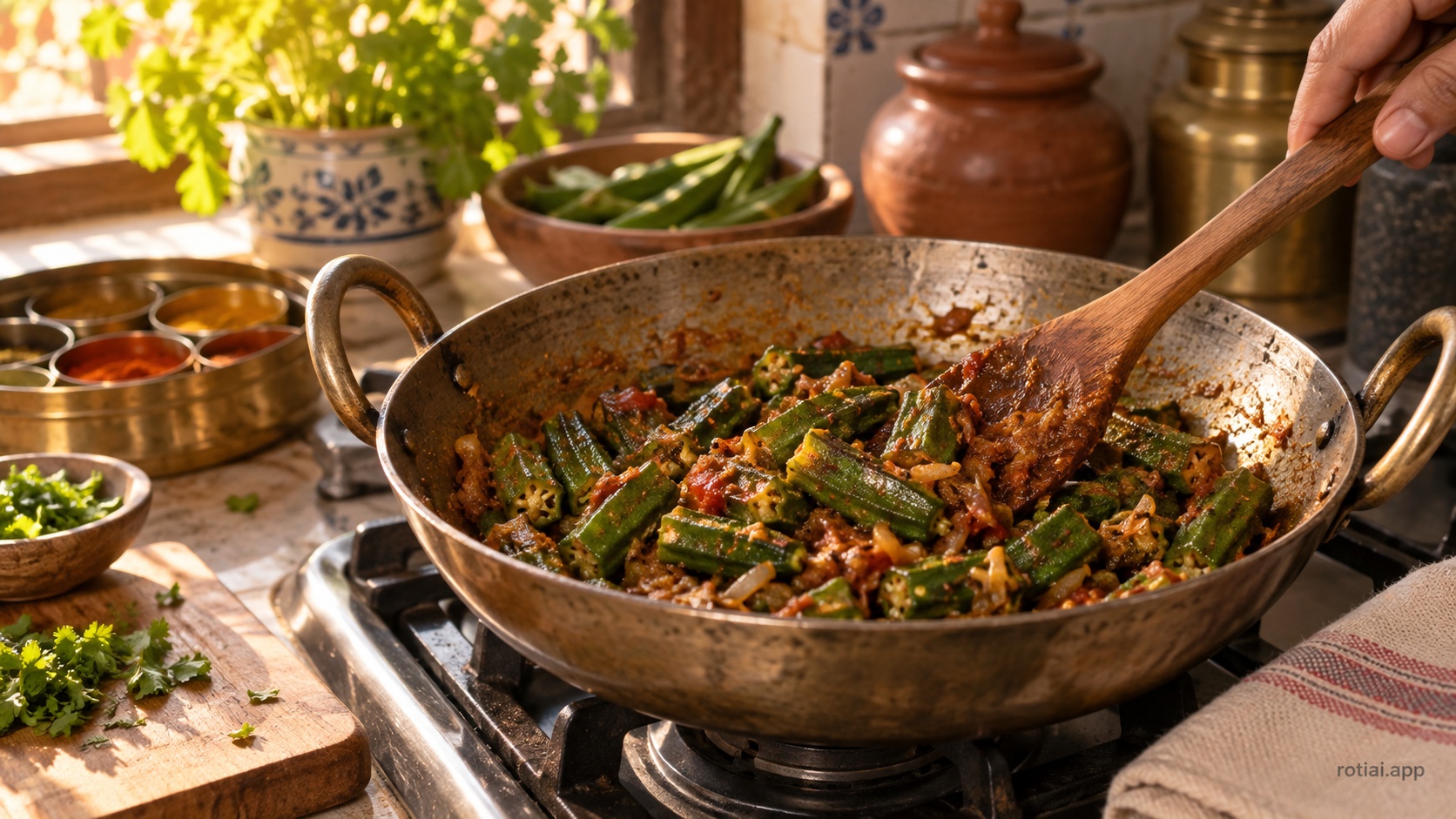
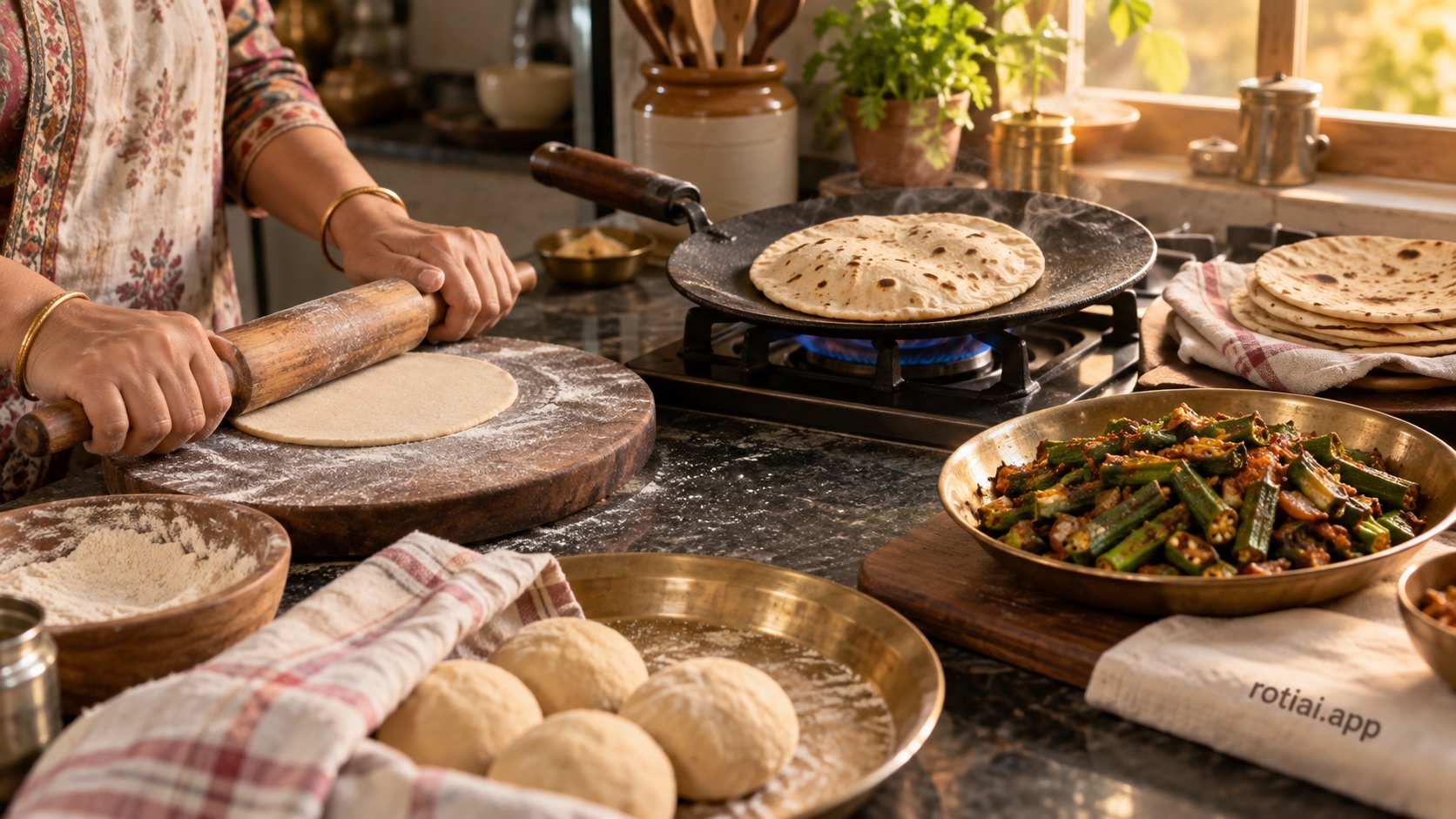
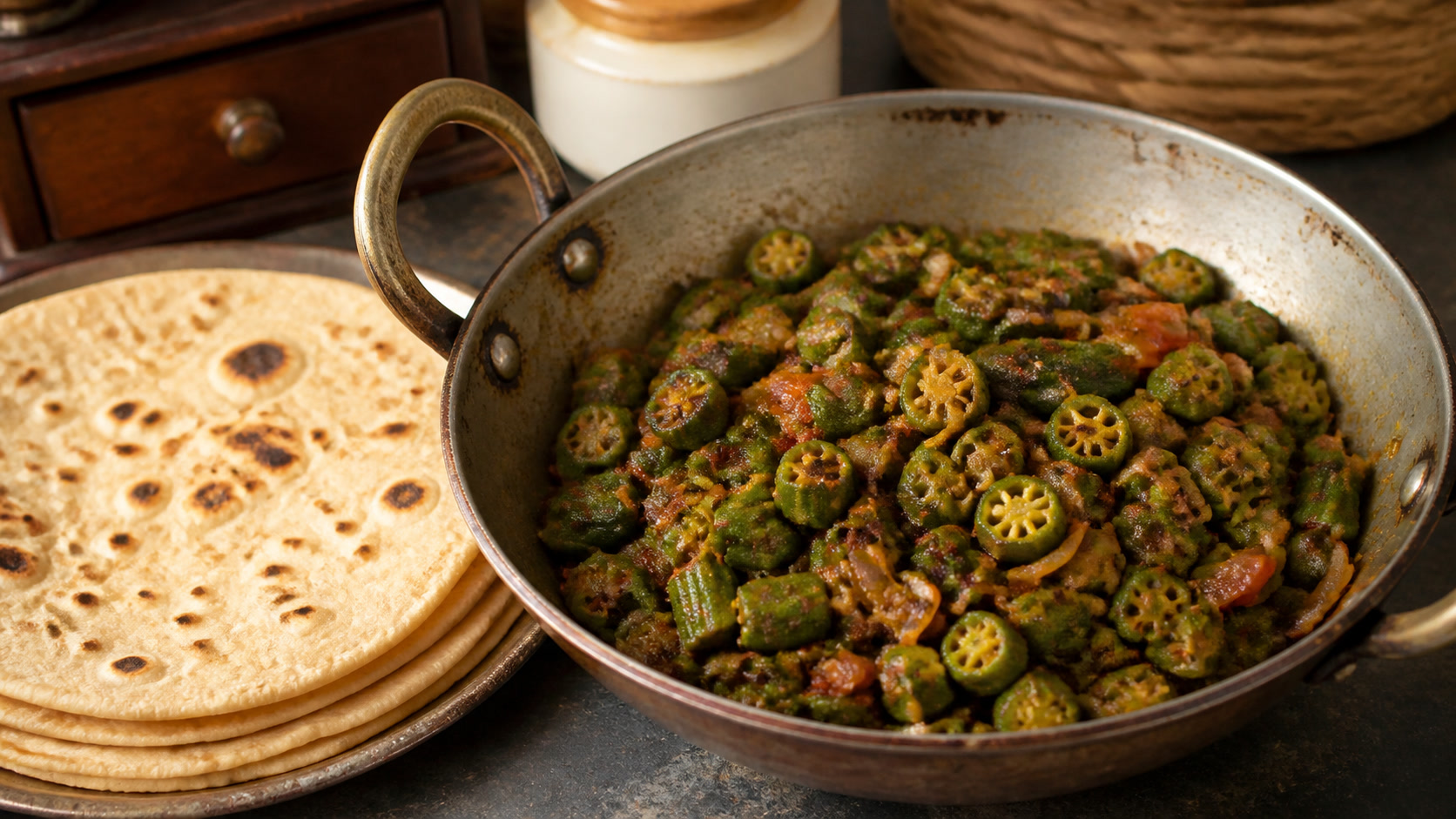
Bhindi with roti (بھنڈی + روٹی) pairs lightly spiced sautéed okra with fresh whole-wheat flatbread — simple and always comforting. This bhindi roti recipe serves 4, takes about 30 minutes, and comes in at roughly 410 kcal per serving (a quarter of the sabzi plus 2 rotis).
Bhindi is a beloved everyday sabzi in Punjabi households, the kind of dish that shows up on the table without fanfare but is missed the moment it’s absent. It’s entirely vegetarian and cooked with a modest 1/4 cup of oil for the whole pot (about 1 tbsp a serving), which keeps the okra tasting fresh rather than heavy. For the numbers (about 410 kcal with two rotis) see bhindi roti calories.
Why this Bhindi + Roti recipe works
Okra’s biggest challenge is its natural sliminess, which comes from a mucilage that’s released once the pods are cut and exposed to moisture. Frying the okra uncovered and over medium-high heat first — before it ever meets the tomatoes and onions — drives off surface moisture fast and seals the cut edges, which is what keeps this bhindi dry and slightly crisp rather than gooey. Cooking the masala separately and only combining at the end also means the onions and tomatoes get properly softened without the okra overcooking into mush.
How to serve Bhindi + Roti
Serve the bhindi hot with fresh rotis straight off the griddle, and a side of plain yogurt or sliced onion if you like. It’s a simple weeknight plate that never feels boring.
Common Bhindi + Roti recipe mistakes to avoid
- Not drying the okra thoroughly. Even a light film of water on washed okra reacts with the mucilage and makes the whole pan slimy. Wash it well ahead of time and pat completely dry — a clean kitchen towel works better than a paper towel for larger batches.
- Covering the pan while frying the okra. Trapped steam is the enemy here. Keep the pan uncovered during the initial fry so moisture escapes instead of condensing back onto the okra.
- Adding more oil to fix texture. Oil is roughly half the calories of the sabzi; 2 tbsp instead of 1/4 cup in the pot saves about 55 kcal a serving.
- Cutting the okra too small. Very small pieces have more cut surface exposed, which means more mucilage release. Stick to the 2 cm size in the ingredients.
- Stirring too often. Constant stirring breaks down the pods and releases more sliminess. Let the okra sit and brown for a minute or two between stirs.
Using less or more oil in this bhindi roti recipe
If you cut the 1/4 cup of oil, expect a trade-off, not a free saving. Each tablespoon removed from the pot takes about 25-30 kcal off every plate, but with 2 tbsp or less the okra sticks and scorches, browns unevenly, and tastes drier. Use a non-stick pan, keep the heat high, add the okra in a single layer, and pat it completely dry before it goes in. Going to zero oil is not the aim: a little fat helps you absorb the vitamins A, D, E and K and the lycopene in the tomatoes.
Adding more oil does the opposite: a heavier, greasy sabzi with oil pooling in the pan, about 100 kcal more per plate at 1/2 cup, and still no help with slime. Measure with a spoon and check the calorie breakdown for different oil amounts. Reduced oil only lowers your number if you do not make it up with extra ghee on the roti or a bigger helping. If a health condition limits your fat intake, follow your clinician’s advice.
Bhindi + Roti recipe variations
- Bhindi do pyaza: double the onions and add them in two stages — half early, half toward the end — for a sweeter, onion-forward version.
- Achari bhindi: add 1/2 tsp of whole mustard seeds and a pinch of nigella seeds (kalonji) to the oil before the onions for a tangy, pickle-spiced twist.
- Stuffed bhindi: slit whole okra pods lengthwise and stuff with a dry spice-and-besan mix before frying, instead of chopping — a popular variation for special occasions.
- Dahi bhindi: stir in 2-3 tablespoons of whisked yogurt at the very end off the heat for a creamier, tangier finish.
Storing and reheating leftover Bhindi + Roti
Bhindi keeps in the fridge for 2-3 days in an airtight container, though the texture softens somewhat on reheating — this is normal for okra dishes. Reheat in a dry pan over medium heat, uncovered, to avoid trapping steam and turning it slimy again; a microwave works in a pinch but the pan gives a better texture. Roti dough can be portioned and refrigerated for up to a day, or the rolled rotis frozen with parchment between layers and cooked straight from frozen.
FAQ: Bhindi + Roti recipe
Why does my bhindi always turn slimy?
Almost always moisture — either the okra wasn’t dried before cutting, or the pan was covered during frying. Both trap the mucilage instead of letting it evaporate off.
Can I use frozen okra?
Fresh is strongly preferred for this dry-style preparation, since frozen okra releases extra water as it thaws and rarely crisps up the same way. If frozen is all you have, thaw and pat it very dry first.
Is bhindi roti good for a low-carb or weight-loss diet?
It is not low-carb: a serving has about 66 g of carbohydrate, mostly from the two rotis. The sabzi is about 205 kcal, about half of it from the frying oil, and the two rotis add about 205 kcal. For a lighter version, see how roti fits into a calorie budget, or check RotiAI’s roti vs rice comparison for portioning ideas.
What other sabzi pairs well if I want variety through the week?
Try lauki ki sabzi for a lighter vegetarian option on a different night (about 350 kcal a serving with 2 rotis).
Where the calories in this bhindi roti recipe come from
These numbers are estimates, not laboratory values. We converted the ingredient list to grams (okra 800 g, onions 2 medium at about 110 g each, tomatoes 2 medium at about 120 g each, oil 1/4 cup = 60 ml = about 55 g, atta 2 cups at about 120 g per cup, so about 30 g per roti for 8 rotis) and summed per-100 g values from USDA FoodData Central: okra raw (FDC 169260), whole-grain wheat flour (FDC 168893), onion (FDC 170000), tomato (FDC 170457), and peanut oil for cooking oil (FDC 171410). Spices and chilli are our own estimate. We assume 70-100% of the oil ends up in the servings. The result is about 410 kcal per serving with a likely range of 345-460; the full breakdown is on the bhindi roti calorie page. This is general nutrition information, not medical or dietary advice.
Cook Bhindi + Roti smarter with RotiAI
Wondering how a homestyle sabzi like this fits your daily calories? RotiAI works out kcal for any desi dish, and Sehat Mode can build everyday meals like bhindi roti right into your personalized diet plan.


Comments
to leave a comment — same account as the RotiAI app.
Check your email for a sign-in link.
Commenting as ·
Loading comments…