 RotiAI

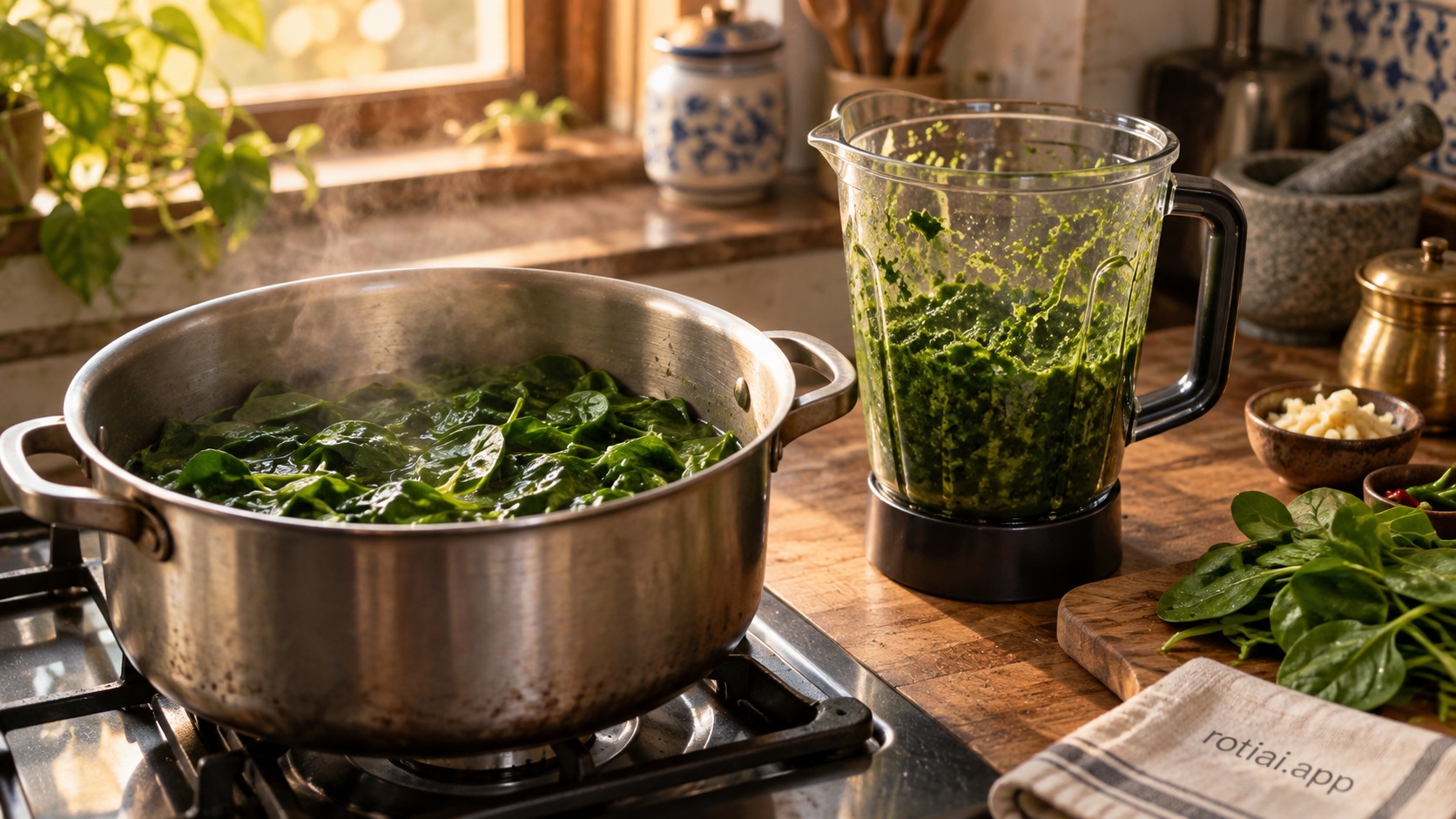
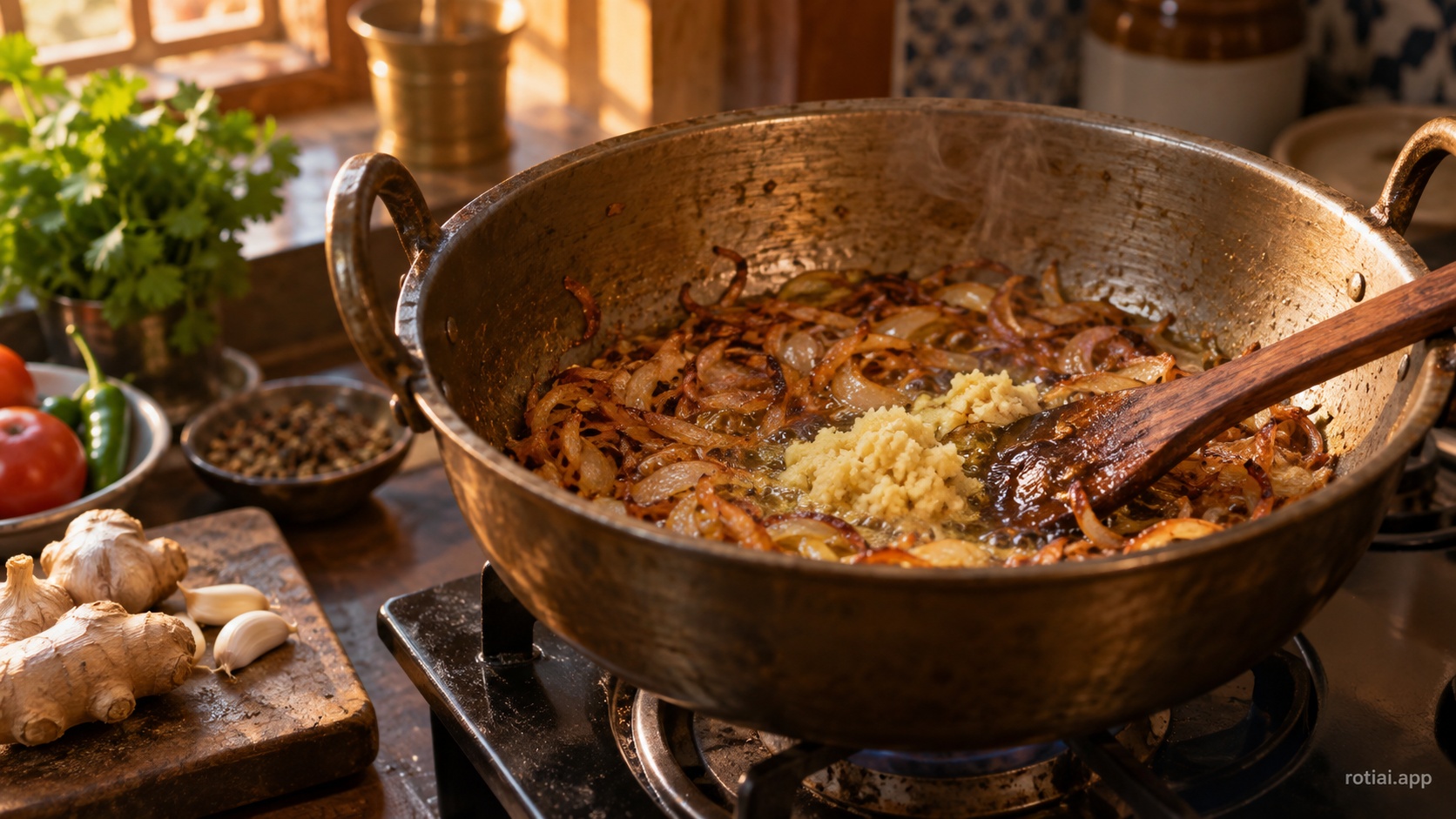
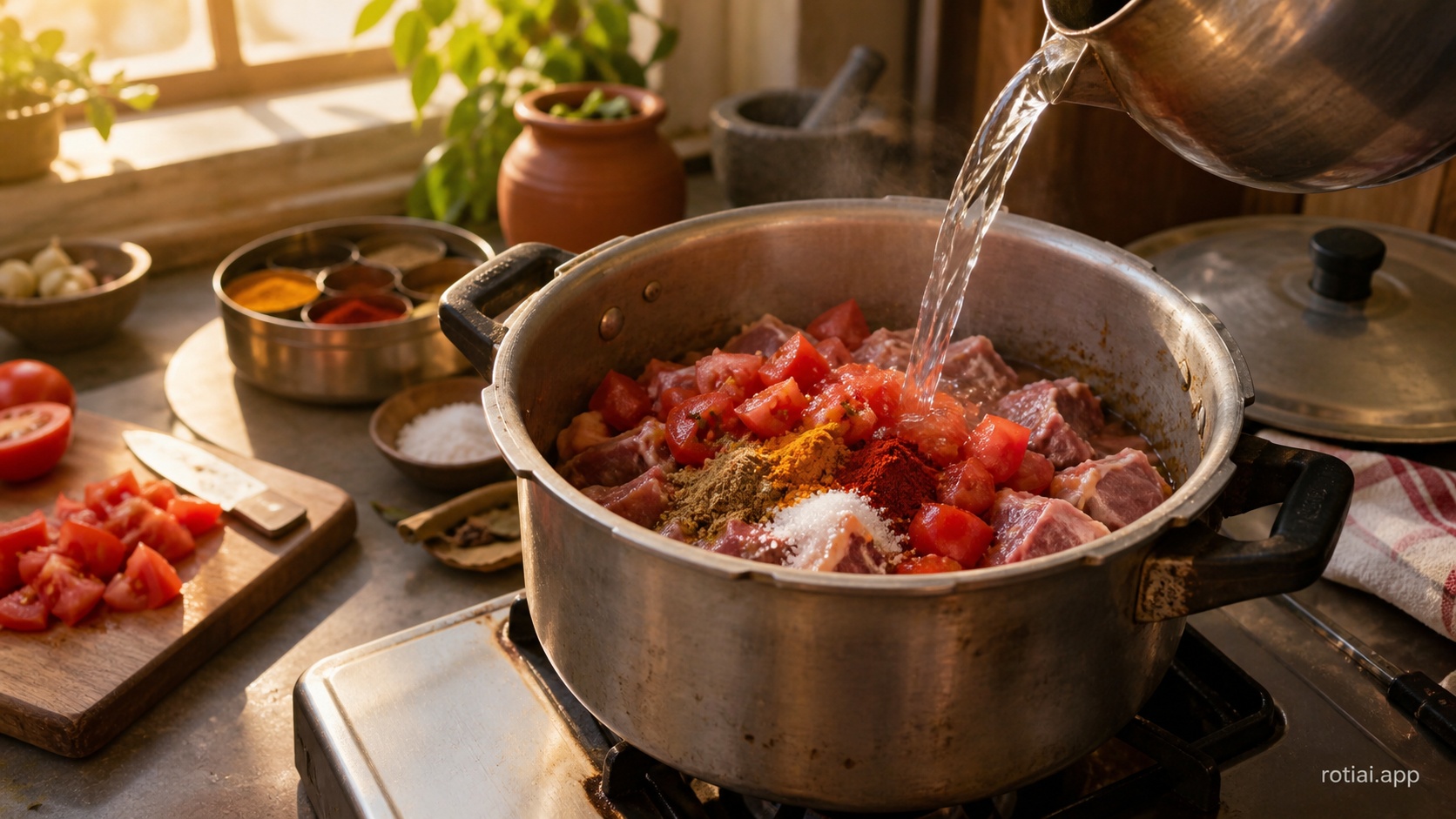
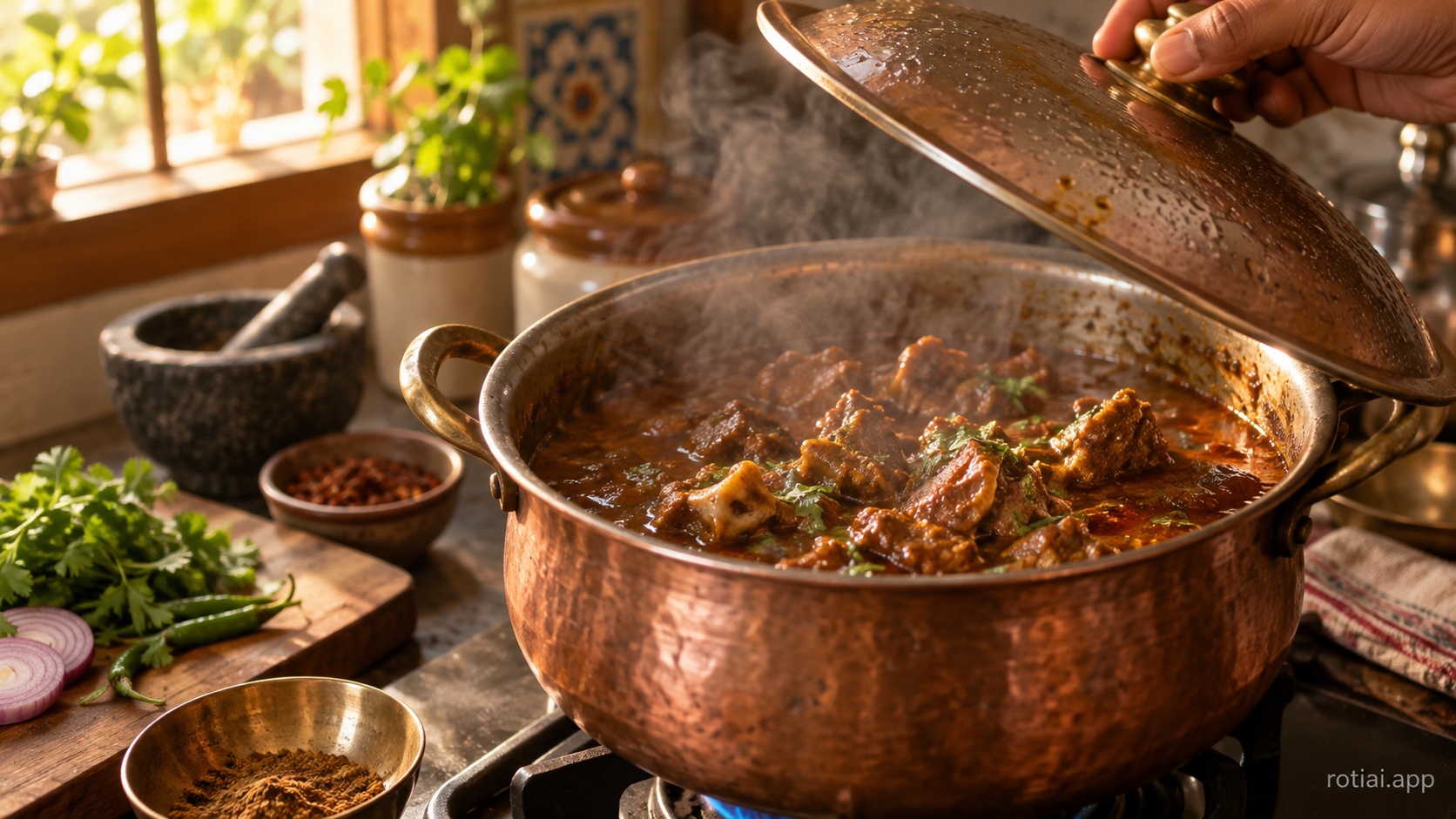
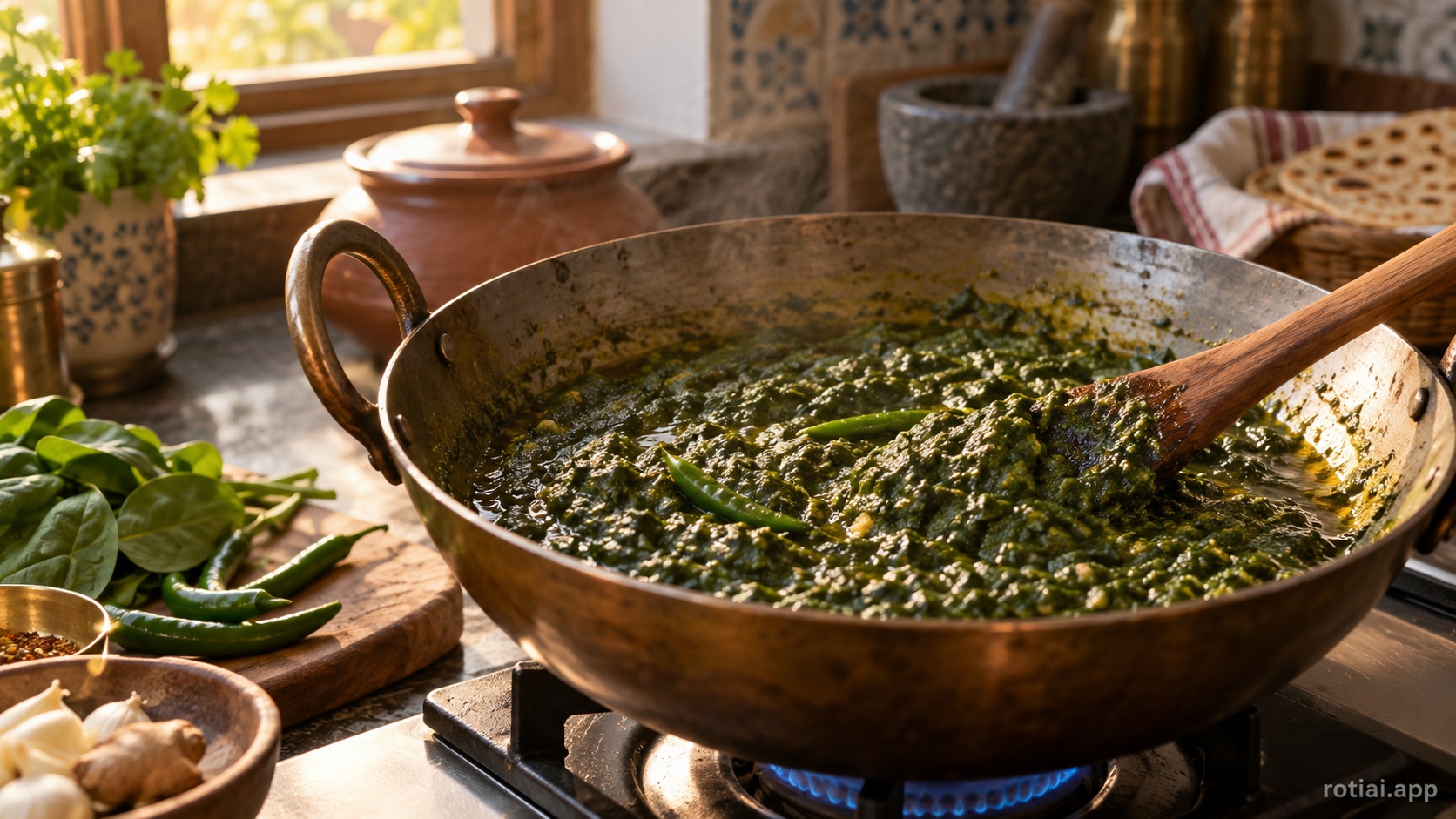
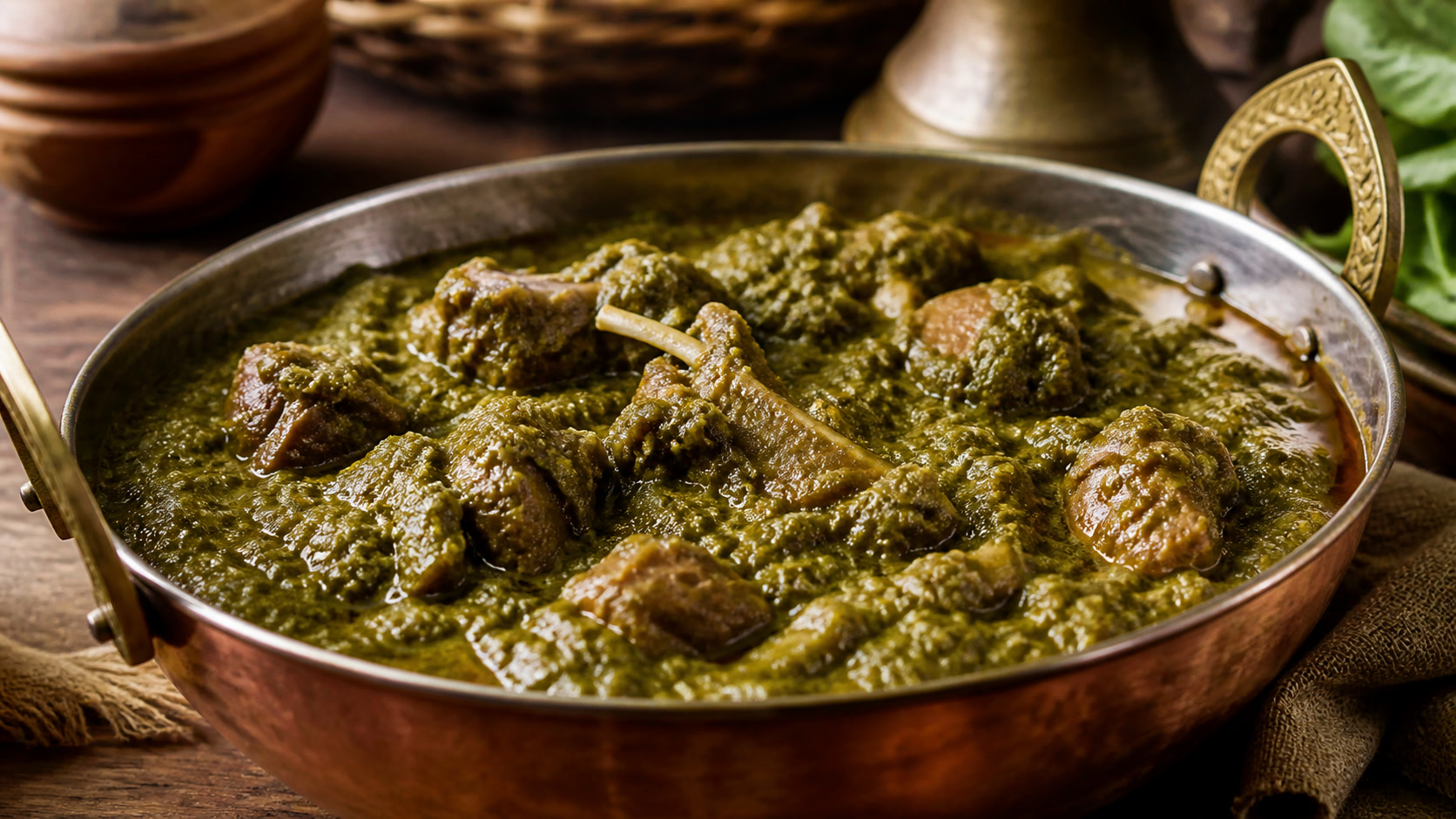
Palak gosht (پالک گوشت) is the kind of slow-cooked curry that fills the house with the smell of home — tender bone-in mutton simmered into a rich, deep-green spinach gravy. This palak gosht recipe serves 4, takes about 45 minutes, and delivers roughly 420 kcal per serving, making it a proper, satisfying main course.
A classic from Punjab, palak gosht is the dish families reach for on cold winter evenings, when a hearty, iron-rich dinner is exactly what’s needed. Between the mutton and the spinach, it’s genuinely high in protein and iron, which is part of why it’s stayed a family-dinner favourite for so long.
Why this Palak Gosht recipe works
Palak gosht lives or dies on two things: how well the mutton is browned early on, and how the spinach is handled. A few things that make a real difference:
- Don’t blend the spinach too fine. A coarse blend keeps a bit of texture in the final gravy — a smooth purée turns the dish into something closer to baby food.
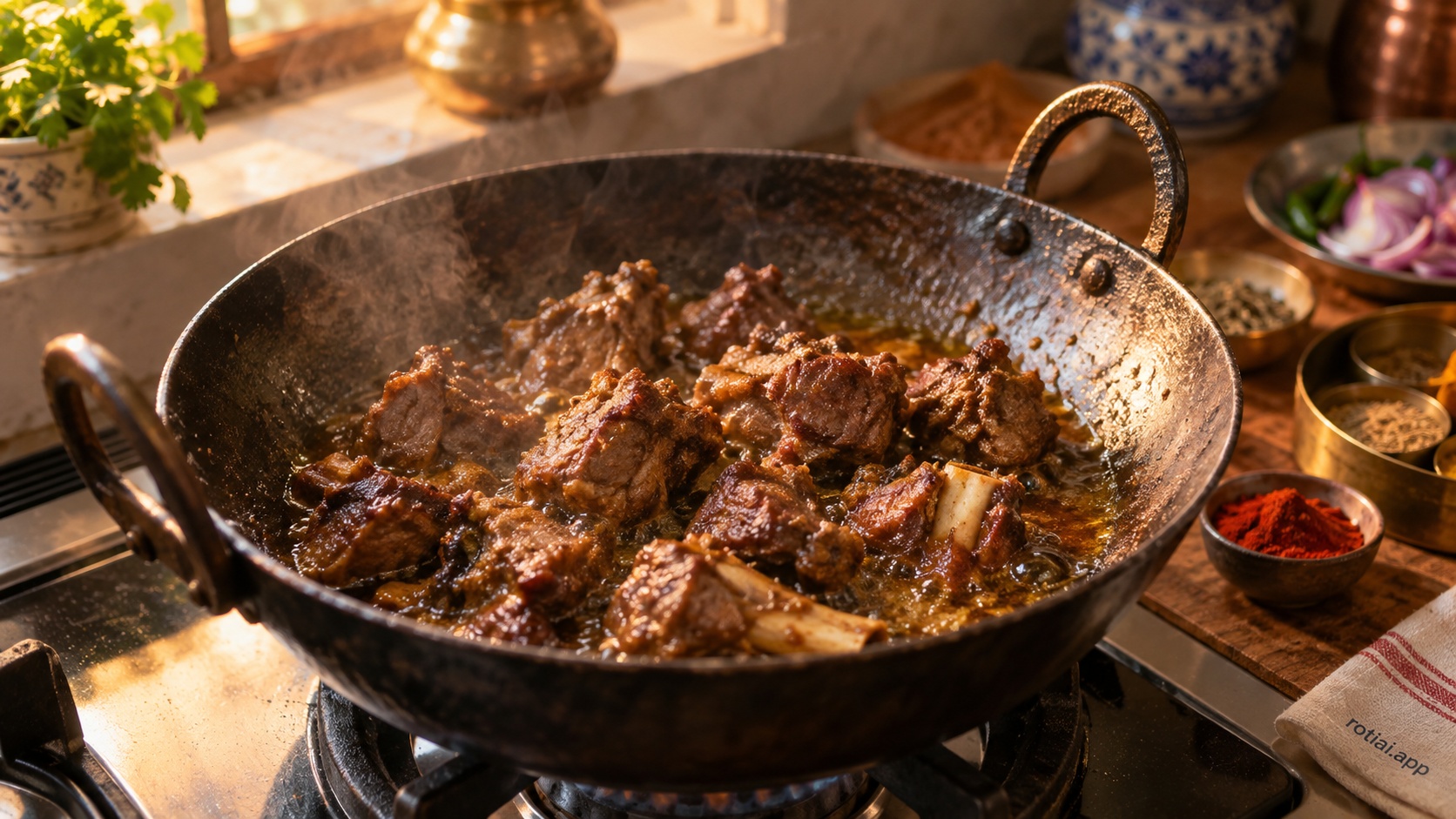
- Brown the mutton properly in step 3. Letting the meat sit undisturbed over high heat until it visibly changes colour and the oil separates builds a depth of flavour that boiling alone can’t replicate.
- Cook the spinach uncovered at the end. This is what lets excess water evaporate and lets the oil rise back to the surface — a sign the dish is properly finished, not just cooked.
- Use bone-in mutton. The bone contributes marrow and collagen during the long simmer, giving the gravy a richness boneless cuts don’t match.
How to serve Palak Gosht
Serve palak gosht hot with plain steamed rice or fresh naan, and a wedge of lemon on the side to cut through the richness. A simple onion-tomato salad works well alongside it too.
Common Palak Gosht recipe mistakes to avoid
- Rushing the mutton simmer. Bone-in mutton genuinely needs 40-50 minutes on low heat to turn tender — cranking the heat to speed things up just toughens the meat.
- Adding the spinach too early. Stirring it in before the mutton is fully tender means it overcooks and loses its bright colour and flavour by the time the meat is done.
- Over-blending the spinach into a completely smooth purée, which loses texture and can make the final dish taste flat.
- Skipping the initial wilt-and-cool step for the spinach, which helps preserve its colour — spinach added raw and cooked for a long time turns a dull, muddy green.
Palak Gosht recipe variations
- Palak keema: swap the bone-in mutton for ground mutton or beef mince for a faster-cooking version, ready in about half the time.
- Chicken palak: use bone-in chicken thighs instead of mutton for a lighter, quicker take — reduce the simmer time to about 20-25 minutes.
- Add a tempering (tarka) of ghee and whole red chillies poured over the top just before serving for an extra layer of restaurant-style richness.
- Lighter version: cut the oil to a quarter cup and skip the final oil-rising step for a leaner curry that still holds most of the flavour.
Storing and reheating leftover Palak Gosht
Palak gosht keeps well in an airtight container in the fridge for up to 4 days, and like most slow-cooked curries, the flavour actually deepens after a day’s rest. Reheat gently on the stovetop over low-medium heat with a splash of water to loosen the gravy, stirring occasionally — this preserves the texture of the mutton far better than microwaving, which can make bone-in meat go rubbery if overheated.
It freezes very well for up to 2 months, making it a good make-ahead option; thaw overnight in the fridge and reheat slowly on the stove rather than defrosting in the microwave, which can unevenly cook the edges.
FAQ: Palak Gosht recipe
Is palak gosht healthy?
Yes, in moderation — it’s high in protein and iron from both the mutton and spinach, though the oil content makes it calorie-dense, so portion size matters if you’re managing intake. See the full calorie breakdown for palak gosht for exact numbers.
Can I make palak gosht with beef instead of mutton?
Yes, bone-in beef works as a substitute, though it typically needs a longer simmer (closer to 60-70 minutes) to reach the same tenderness as mutton.
Why did my spinach turn a dull, brownish green?
This usually happens when spinach is cooked too long or at too high a heat, which breaks down its chlorophyll. Wilting it briefly and blending it coarsely before adding it late in the cooking process, as this recipe does, helps preserve the vibrant colour.
What can I pair with palak gosht besides naan or rice?
A simple chicken yakhni soup or a side salad works well if you want to keep the rest of the meal lighter, since palak gosht itself is fairly rich.
Can I use frozen spinach instead of fresh?
Yes — thawed and drained frozen spinach works fine and saves the wilting step, though fresh spinach generally gives a brighter colour and slightly cleaner flavour to the final gravy.
Cook Palak Gosht smarter with RotiAI
Curious how a bowl of palak gosht fits into your day’s calories? RotiAI calculates kcal for any desi dish — and its Sehat Mode can build a personalized desi diet plan around hearty, nutrient-dense meals like this one. Browse the Rasoi recipe feed for more high-protein mains.


Comments
to leave a comment — same account as the RotiAI app.
Check your email for a sign-in link.
Commenting as ·
Loading comments…