 RotiAI

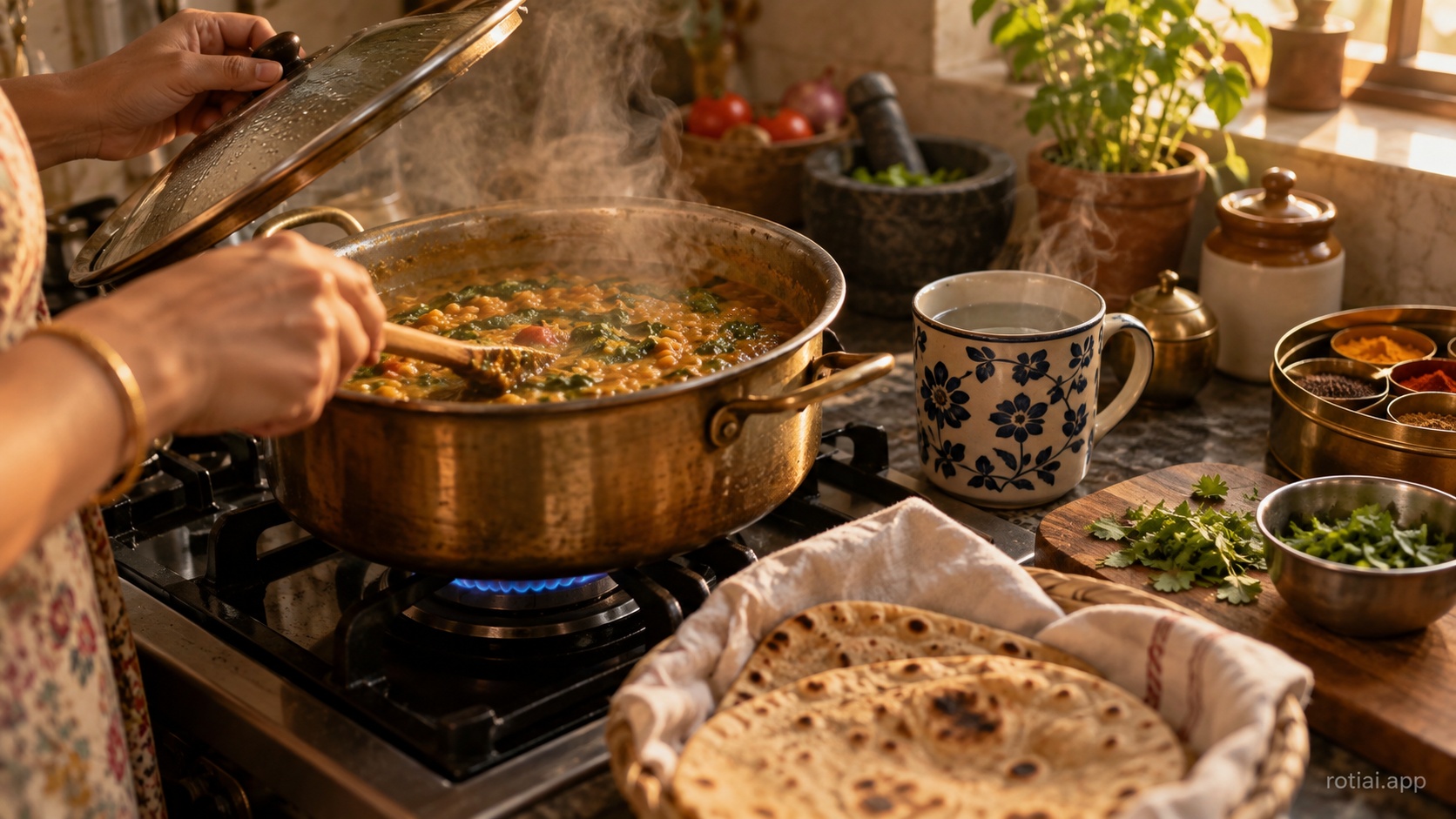
Moong daal khichdi (مونگ دال کھچڑی) is the dish desi households turn to when something gentle and soothing is what the day calls for. This moong daal khichdi recipe cooks split yellow lentils and basmati rice together into one soft, creamy pot, serves 6, takes about 30 minutes, and sits at around 350 kcal a serving.
It’s a light, easily digestible meal that works for dinner (raat ka khana) or any time your stomach wants a break from heavier curries — vegetarian and about as comforting as desi food gets.
Why this Moong Daal Khichdi recipe works
Khichdi’s whole appeal is texture — soft, almost porridge-like, with the rice and lentils cooked past the point of being separate ingredients. A few things that get you there reliably:
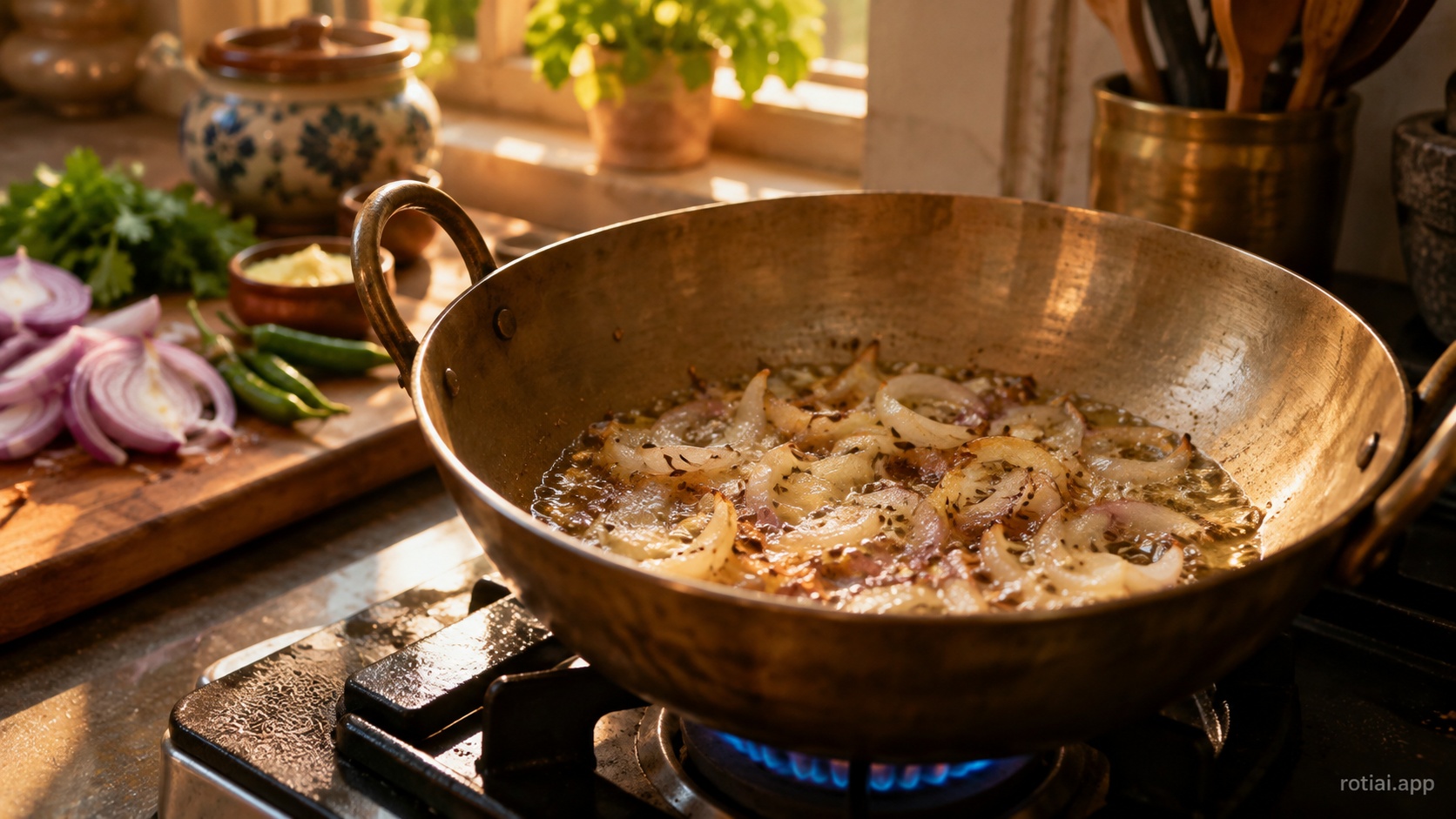
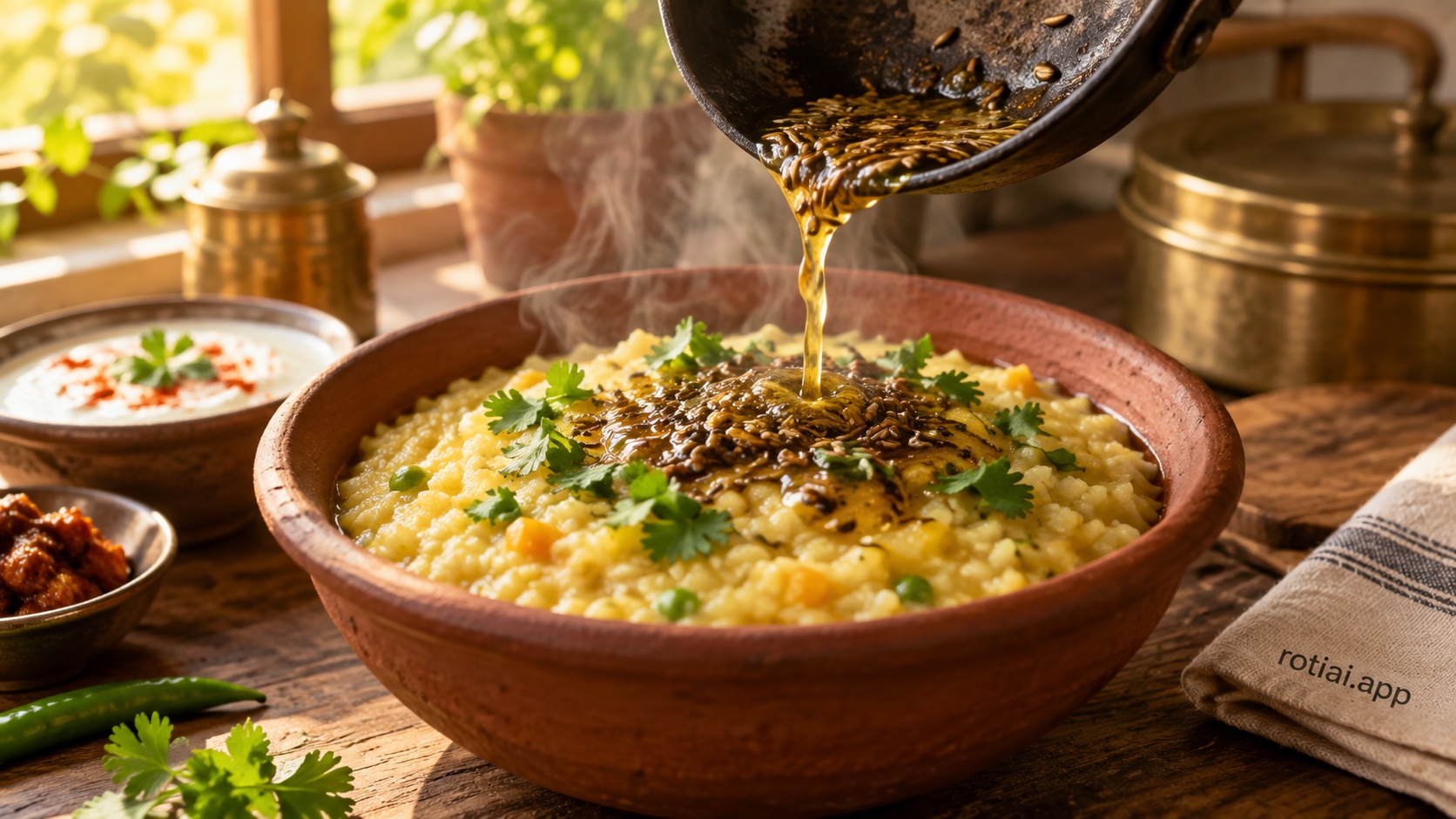
- Split the cumin tempering into two stages, like the recipe does. Half at the start builds a flavour base, half at the end (bhagar) adds a fresh burst of aroma right before serving — one alone isn’t the same.
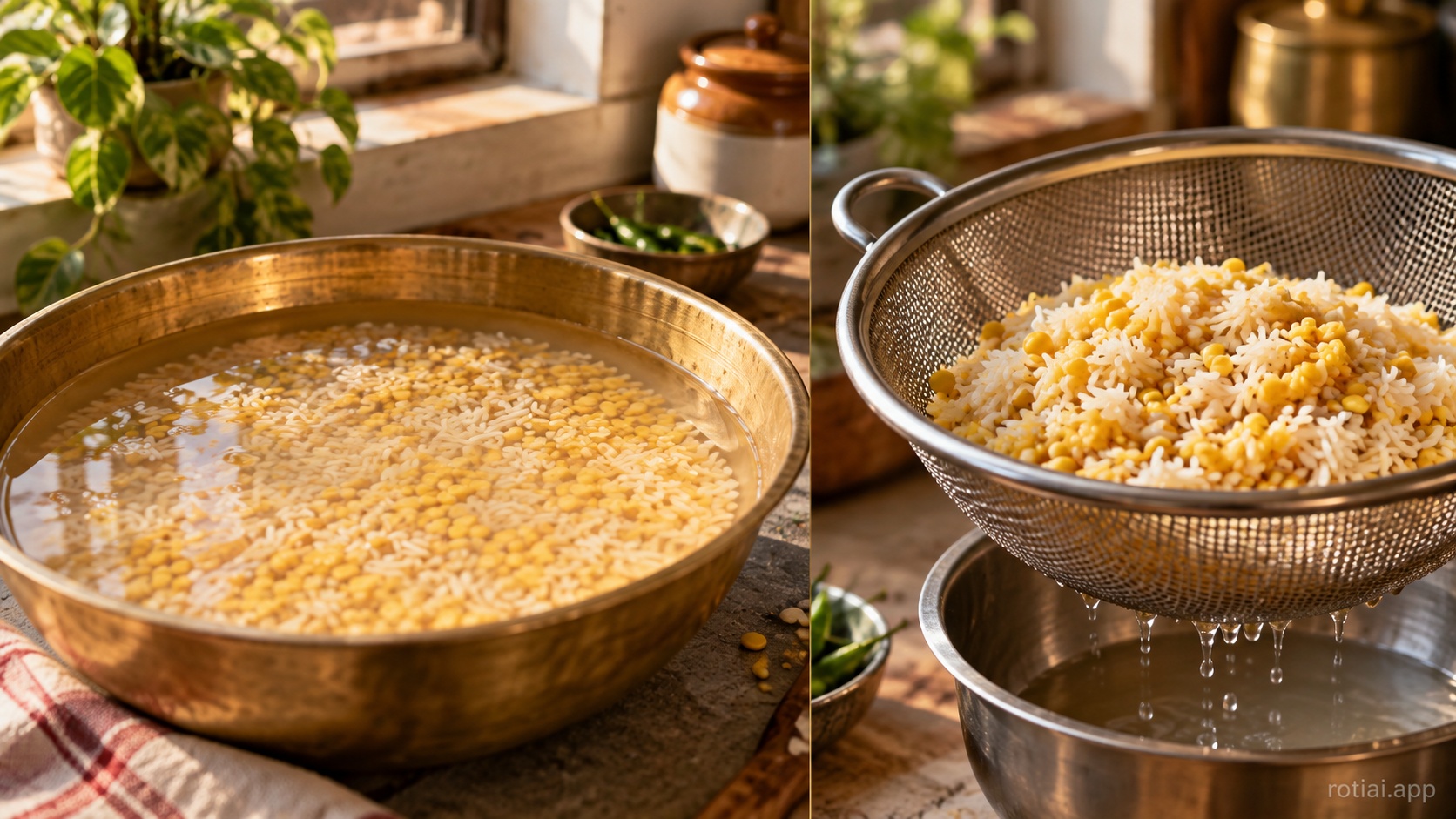
- Soak the rice and lentils together. Even a short 20-minute soak evens out their cooking times so you don’t end up with mushy lentils and undercooked rice.
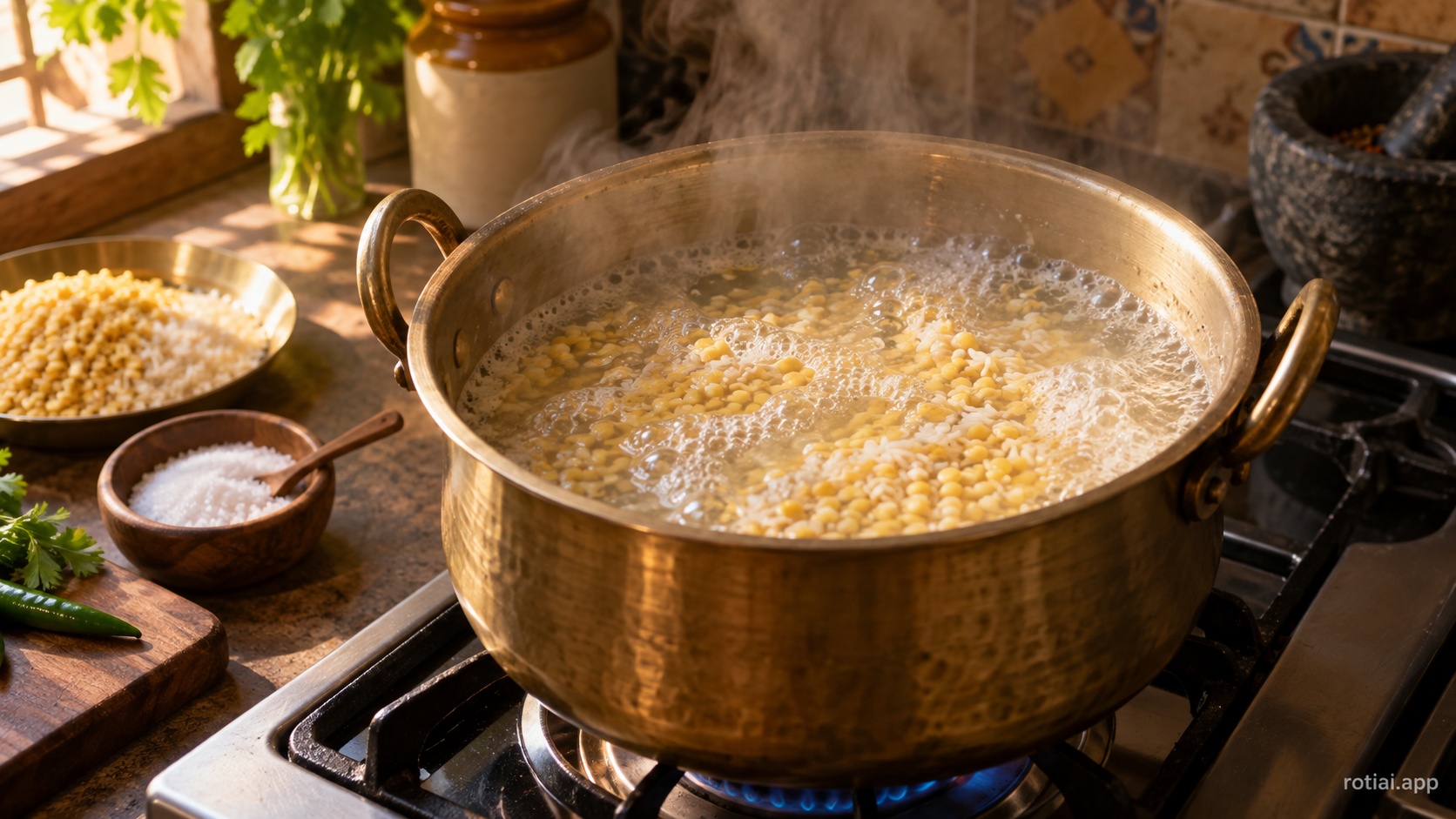
- Keep extra hot water on the stove. Khichdi thickens fast as it cooks; having hot (not cold) water ready to loosen it keeps the texture consistent without shocking the pot’s temperature.
- Don’t stir too aggressively. Gentle stirring keeps some texture; over-mixing turns the whole pot into a uniform paste.
How to serve Moong Daal Khichdi
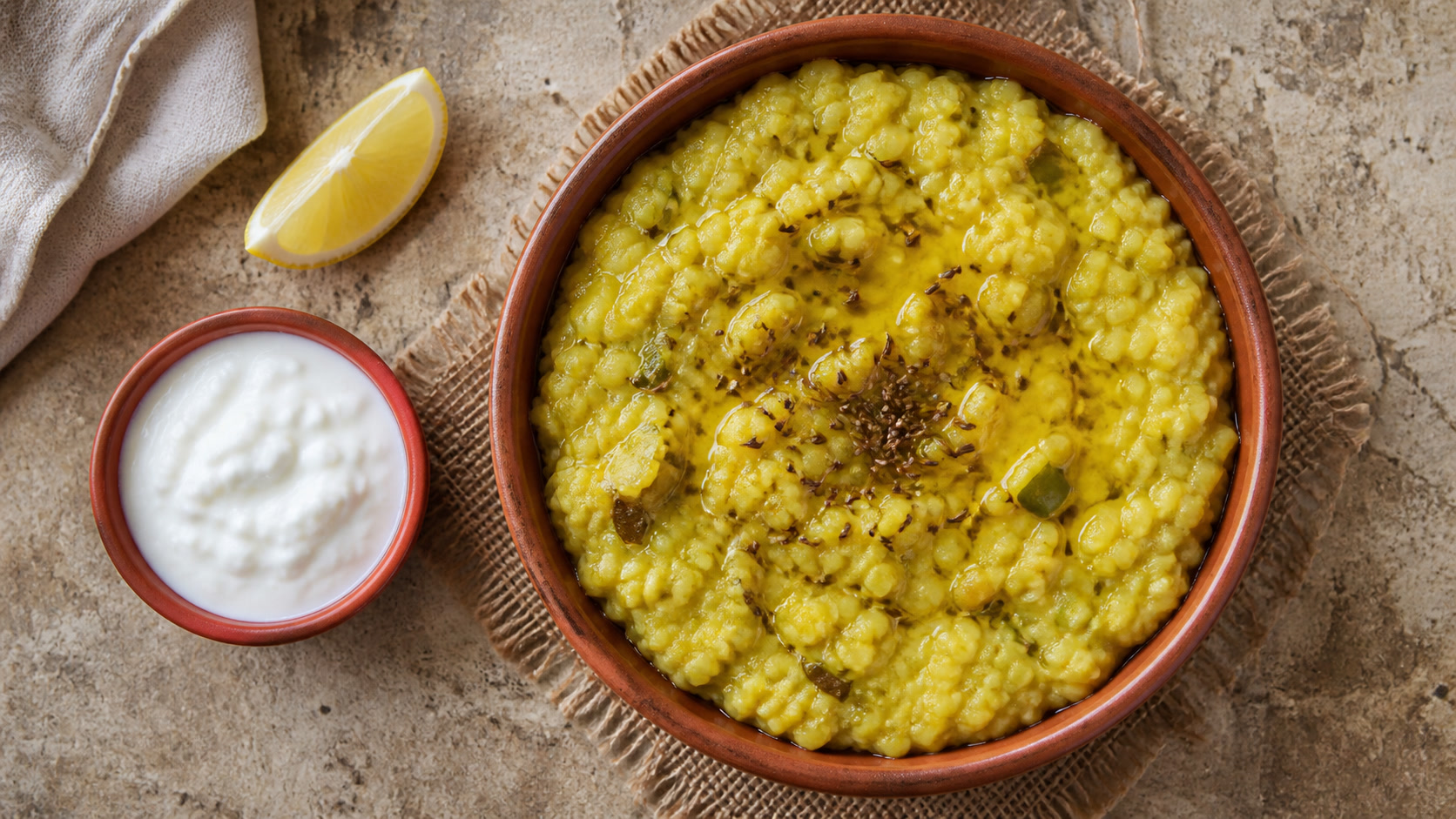
Ladle it into bowls while it’s still warm, with the tempered ghee glistening on top. A dollop of plain yogurt or a wedge of lemon on the side rounds it out nicely.
Common Moong Daal Khichdi recipe mistakes to avoid
- Using too little water. Khichdi should be looser than regular rice — if it looks dry while cooking, add more hot water rather than letting it stick to the pot.
- Skipping the soak. Unsoaked rice and lentils cook unevenly, leaving grainy bits in an otherwise creamy dish.
- Adding all the ghee at once. Splitting it between the base and the final tempering, as the recipe does, gives more flavour per tablespoon than dumping it all in early.
- Forgetting to stir occasionally while it simmers, which can cause the bottom to catch and scorch, giving the whole pot a burnt undertone.
Moong Daal Khichdi recipe variations
- Vegetable khichdi: stir in diced carrots, peas, and potatoes with the lentils and rice for a more complete one-pot meal.
- Masala khichdi: add a pinch of garam masala and a bay leaf to the tempering for a more robustly spiced version, popular for lunch rather than a light dinner.
- Sindhi-style khichdi often pairs the dish with a side of kadhi (yogurt-besan curry) instead of plain yogurt, for a tangier accompaniment.
- Lower-ghee version: cut the ghee to 1 tablespoon total for a lighter dish if you’re watching fat intake — the khichdi will taste slightly less rich but still work well.
Storing and reheating leftover Moong Daal Khichdi
Khichdi keeps in an airtight container in the fridge for up to 3 days. It thickens noticeably as it cools and sits, which is completely normal — lentils and rice continue absorbing liquid overnight.
Reheat on the stovetop over low heat with a generous splash of hot water, stirring until it loosens back to a soft, pourable consistency; microwaving works too but needs frequent stirring and extra water to avoid drying out unevenly. Khichdi freezes well for up to a month — portion it before freezing so you can thaw only what you need, and expect to add a bit more water when reheating from frozen.
FAQ: Moong Daal Khichdi recipe
Is moong daal khichdi good for weight loss or an upset stomach?
It is soft and mild, which is why it is a common choice when someone is unwell or wants a plain meal, but we make no medical claims. A serving is about 350 kcal (a sixth of the recipe), and the ghee supplies about 17% of that, so measure it if you are cutting calories. See our desi weight loss meals guide for how it fits alongside other light options.
Can I make khichdi without ghee?
Yes — substitute a neutral oil for a dairy-free version, though you’ll lose some of the nutty richness that ghee brings to the final tempering.
Why is my khichdi too thick or too thin?
Thickness comes down to the water-to-grain ratio and how long it sits. If it’s too thick, add hot water while reheating; if it’s too thin straight off the stove, uncover it and simmer a few more minutes to let excess liquid cook off.
What’s the difference between khichdi and daal chawal?
Khichdi cooks the rice and lentils together into one soft dish, while daal chawal keeps them separate — a ladle of daal spooned over plain rice. Khichdi is generally softer and considered more of a comfort or convalescent food.
Can I make khichdi in a pressure cooker?
Yes — pressure-cooking the soaked rice and lentils together for 2-3 whistles gives you the same soft, creamy texture in a fraction of the stovetop time, then you finish with the same ghee-cumin tempering poured on top.
Cook Moong Daal Khichdi smarter with RotiAI
Curious how a bowl of khichdi fits into your calorie goals? RotiAI works out kcal for any desi dish, can shape a personalized plan around light meals like this one with Sehat Mode, and keeps new ideas flowing through the Rasoi recipe feed — or check the full calorie breakdown for moong daal khichdi.


Comments
to leave a comment — same account as the RotiAI app.
Check your email for a sign-in link.
Commenting as ·
Loading comments…