 RotiAI

Chicken manchurian (چکن منچورین) — bite-sized chicken fried till crisp and tossed in a hot soya-and-chilli sauce — is about 360 calories per serving for the dry homemade style. It is genuinely protein-rich, which is why it earns its place at the Pakistani-Chinese table better than most fried starters — as long as you respect the oil. The vegetable version, veg manchurian, is about 330 kcal.
Quick answer
- Calories: ~360 kcal per serving (dry, homemade)
- Serves: 4 · Cook time: 40 min
- Region: Pakistani-Chinese · Tags: high-protein, spicy, dry
Calories in Chicken Manchurian: the count
~360 calories per serving. A serving is deep-fried, batter-coated chicken tossed in a thin glaze of soy, red chilli sauce and a cornflour slurry. The chicken brings protein, the cornflour-and-maida batter brings carbs, and the deep-frying oil is what moves the number — the same dish shallow-fried or air-fried lands noticeably lower.
Why Chicken Manchurian lands at this number
- Chicken is the protein. 300 g across 4 servings makes this a high-protein plate; the chicken itself is lean, so the protein comes cheap.
- The batter is the carb. Cornflour and maida coat every piece and fry into the crust — that is where the carbohydrate calories sit.
- Deep-frying is the fat swing. Oil is calorie-dense and batter soaks it up. How much oil the crust holds is the single biggest lever on the final count.
Chicken Manchurian macros at a glance
Chicken manchurian is a high-protein, moderate-carb, moderate-fat dish. The chicken supplies the protein, the batter supplies the carbs, and the frying oil supplies most of the fat — which is also the part you can control.
How Chicken Manchurian fits a desi diet
At ~360 calories for the dry style, homemade manchurian fits a fat-loss plan better than you would expect from a fried starter — provided you air-fry or shallow-fry it, go light on the sauce, and eat it as a protein-forward plate rather than a mountain of batter. The restaurant and gravy versions are where it stops being a diet-friendly choice; see the comparison below.
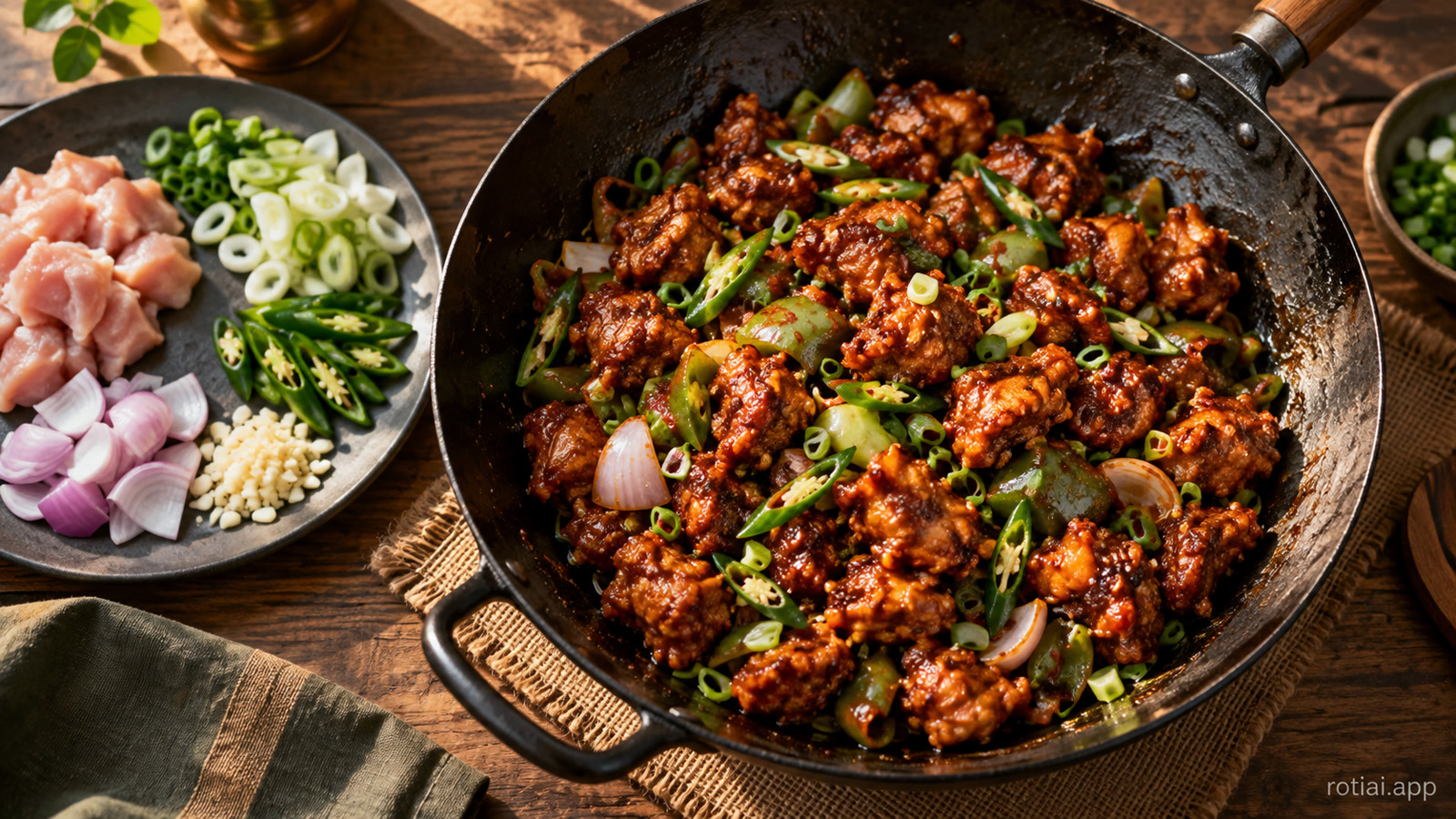
Chicken Manchurian: full macro breakdown
For a standard ~360-calorie serving of dry homemade chicken manchurian (about 75 g chicken, thin batter, deep-fried with sauce to glaze):
| Macro | Approx. amount | % of calories |
|---|---|---|
| Protein | 18–20 g | ~22% |
| Carbohydrates | 18–22 g | ~22% |
| Fat | 15–17 g | ~42% |
| Fiber | 1–2 g | — |
The fat share looks high because deep-fried batter holds oil, not because the chicken itself is fatty. The protein is real and substantial, and if you air-fry the same pieces the fat — and the total calorie count — drop sharply.
Chicken Manchurian portion size comparison
The recipe style and the cooking method swing the count far more than portion size does:
| Version | What changes | Calories per serving |
|---|---|---|
| Air-fryer version | Oil sprayed, not deep-fried | ~280–300 |
| Dry, homemade (this recipe) | Deep-fried, thin glaze only | ~360 |
| Gravy manchurian | + about 1 cup stock thickened into a coating sauce | ~420–440 (approx., roughly +60–80) |
| Restaurant manchurian | More oil, thicker batter, sugar in the sauce | ~480–550 |
| With egg fried rice | Dry manchurian + a side portion of egg fried rice | add ~250–300 |
The gravy and restaurant figures are approximate — they move with the kitchen, the batter thickness and how much sugar goes into the sauce.
Tips for a lighter Chicken Manchurian
- Air-fry or shallow-fry the pieces. Same batter, same toss — far less oil held in the crust. This one change cuts the most calories.
- Thin the batter, keep the chicken. More chicken and a lighter cornflour coat means more protein and fewer carbs per bite.
- Glaze, don’t drown. A thin sauce that just coats the pieces adds almost nothing; a thick, starchy gravy is where the extra calories pile up.
- Drain well and serve immediately. Toss fried manchurian through the sauce at the last second so the crust stays crisp and does not go soggy and oil-heavy on the plate.
Frequently asked questions about Chicken Manchurian calories
How many calories are in chicken manchurian?
About 360 calories per serving for the dry homemade version. Gravy manchurian lands around 420–440, and restaurant manchurian can reach 480–550 because of more oil and sugar in the sauce.
Is chicken manchurian good for weight loss?
The dry homemade version is one of the better fried starters, because the chicken is high-protein and keeping it dry keeps the sauce thin. Make it weight-loss-friendly by air-frying, cutting the batter, and serving it as a protein plate rather than a side to fried rice.
Is chicken manchurian high in protein?
Yes — roughly 18–20 g per serving from the chicken, which is a real protein hit for a starter. The catch is that the deep-fried batter also carries the fat calories, so treat the cooking method, not the chicken, as the thing to control.
Can I make chicken manchurian with less oil?
Yes. Air-fry or shallow-fry the battered pieces and toss them through the same sauce the same way. You lose a little of the restaurant crunch but you can cut the total calorie count by roughly 60–80 per serving.
Is gravy manchurian more calories than dry?
Yes. The gravy is a starch-thickened sauce, so it adds carbs on top of the dish. The dry version is the lower-calorie choice — the gravy style adds roughly +60–80 calories per serving, give or take.
How we calculate chicken manchurian calories
Ingredient values are read from USDA FoodData Central (per 100 g). The recipe gives home measures, so cup weights come from the same USDA records: cornstarch 128 g per cup, white flour 125 g per cup, soybean oil 218 g per cup.
| Ingredient (recipe amount) | USDA record | kcal per 100 g | Protein / carbs / fat per 100 g |
|---|---|---|---|
| Chicken breast, 300 g (raw, skinless, boneless) | FDC 171077 | 120 | 22.5 g / 0 g / 2.6 g |
| Cornflour, 1/2 cup (about 64 g) | FDC 169698 (cornstarch) | 381 | 0.3 g / 91.3 g / 0.1 g |
| Maida, 1/4 cup (about 31 g) | FDC 169761 (white flour, unenriched) | 364 | 10.3 g / 76.3 g / 1.0 g |
| Egg, 1 | FDC 171287 | 143 | 12.6 g / 0.7 g / 9.5 g |
| Soy sauce | FDC 174277 | 53 | 8.1 g / 4.9 g / 0.6 g |
| Frying oil, 1 cup (about 218 g) | FDC 172370 (soybean oil, stand-in for cooking oil) | 884 | 0 g / 0 g / 100 g |
What this shows: 300 g of chicken breast carries about 360 kcal and 67 g of protein for the whole batch, so about 90 kcal and 17 g of protein per serving, which fits the 18-20 g protein range above once the egg and batter are added. The batter flours add roughly 357 kcal for the batch. The frying oil is the unknown: if all 218 g stayed in the food it would add about 1,927 kcal, around 480 kcal per serving, more than the 360 kcal figure for the whole serving. So most of the oil is left in the pan, and how much the crust absorbs decides the real number. The serving figure is RotiAI’s recipe estimate, not a lab measurement. Method: how we calculate. Cut of chicken changes the protein figure; thigh meat is fattier than breast.
Related reading on Chicken Manchurian
- Chicken Manchurian recipe — the full step-by-step dry-style method
- Calories in Veg Manchurian — the lighter vegetable version of the same family
- Calories in Chilli Chicken — a chilli-sauce cousin, and how its oil load compares
Get the exact calorie count for Chicken Manchurian
The batter thickness and how much oil the crust holds are the variables. RotiAI computes the exact kcal for your chicken manchurian, and Sehat Mode builds protein-forward Pakistani-Chinese meals like this into a personalized desi diet plan.


